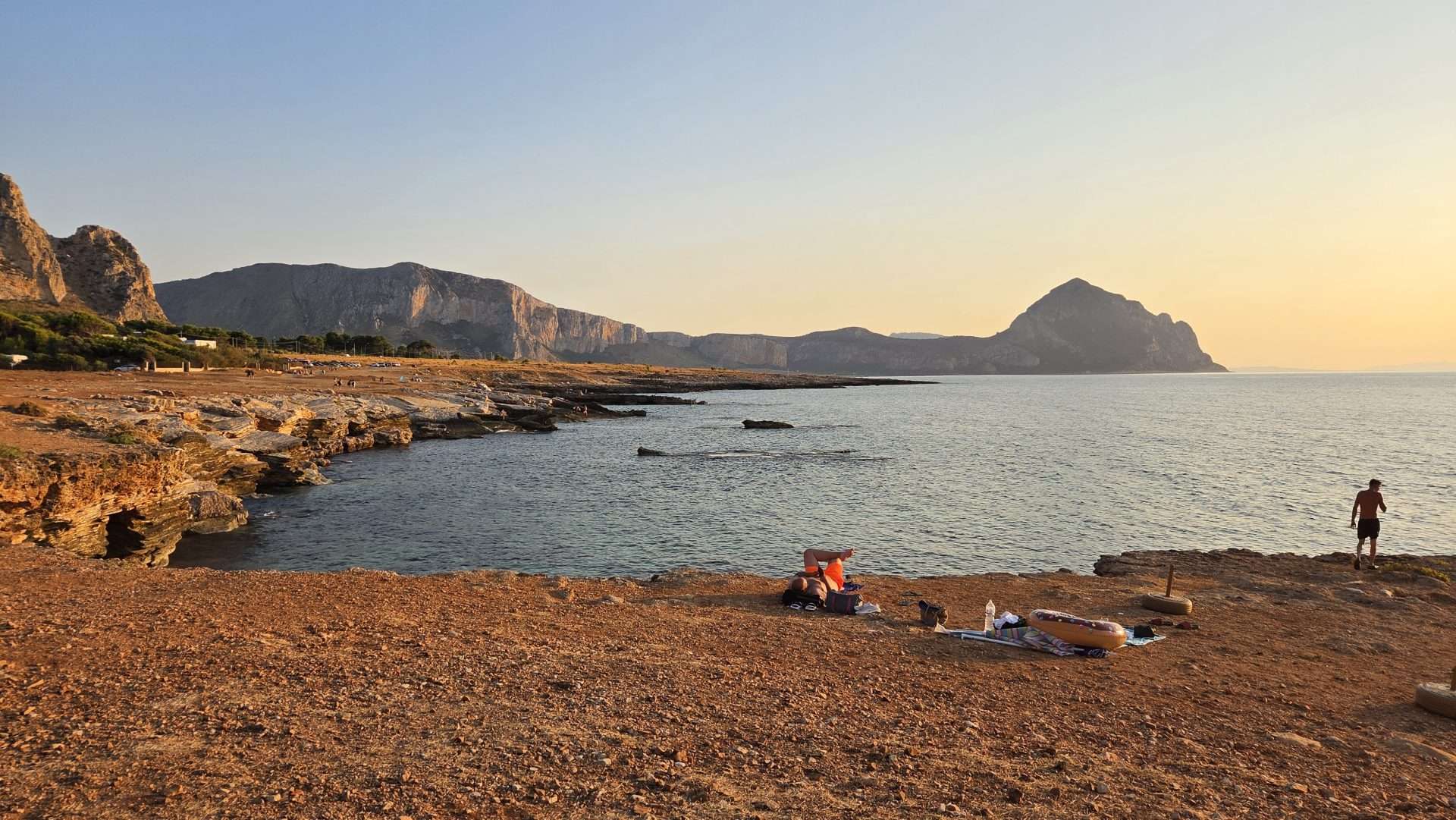
Moving to Sicily does not mean choosing an island. It means choosing one of the many islands inside it. In May 2026 the average asking price was €1,028 per sqm (idealista), from €627 in Caltanissetta to €1,196 in Palermo. Foreign retirees who move to a town under 30,000 residents can access the 7% flat tax on foreign income; people who bring their work here may use the impatriate regime, which cuts 50% of taxable income. And inland, while young Sicilians keep leaving, new residents arrive from abroad: in Mussomeli the €1 houses have produced roughly 450 sales to buyers from 18 countries.
Why is Sicily back on the radar for people moving to Italy?
For decades Sicily was described in only two ways. A place to visit, or a place to leave. That story no longer holds.
The island is back in the plans of people who, a few years ago, would not have considered it. Retirees looking for more room in their budget. Professionals who work remotely. Italians and Italian-Americans coming home after years abroad.
Some come for the cost of living. According to idealista, in May 2026 the average asking price in Sicily was €1,028 per square metre. Others come for the light, and for a life that genuinely happens outdoors. Others still come for one precise fiscal lever: the 7% flat tax for foreign pensioners.
But nobody chooses Sicily for a single reason. People choose it when it stops feeling like an escape and starts looking like a repositioning.
Why there is no single Sicily
Here is the point almost nobody makes, and it changes everything. Sicily is not an island: it is an archipelago of worlds, and each one asks something different of you.
There is layered, Arab-Norman Palermo, which resists every simplification. There is Catania, black with lava, practical and restless, with the volcano at its back. There is the golden Baroque of the Val di Noto, where life has a human measure. There are the salt pans of Trapani, the temples of Agrigento, the Aeolian Islands out at sea. And there are the Madonie and the Nebrodi: highland Sicily, the Sicily of villages.
On a map the distances look short. In daily life, they are different countries. That is why the real question is not whether to move to Sicily, but which Sicily.
Where to live in Sicily? The areas, one by one
The most common mistake is to start by looking for the most beautiful place. In Sicily beauty is everywhere, so that filter is useless. The useful question is another one: which area supports my daily life with the least friction?
So it is worth looking at each area for what it actually is. Its character, its prices and its practical truths.
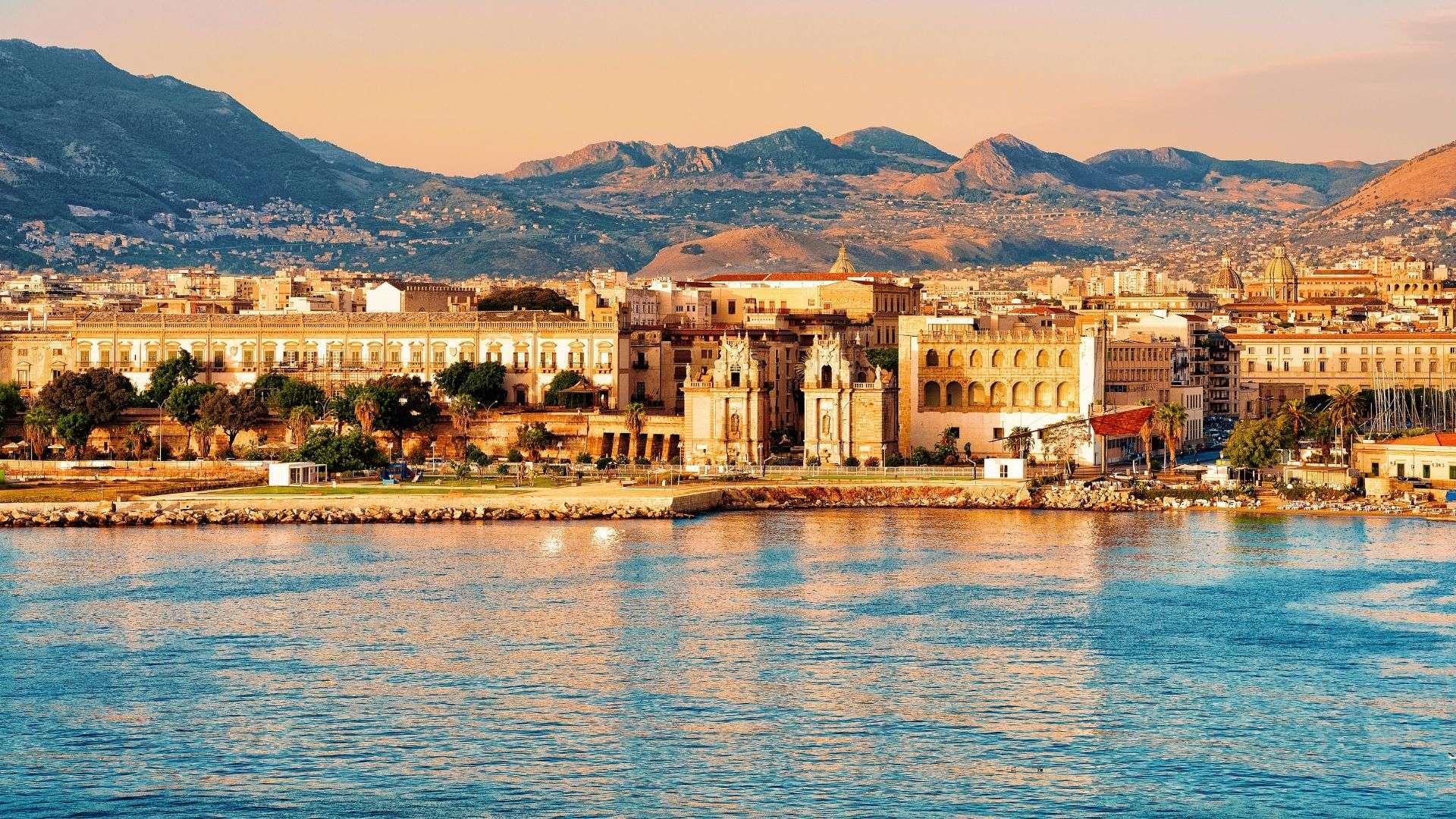
Living in Palermo and the Conca d’Oro: a city that refuses to be simplified
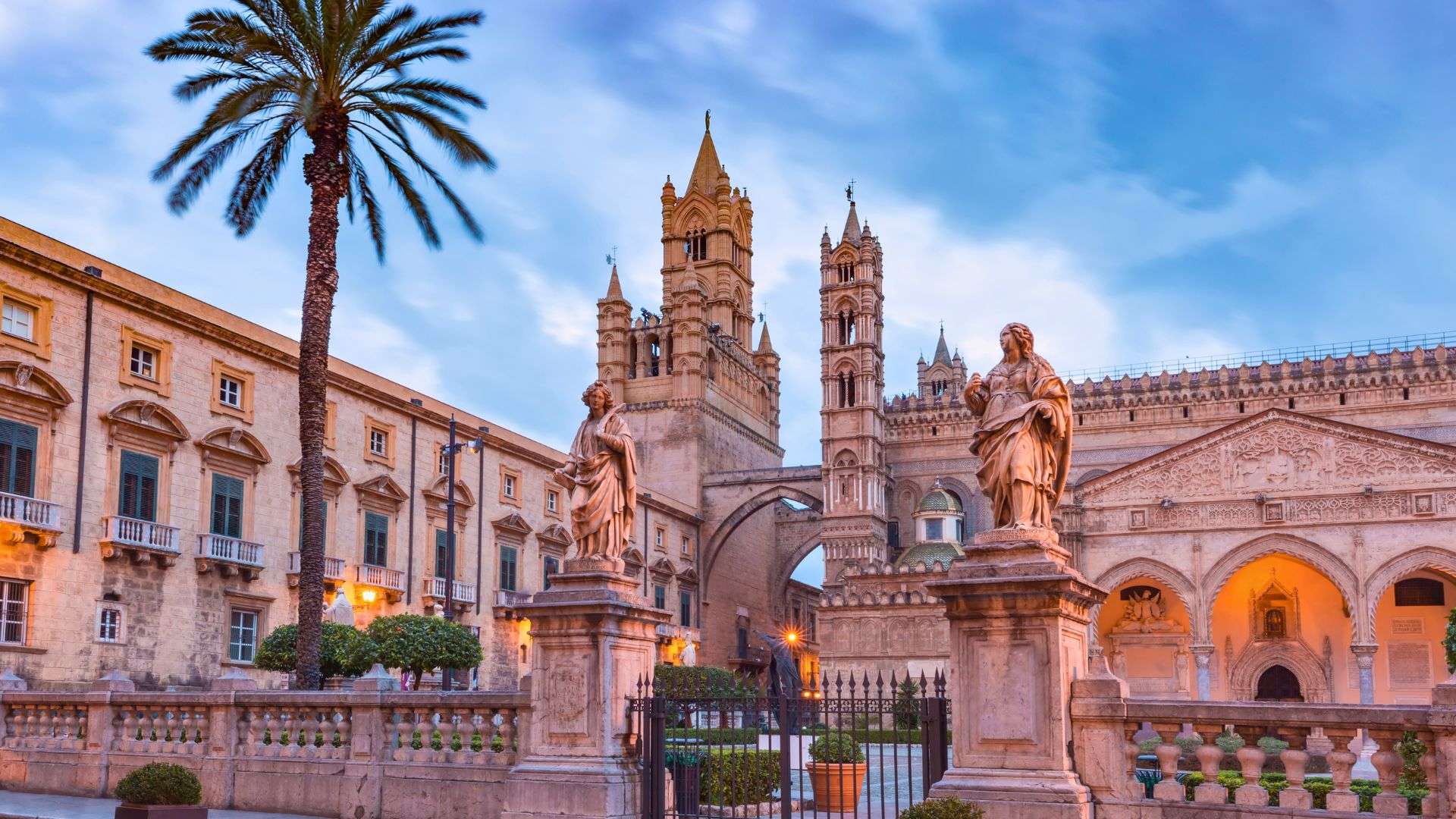
Palermo is not a city you visit: it takes you over. The first impact is sound, before sight. The voices of the Ballarò, Capo and Vucciria markets arrive before the façades do.
It is a layered city, where Arab, Norman, Spanish and Baroque coexist on the same block. The Arab-Norman route has been a UNESCO World Heritage Site since 2015. The Cathedral, the Palatine Chapel and Monreale all sit within half an hour by car.
But Palermo is not only beauty: it is also friction. Traffic, bureaucracy and uneven services come with the package. In exchange, the sea is minutes away: Mondello is twenty minutes out, and in summer it becomes the city’s courtyard.
On the numbers, the province is the most expensive on the island. In May 2026 idealista reported €1,196 per sqm to buy, and €9.6 per sqm a month to rent in June. You choose Palermo for its human density, not to save money. How the city works district by district, from the old town to Mondello and Cefalù, is set out in our guide to living in Palermo.
Living in the Trapani area and the west: salt, wind and wine
The west is another Sicily. Wider, windier and far less predictable.
The salt pans of Trapani and Marsala are perhaps the most hypnotic landscape on the island. At sunset the basins turn pink, the windmills stand against the sky, and flamingos stop in the Stagnone lagoon. Just above, Erice watches everything from 750 metres, often wrapped in fog while the coast below is in full sun.
Then there is Marsala, with its fortified wine and a historic centre that is genuinely alive. And there are Segesta and Selinunte, where Greek temples stand in open countryside, without crowds. The Egadi Islands — Favignana, Levanzo, Marettimo — are an hour away by hydrofoil.
For anyone moving here, the west offers space and identity at contained prices: €1,057 per sqm to buy, €7.4 per sqm to rent. In exchange, it asks for autonomy, because services are thinner on the ground. Anyone looking at this side of the island will find Trapani, Marsala, Erice, Favignana and the Belice valley in the guide to western Sicily.
Living in the Agrigento area: temples, white marl and a rugged beauty
The Agrigento area is the Sicily that sweetens nothing. It is beautiful and rough at once, and that is exactly why it stays authentic.
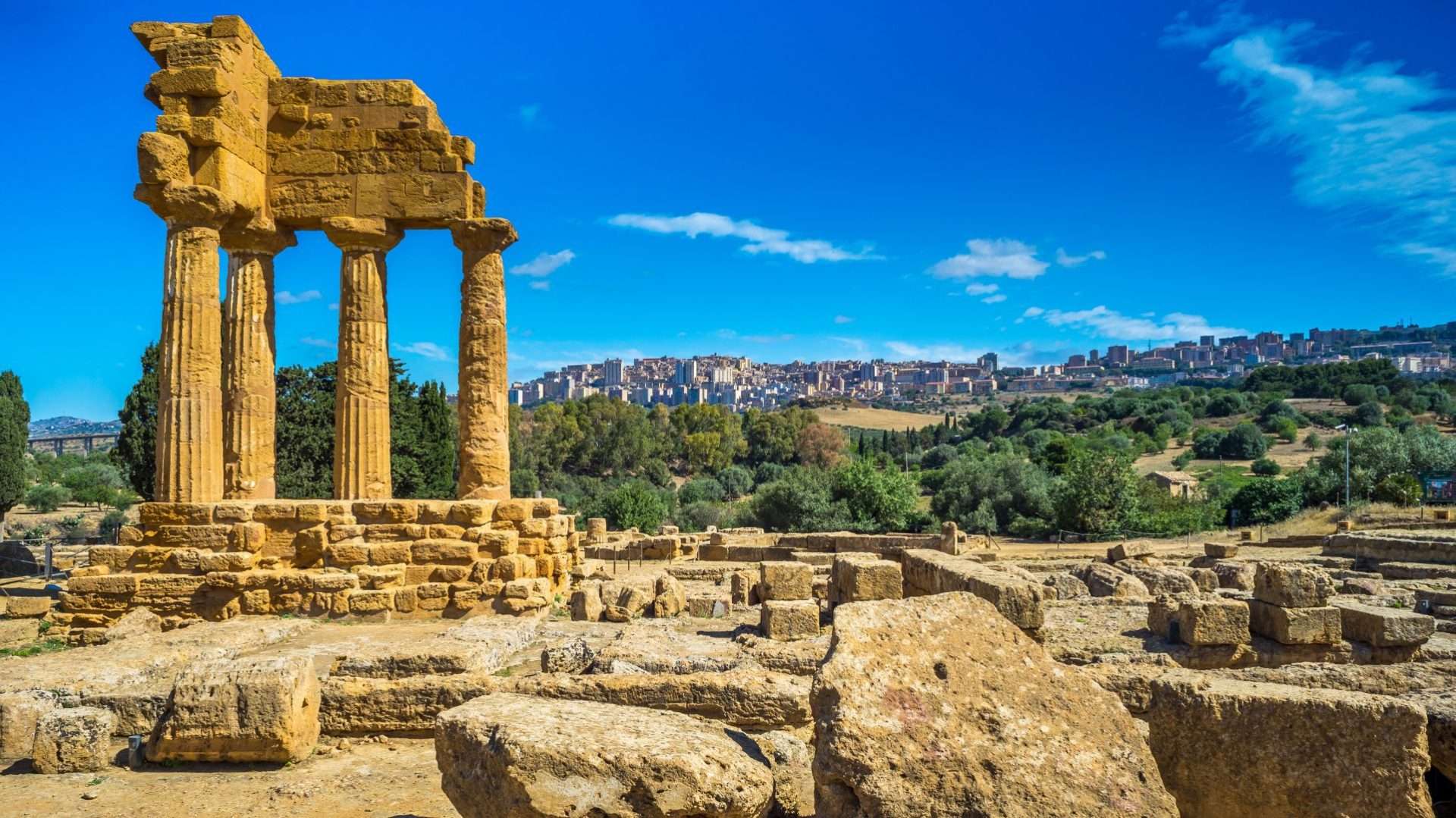
The Valley of the Temples has been a UNESCO World Heritage Site since 1997, and holds some of the best-preserved Doric temples anywhere. A few kilometres away, the Scala dei Turchi drops into the sea as a cliff of white marl. It is not a postcard: it is living rock, it crumbles, and it must be respected.
Sciacca adds thermal baths, ceramics and a fishing port that is still real. And every March the Almond Blossom Festival fills Agrigento with international folklore, when the almond trees flower before anything else.
Prices here are among the lowest on the island: €810 per sqm to buy. Watch the rental market, though, because it is moving fast: €8.0 per sqm in June 2026, up 16.8% in a year. That is a demand signal. The Valley of the Temples, the Farm Cultural Park at Favara and the Scala dei Turchi coast have a guide of their own: living in Agrigento.
Living in Catania and on Etna: a city you can use, a volcano that sets the pace
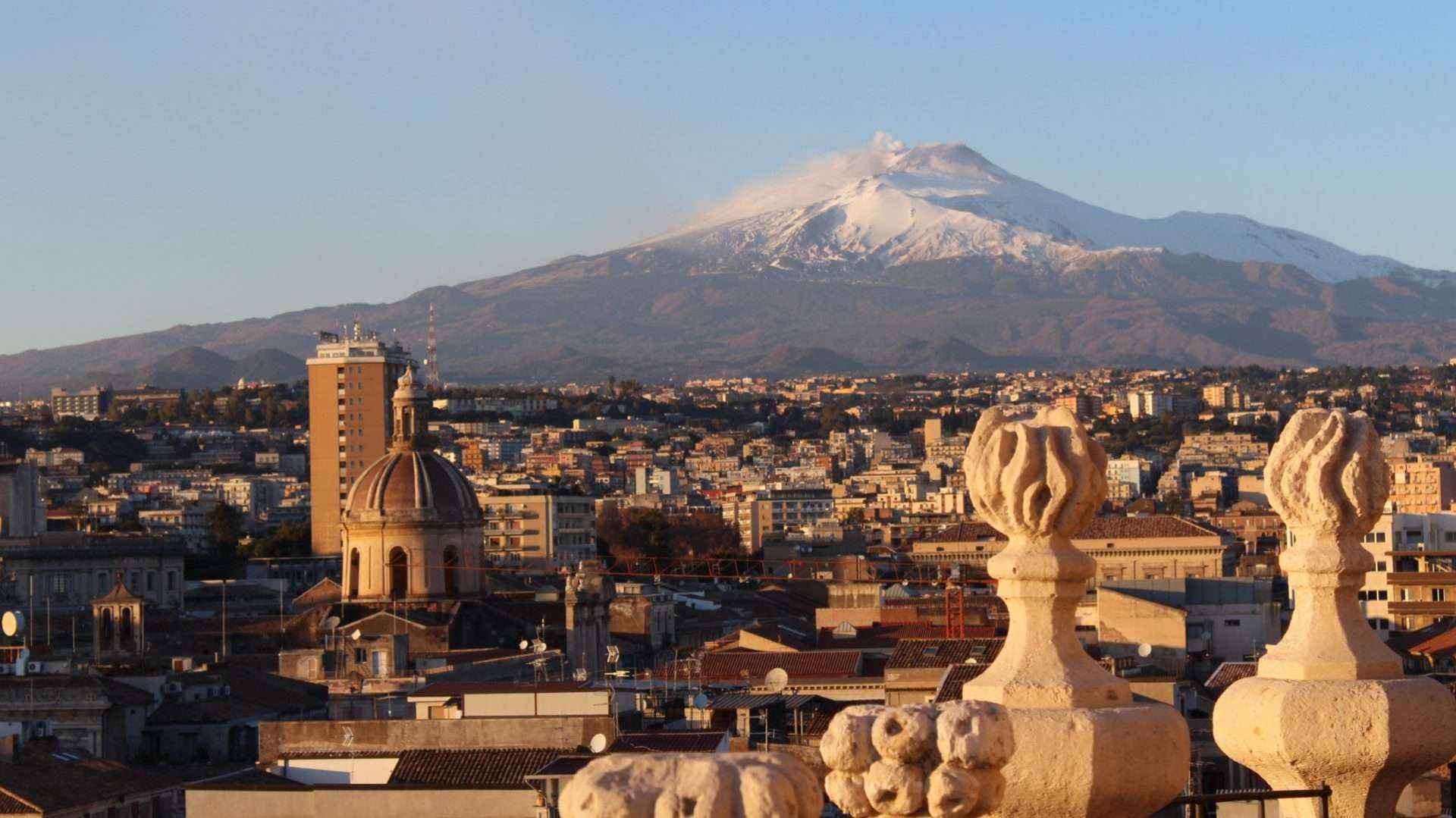
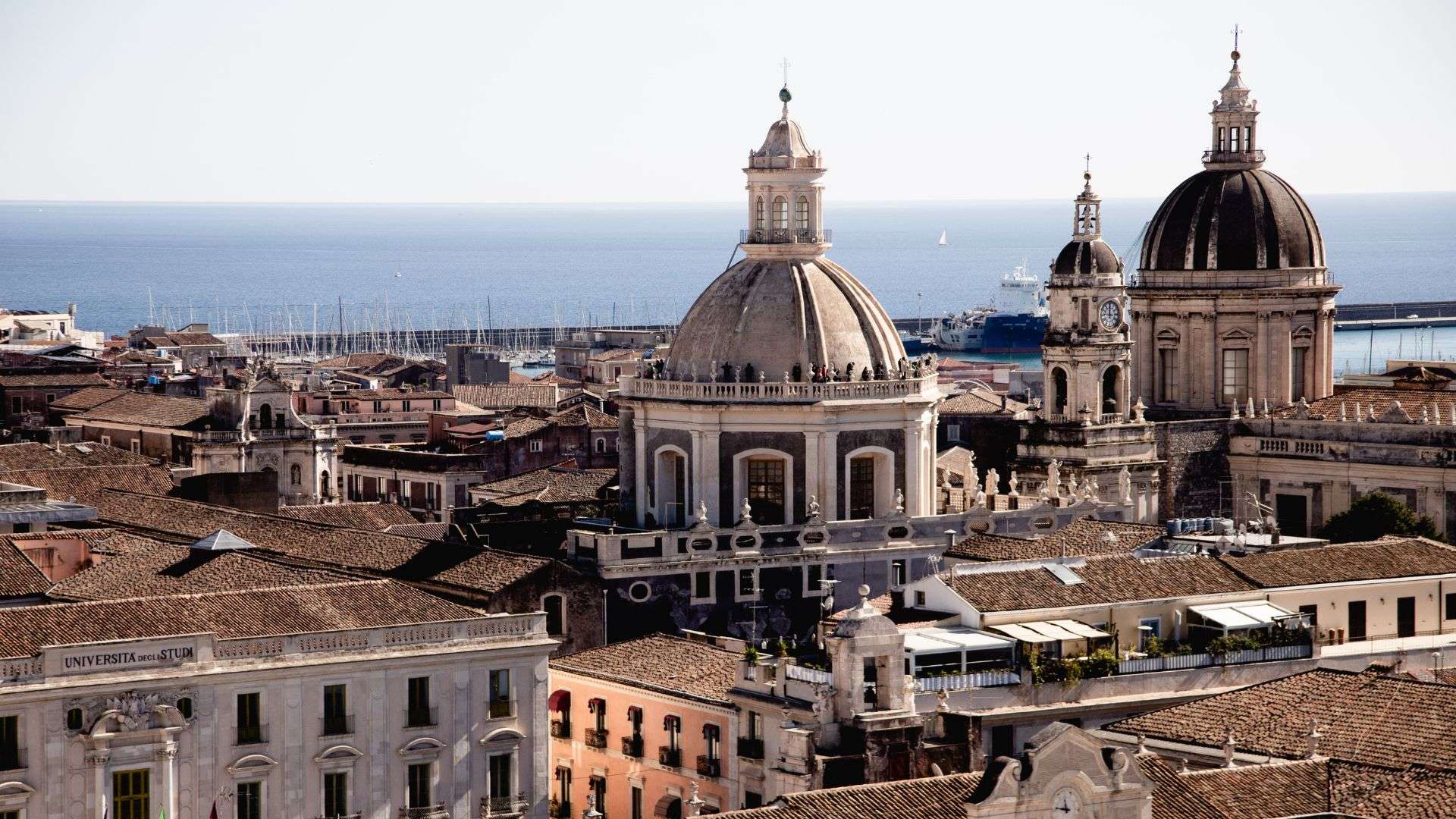
Catania is black. The stone is lava, and you see it immediately. It feels like a city you can still use, not merely admire: pragmatic, loud, awake.
Above it stands Etna, a UNESCO World Heritage Site since 2013. It is not scenery: it is a resident. It dictates the weather, the snow, the ash on your car and, occasionally, the airport schedule. On its slopes, however, one of Europe’s most interesting wine regions has emerged. The Etna DOC districts, with Nerello Mascalese and Carricante, have drawn producers and capital.
Remote workers find a real ecosystem here. The ISOLA innovation hub and Le Village by CA Sicilia, opened in October 2024, are part of it. Catania also has the island’s best airport, and that matters more than people expect.
On prices, the province sits in the middle: €1,071 per sqm to buy, €9.0 per sqm to rent. For many people, it is the compromise that works. Districts, the ring towns on the slopes of Etna, real costs and the daily contrast between sea and volcano are covered in the guide to living in Catania.
And people who move here rarely stay within the city limits: they choose between the central districts and the ring towns on the slopes of Etna, which climb from sea level to the 700 metres of Nicolosi in about twenty kilometres.
Living in the Messina area: the Strait, Taormina and the Nebrodi behind you
The Messina area is Sicily’s front door. Everyone arriving by land passes through, and the Strait remains one of the most theatrical landscapes in the Mediterranean.
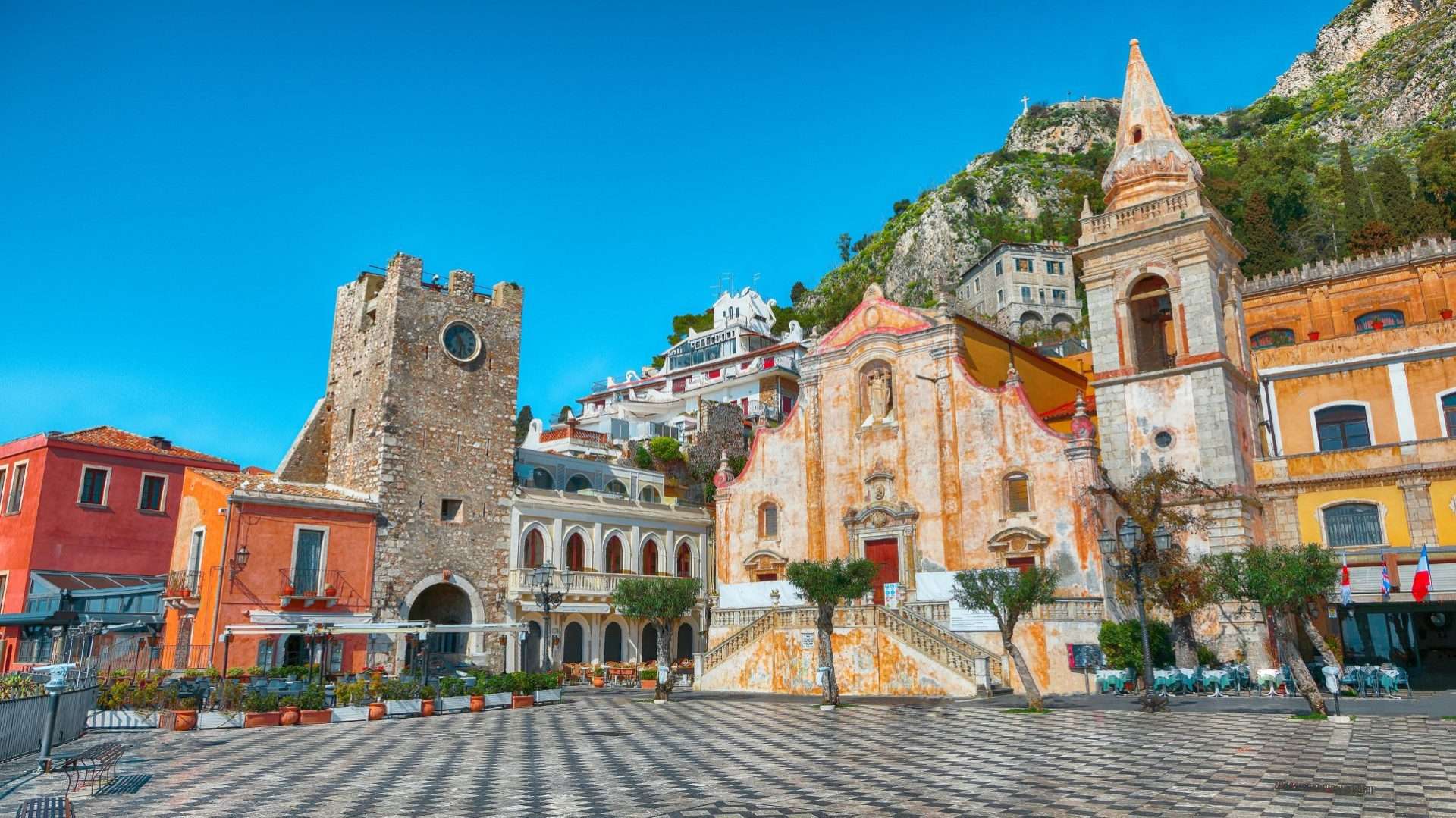
Taormina is its icon. The Ancient Theatre looks at Etna and the sea in the same frame, and in summer it hosts Taobuk and the Taormina Film Fest. It is beautiful and, inevitably, expensive and crowded.
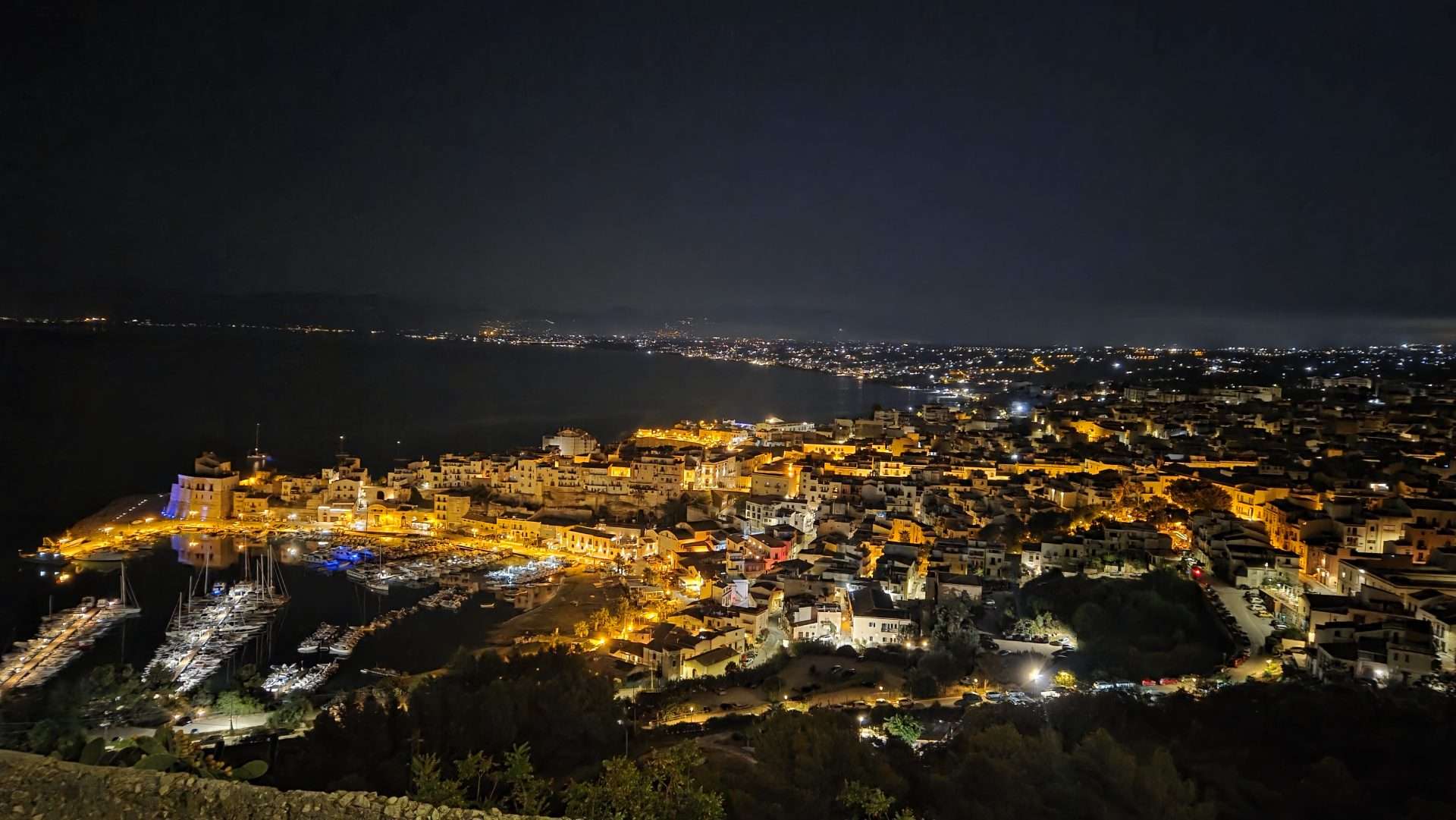
Just below, Milazzo is the port for hydrofoils to the Aeolian Islands. Tindari adds its sanctuary and the Marinello lagoons. Behind it all, the Nebrodi offer forests, silence and villages such as Montalbano Elicona.
The province costs €1,141 per sqm to buy and €9.2 per sqm to rent. It rewards anyone who wants sea, mountains and connections within the same hour’s drive. Taormina, Acireale and the Riviera dei Ciclopi have a piece of their own: living in Taormina and on the Ionian coast.
Nearby, one village tells this story better than any figure.
Living in the Baroque Val di Noto: the balance point of the south-east
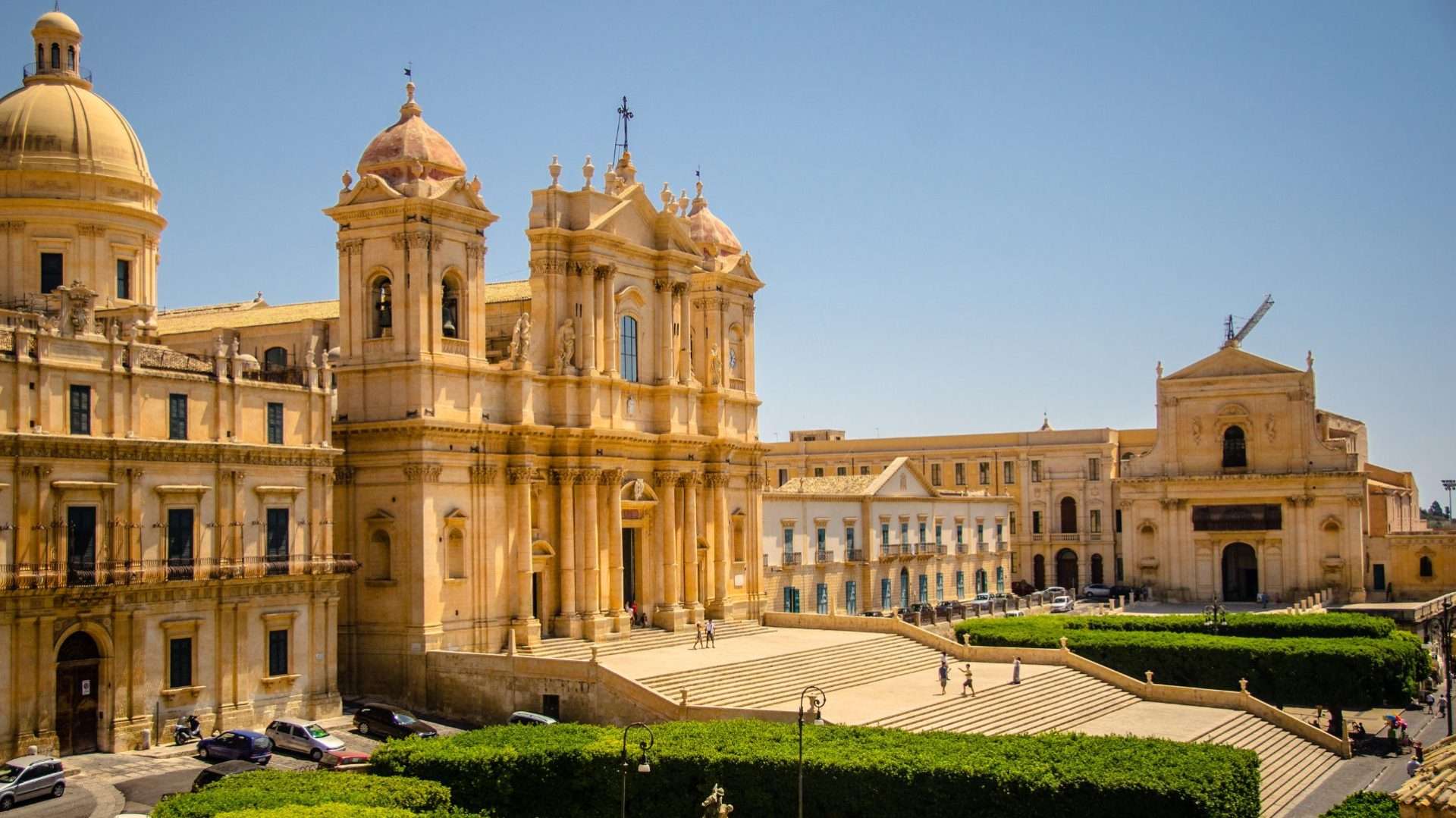
If there is one area where Sicily becomes liveable without ceasing to be beautiful, this is it. The Val di Noto has been a UNESCO World Heritage Site since 2002, with late-Baroque towns rebuilt after the 1693 earthquake.
Syracuse and its Ortigia are the clearest example. Ortigia is an island inside the city: you walk everywhere, the sea is always there, and the day stays full without becoming crowded. Every year, between May and June, the Classical Performances at the Greek Theatre bring ancient tragedy back to the stage.
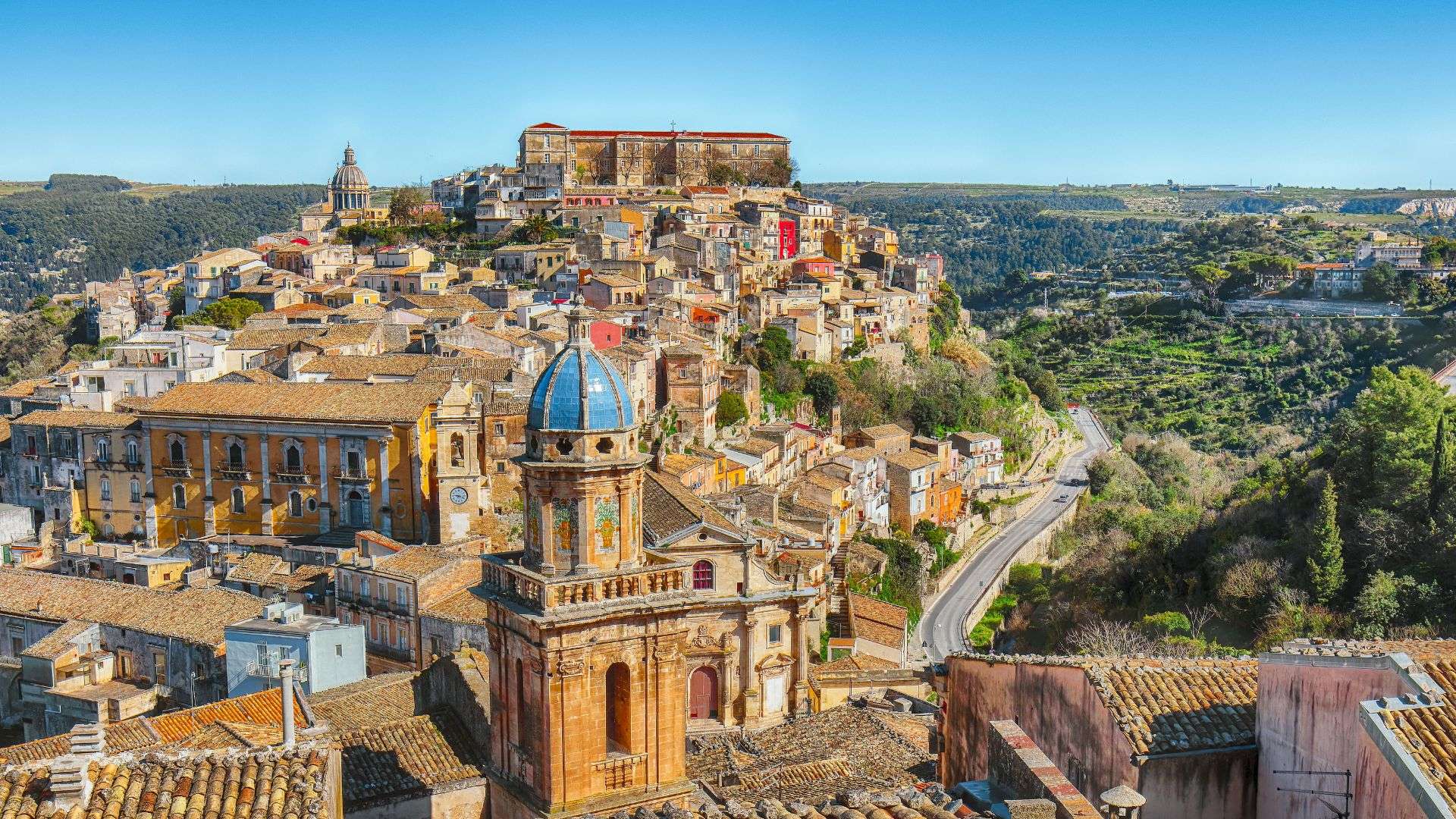
Then there is Noto, golden at sunset, with its May Infiorata. There is Ragusa Ibla, perhaps the most elegant old town on the island. There are Modica, with its cold-worked chocolate, and Scicli, familiar to anyone who has watched Inspector Montalbano.
The numbers explain why so many people settle here. Syracuse costs €1,047 per sqm, Ragusa only €829. Rents say the same: €9.5 against €7.0 per sqm. For retirees, couples in transition and mature remote workers, this is often the real balance. We cover them in two guides: moving to the Val di Noto for Noto, Modica, Ragusa and Scicli, and living in Siracusa and Ortigia for the city and its island.
It is also the area with the highest concentration of UNESCO heritage on the island: eight late-Baroque towns recognised in 2002, all within an hour of one another.
Living in the Aeolian Islands: an island inside the island
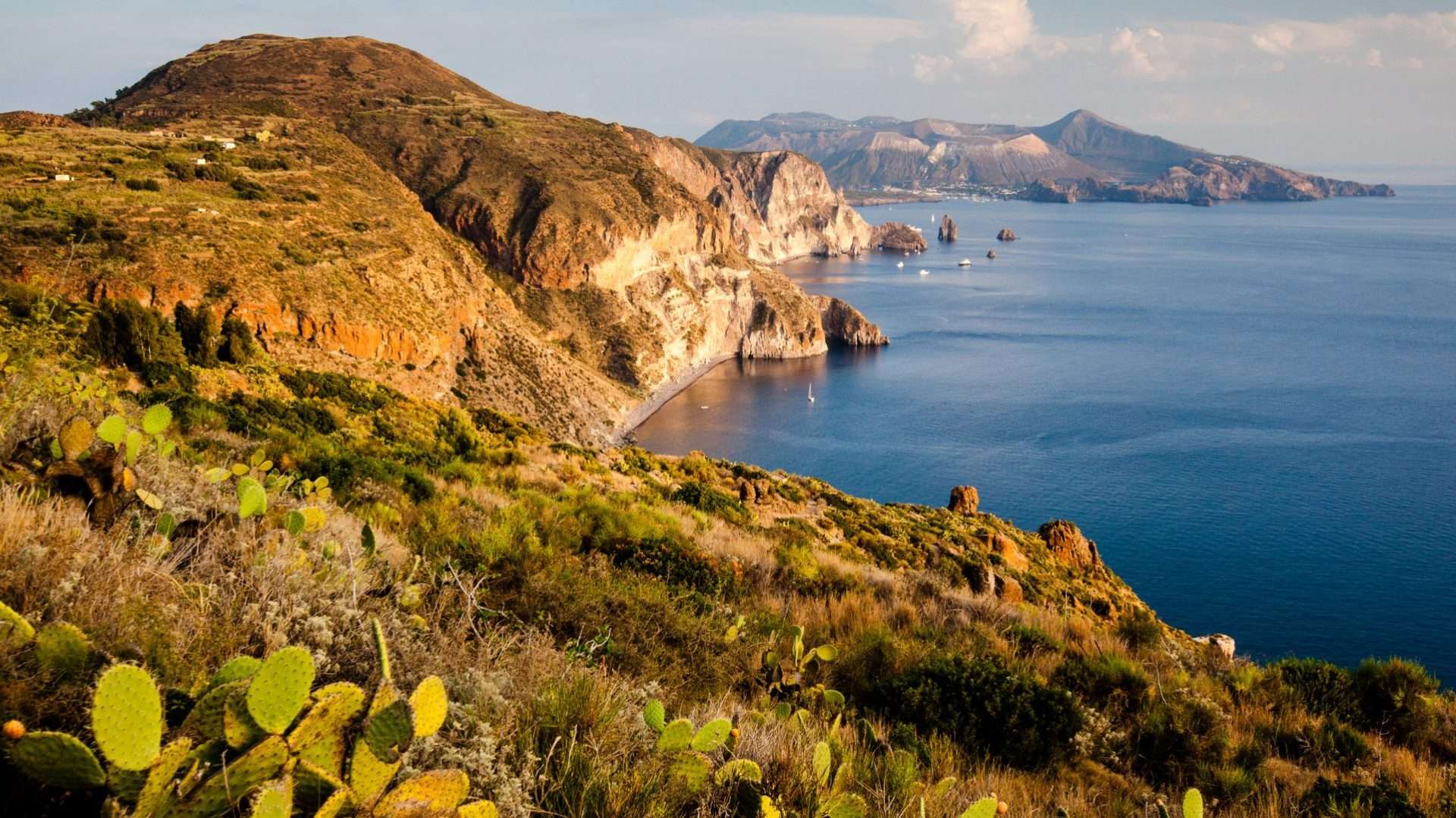
The Aeolian Islands have been a UNESCO World Heritage Site since 2000, and they are seven different worlds. Lipari is the most structured, and acts as the capital. Salina is the greenest, with capers and Malvasia. Stromboli lives beside a volcano that erupts continuously, and Vulcano beside its mud baths.
Living in the Aeolians, however, is not living on holiday. That is the truth nobody tells you. In summer the islands explode; in winter they empty, and only a few hundred residents remain.
Everything depends on the hydrofoils, and the hydrofoils depend on the sea. In bad weather the connections stop, and with them the shopping, the doctor and the school. Healthcare is basic: for a serious test you go to Milazzo or Messina.
So the Aeolians reward a precise profile. You need autonomy, flexible income and a realistic idea of winter. To anyone who accepts that bargain, they give back a silence that does not exist elsewhere.
Living in the Madonie and the Nebrodi: highland Sicily, where the 7% flat tax makes sense
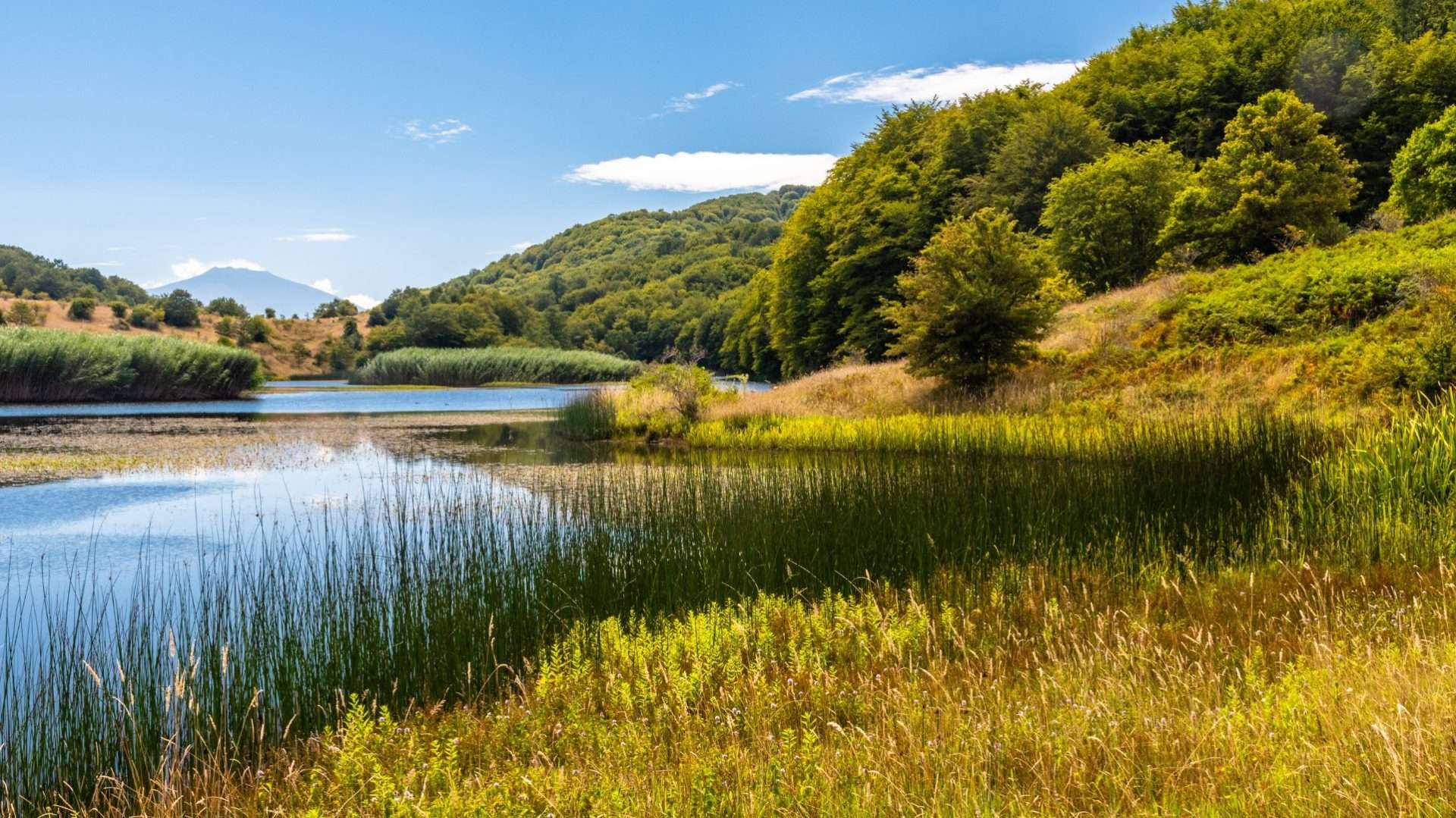
Finally there is the Sicily almost nobody imagines: the one where it snows. The Madonie Park rises above 1,900 metres, and in winter it turns genuinely white.
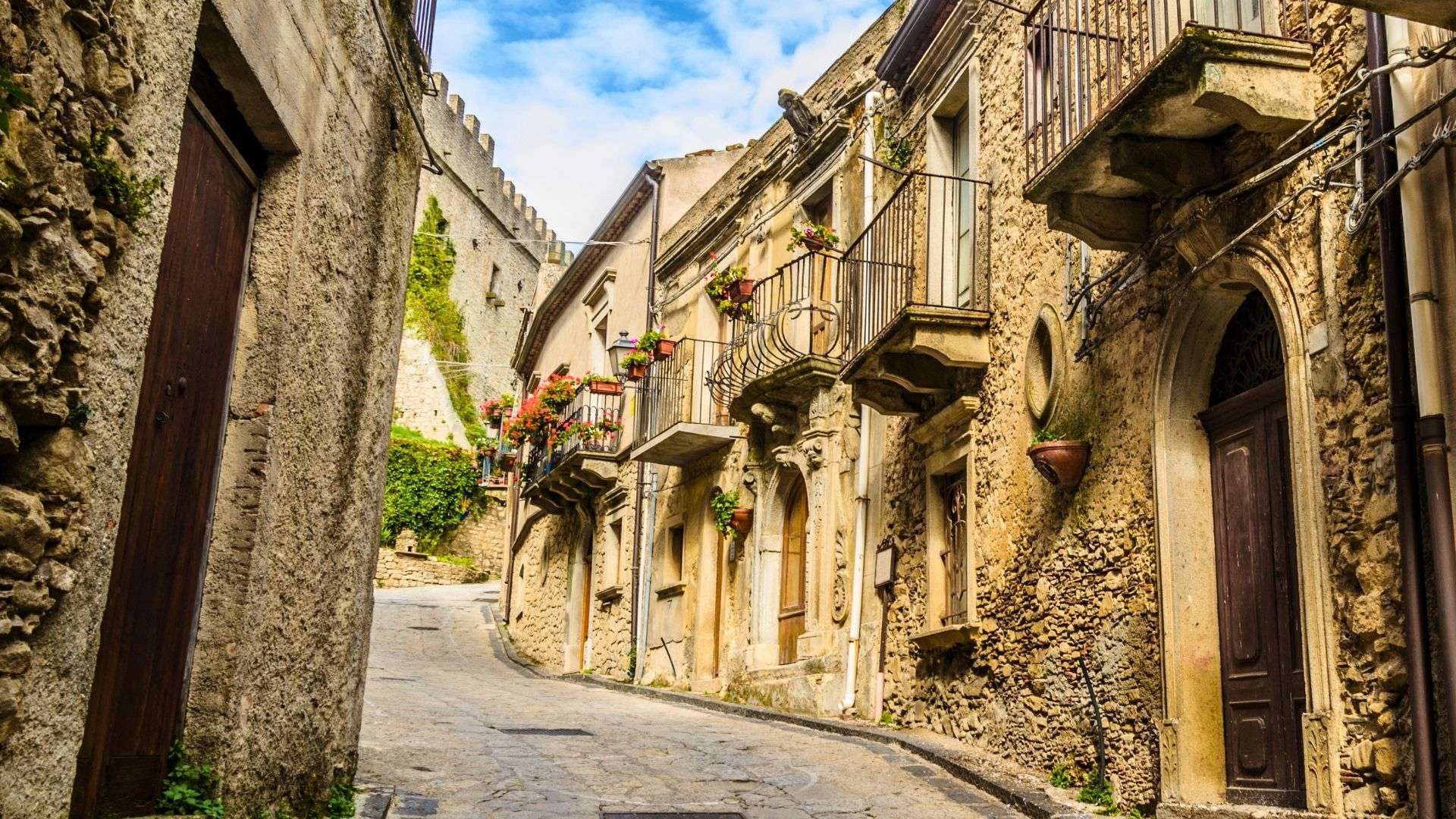
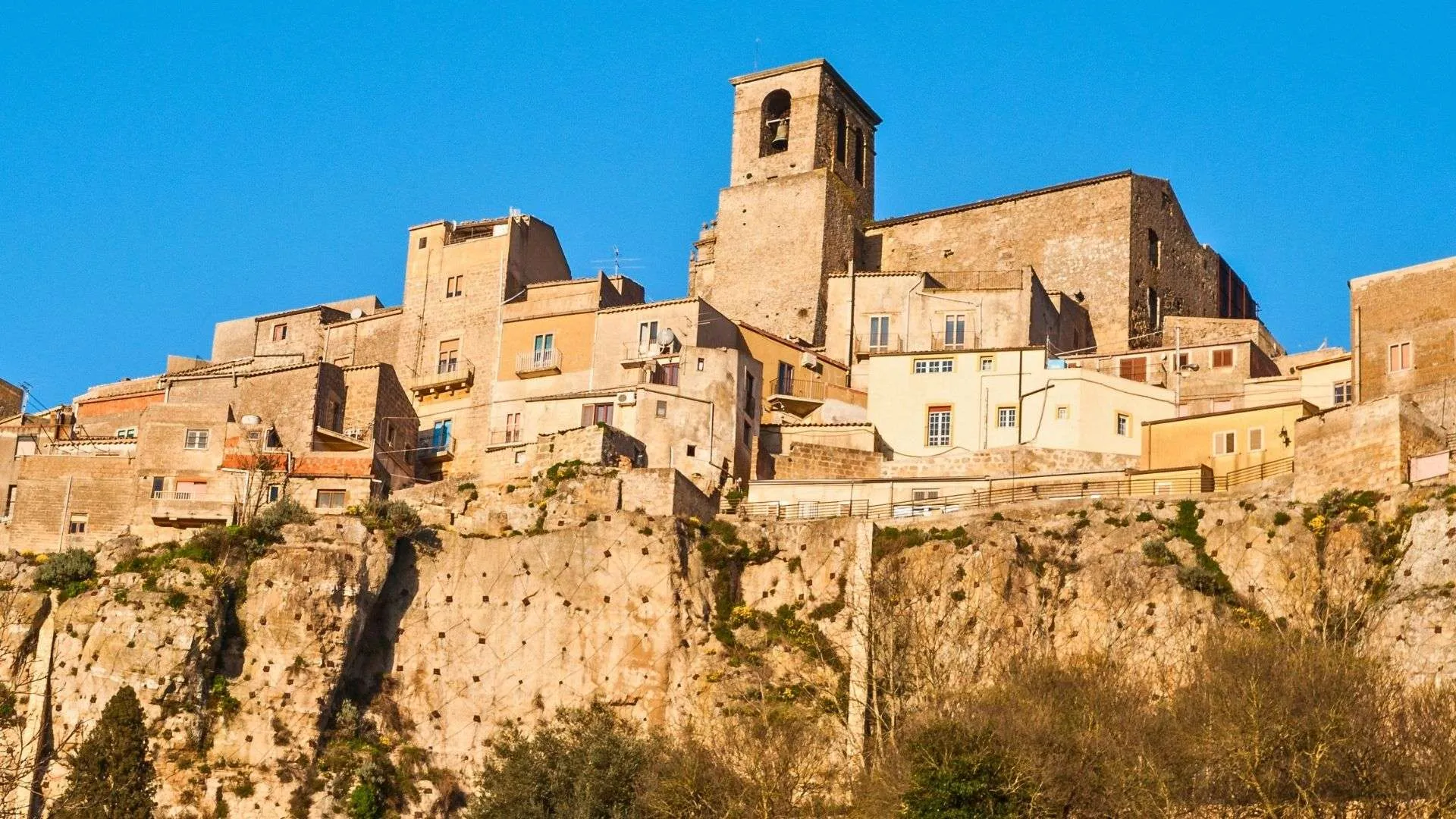
Petralia Soprana is its symbol. It sits at 1,147 metres, is the highest town in the Madonie, and in 2018 won RAI’s Borgo dei Borghi title as Italy’s most beautiful village. It has around 3,200 residents. Nearby, Gangi, Castelbuono and Polizzi Generosa tell a similar story. Further east, the Nebrodi add forests and villages such as Montalbano Elicona.
Prices here collapse: €702 per sqm in the Enna area, €627 in the Caltanissetta area. And this is where the two levers become concrete. The 7% flat tax applies in towns under 30,000 residents, which means almost all of them. The €1 houses, moreover, were born in exactly this Sicily.
Living at altitude does require a conscious choice. You need a car, more self-reliance, and the willingness to drive twenty minutes to a hospital. Those who accept it find real communities, and costs that are unthinkable elsewhere.
Nearby, one village tells this story better than any figure.
Are Sicily’s inland villages really repopulating?
Here honesty matters, because the easy story does not survive contact with the data. Inland towns are still losing people, and above all they are losing the young, who leave to study and work. Calling it a “repopulation” would be a simplification.
Something new is happening, though, and it deserves to be looked at without hype. Alongside those who leave, for the first time someone arrives: foreigners, returning Italians, families who buy a house and put it back together. The balance is often still negative. The direction, however, has cracked.
The most mature case is Mussomeli, in the Caltanissetta area. There the €1 houses project is no longer an experiment: it has a dedicated municipal office, handles more than 500 enquiries a year and has produced roughly 450 sales, with buyers from 18 countries. Annual visitors, meanwhile, have gone from 390 in 2015 to over 8,000.
Elsewhere the mechanism has started too. Sambuca di Sicilia moved to €3 house auctions, focused on its Saracen quarter. Cammarata, active since 2015, supports buyers through the local “Street To” association. Gangi, Salemi, Troina and Piazza Armerina complete the picture.
Read the phenomenon carefully, though. The symbolic price is only the start: the real cost is the renovation. The public notices also impose tight deadlines, because in Cammarata and Salemi work must begin within twelve months. The full picture is in our guide to €1 houses in Sicily.
How much does it cost to live in Sicily? House prices and rents by province
Sicily is not uniformly cheap, and that is the first thing to understand. Between inland provinces, provincial capitals and tourist coasts the differences are sharp.
According to idealista, in May 2026 the average asking price to buy was €1,028 per square metre, up 1.0% year on year. For rentals, in June 2026, the average was €8.8 per sqm a month, up 5.5% in a year. These are average asking prices, so use them as a compass, not as a verdict.
How much does it cost to buy a house in Sicily? Average prices by province (idealista, May 2026)
| Province | Average sale price €/sqm |
|---|---|
| Agrigento | €810 |
| Caltanissetta | €627 |
| Catania | €1,071 |
| Enna | €702 |
| Messina | €1,141 |
| Palermo | €1,196 |
| Ragusa | €829 |
| Siracusa | €1,047 |
| Trapani | €1,057 |
How much does it cost to rent in Sicily? Average rents by province (idealista, June 2026)
| Province | Average rent €/sqm per month |
|---|---|
| Agrigento | €8.0 |
| Caltanissetta | €5.7 |
| Catania | €9.0 |
| Enna | €5.9 |
| Messina | €9.2 |
| Palermo | €9.6 |
| Ragusa | €7.0 |
| Siracusa | €9.5 |
| Trapani | €7.4 |
How much does an 80 sqm apartment cost in Sicily? A simulation by province
| Province | Buy 80 sqm | Buy 140 sqm | Rent 80 sqm/month | Rent 140 sqm/month |
|---|---|---|---|---|
| Agrigento | €64,800 | €113,400 | €640 | €1,120 |
| Caltanissetta | €50,160 | €87,780 | €456 | €798 |
| Catania | €85,680 | €149,940 | €720 | €1,260 |
| Enna | €56,160 | €98,280 | €472 | €826 |
| Messina | €91,280 | €159,740 | €736 | €1,288 |
| Palermo | €95,680 | €167,440 | €768 | €1,344 |
| Ragusa | €66,320 | €116,060 | €560 | €980 |
| Siracusa | €83,760 | €146,580 | €760 | €1,330 |
| Trapani | €84,560 | €147,980 | €592 | €1,036 |
How much does daily life cost in Sicily?
| Household | Indicative monthly cost (excluding rent) |
|---|---|
| Single person | ~€800 |
| Couple | ~€1,300–1,450 |
| Family of four | ~€2,760–2,830 |
The comparison with the rest of the country is in our guide to the cost of living in Italy for foreigners. For the purchase itself, the practical steps are in how to buy a home in Italy from abroad, while finding the property and running due diligence is the core of the Property Finder service.
What tax breaks does Sicily offer to people who move there?
Sicily has no tax regime of its own. It is, however, the region where the national incentives bite hardest. The reason is simple: almost all of its municipalities meet the requirements.
The best-known lever is the 7% flat tax on foreign-source income. It applies to people who receive a foreign pension, have not been tax resident in Italy for the previous five years, and move their residence to a town in the South with fewer than 30,000 residents. It lasts ten tax years and replaces ordinary income tax (IRPEF).
Anyone bringing their own work to Sicily looks instead at the impatriate regime. In the version in force since 2024, it removes 50% of taxable income from IRPEF, up to €600,000 a year, for five years. That is not a detail: on employment or self-employment income, it halves the tax base.
There are also first-home purchase reliefs and building bonuses, which become decisive when you renovate a historic property. The full picture, with requirements and edge cases, is in our article on tax benefits in Sicily.
Case study: a British retiree buying a home in Petralia Soprana
A concrete example helps more than any argument. Take a British retiree with a private foreign pension of €80,000 a year.
He chooses Petralia Soprana, a town of around 3,200 residents, comfortably below the 30,000 threshold. He moves his residence, has not been tax resident in Italy for the past five years, and opts for the 7% flat tax on foreign-source income.
On that €80,000 he therefore pays €5,600 a year. Under ordinary Italian income tax he would pay roughly €26,600: 23% up to €28,000, 33% between €28,000 and €50,000, 43% above €50,000, plus regional and municipal surcharges. The middle band fell from 35% to 33% under the 2026 budget law (Law 199/2025), effective 1 January 2026. The gap is right around €21,000 a year, and the regime runs for ten tax years.
One caveat matters more than the arithmetic. The Italy-UK double tax treaty gives the United Kingdom exclusive taxing rights over government pensions, so the regime works on private pensions. Check that before you run any numbers.
On the property side, the inland figures are just as clear. At average local values, an 80 sqm apartment stays well under €60,000. Renovation, however, must be budgeted seriously: in a historic village it costs more than the purchase. The updated map of eligible towns is in our article on the municipalities eligible for the 7% flat tax.
How does healthcare work in Sicily for people who move there?
For anyone arriving at retirement age, healthcare is not a detail. It is one of the pillars of the decision, and it should be assessed before the house.
In Sicily the network is wide but uneven. Large cities have hospitals and specialists; small towns work well for everyday needs, yet require attention when the need becomes serious. So the right question is a concrete one: how far am I, in real time, from what I might need?
Residents with entitlement access the National Health Service (Servizio Sanitario Nazionale, SSN). Those without entitlement through work — for example holders of an Elective Residency Visa — can register voluntarily. The contribution is income-based, with a minimum of €2,000 a year. Private insurance is the alternative. The comparison is in our guide to healthcare in Italy for foreign retirees.
What is the climate really like in Sicily?
The climate seduces, but it is not uniform. Here too, three different Sicilies exist.
The south-eastern coast is the mildest: gentle winters, and outdoor life almost year-round. Inland Sicily, by contrast, is another story. Summer can be brutal, and winter is colder than most people expect. At altitude, on the Madonie, it snows properly.
Wind changes the equation as well. A ventilated area stays liveable in August; an enclosed old town, much less so. So visit Sicily out of season before you decide. October and February are the months that tell you the truth about a place.
How do you reach Sicily and get around? Airports and connections
Airports are not a technicality: they are quality of life. Especially for anyone keeping ties abroad.
Eastern Sicily revolves around Catania Fontanarossa, the island’s largest airport. In 2026 Air Canada runs a seasonal direct service to Montréal, while New York is served seasonally by Delta. Western Sicily has Palermo Falcone-Borsellino as its hub, with United flying to New York-Newark. Trapani-Birgi and Comiso complete the picture on domestic and European routes.
On the ground, though, we should be honest. The rail network is slow and uneven, so a car is almost always necessary. In Sicily, after all, distances are measured in time, not in kilometres.
How do you do business and build a network in Sicily?
Anyone arriving with a work project finds more than they expect. Sicily is not only tourism.
Agri-food is its engine: citrus, olive oil, ancient grains, Pachino tomatoes, Bronte pistachios. Wine is the most dynamic sector, and the Etna districts are now an international reference. Tourism, in turn, feeds hospitality, restaurants and services.
On innovation, Catania is the liveliest hub, with ISOLA and Le Village by CA. Palermo adds coworking spaces and a strong cultural scene. Anyone starting an innovative company can look at the Italy Startup Visa; anyone entering through capital will find the conditions in the Italy Golden Visa and in the Investor Entry pathway.
What are the real difficulties of living in Sicily?
An honest article cannot hide the other side. Sicily can be a happy choice, but it is not a light one.
The first difficulty is bureaucracy, which in some contexts is slower and more fragmented. The second is services, which are uneven: move a little away from the centres and logistics get complicated. The third is mobility, because without a car many areas become impractical.
Then there is a subtler point, and a decisive one: integration is not automatic. Sicily is welcoming, yet truly entering a place takes time and presence. Those who consume it as scenery stay on the surface; those who let it change them find a rare depth.
How to organise the move to Sicily, step by step
Method matters more than destination. So it is worth reversing the order almost everyone follows.
- Start with the structure of your life. How much you work, how close you need to be to services, how much autonomy you can carry.
- Then choose the area. The one that supports that life with the least friction, weighing healthcare, connections and real climate.
- Only at the end, the house. And it is almost always wiser to rent before you buy, because here the character of a place changes within a few kilometres.
One piece of advice beats all the others: try before you decide. Not a weekend, but a stay long enough to see ordinary life. The full sequence of steps is in our practical guide to moving to Italy; those living on passive income usually start from the Elective Residency Visa.
What is a year in Sicily like?
A place is not measured only by its cost of living. It is measured by the kind of year it offers, and in Sicily the year is full. Seasons here are not a backdrop: they set the rhythm, the food, the festivals and even the roads you can drive.
That is why it is worth looking at the whole calendar before deciding. A Sicilian year looks nothing like a London year, or a New York one.
Winter in Sicily: Sant’Agata, Carnival and snow on the Madonie
Sicilian winter is not what northern Europeans imagine. On the coast it is mild, and on many days you can still eat outside. Inland, however, it is genuinely cold.
On 3, 4 and 5 February Catania stops for Sant’Agata. It is one of the most attended religious festivals in the world, with the shrine carried on foot by devotees in white robes for more than twenty hours. This is not folklore for tourists: it is a city recognising itself.
In February, Acireale lights up the island’s most famous carnival, with flower-covered floats and masked groups. And while the sea is minutes away, snow falls on the Madonie: when the season holds, you can ski at Piano Battaglia, and on Etna the lifts at Nicolosi and Linguaglossa open with a view over the Mediterranean.
This is the contradiction that surprises newcomers. Within an hour’s drive you go from citrus groves to snow, and neither of them is a stage set.
Spring in Sicily: the Almond Blossom Festival, Holy Week and Noto’s Infiorata
Spring is probably the best season to live Sicily. Temperatures hold, the light is long, and places are not yet saturated.
In March, in Agrigento, the Almond Blossom Festival opens the season: almond trees bloom in front of the temples, and the city hosts folk groups from around the world. It is an old festival, born in the 1930s, and it remains one of the island’s identity markers.
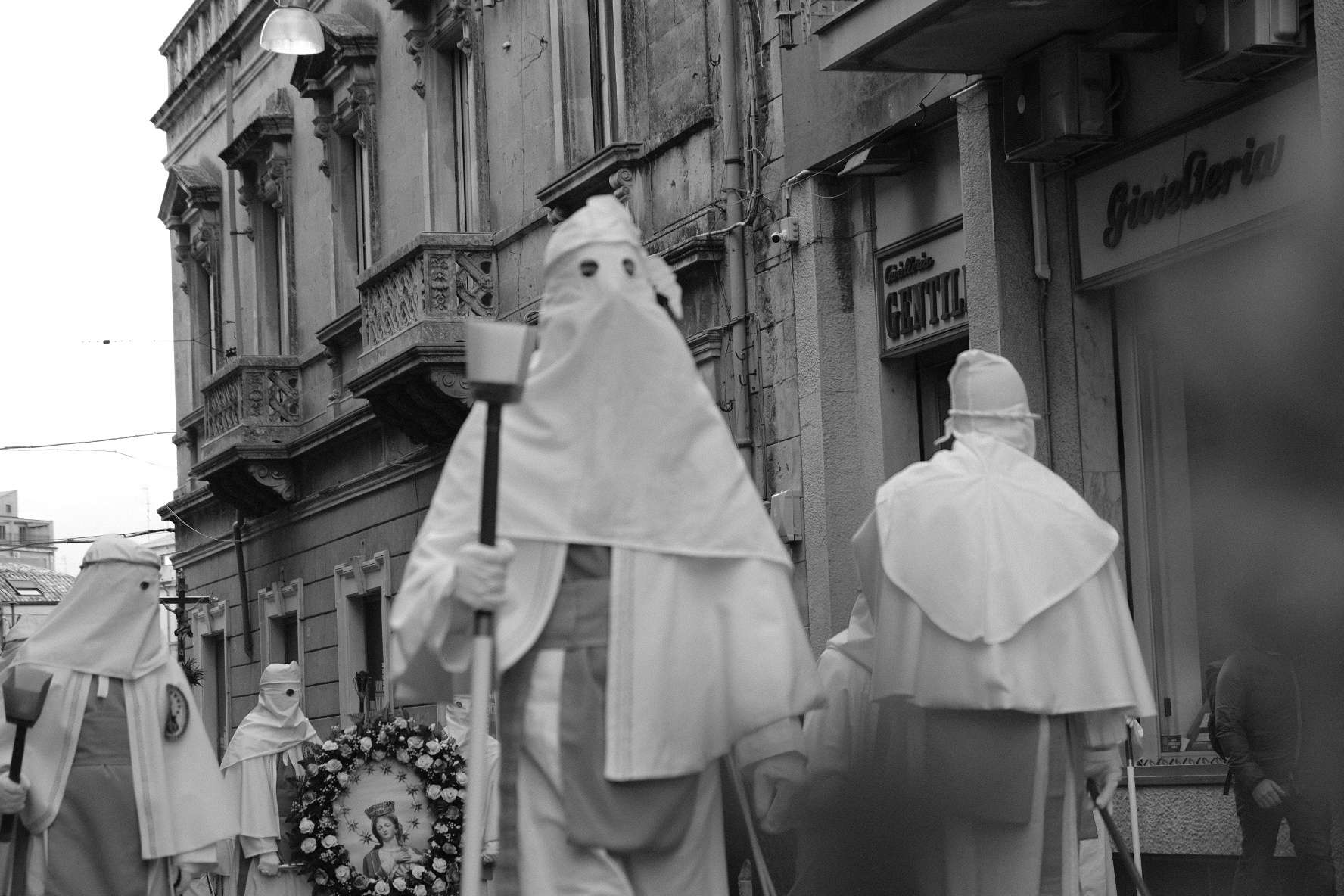
Then comes Holy Week, which in Sicily is not a liturgical parenthesis but the heart of the year. In Trapani the Procession of the Mysteries crosses the city for almost twenty-four hours, with sculpted groups carried by the craft guilds. In Enna, thousands of hooded confraternity members walk in a silence that strikes believers and non-believers alike. In Prizzi, the Dance of the Devils turns Easter into popular theatre.
In May, finally, Noto’s Infiorata turns Via Nicolaci into a carpet of flower petals. Between May and June, in Syracuse, the Classical Performances at the Greek Theatre return: ancient tragedy, in a 5th-century BC theatre, in front of thousands of spectators.
Summer in Sicily: Palermo’s Festino, Taormina and swimming into October
Summer must be described honestly, because it is the season that divides people. July and August bring strong heat, especially inland, and the coastal towns fill up. Residents usually reorganise the day: early morning, a long pause, and a very long evening.
On 14 and 15 July Palermo celebrates the Festino di Santa Rosalia, “u fistinu”, with the triumphal float climbing the Cassaro down to the sea. It is the island’s largest civic festival, and the city stays up all night.
In Taormina, meanwhile, the Ancient Theatre hosts the Film Fest and Taobuk, between cinema, music and literature, with Etna behind the stage. On the other side of the island, the Trapani coast offers the clearest water: Macari, San Vito Lo Capo, the Zingaro Nature Reserve, the Egadi Islands.
The good news, though, concerns the months that follow. In Sicily you swim into October, and September is often the perfect month: warm water, empty beaches, normal prices.
Autumn in Sicily: the Etna harvest, the Cous Cous Fest and the Day of the Dead
Autumn is the season almost no tourist sees, and the one every resident learns to love. The days stay warm, the island empties, and food takes centre stage.
On the slopes of Etna the grape harvest runs from September into October, often at altitude and on hand-worked terraces. This is when the Etna DOC districts open up, and wine stops being a label and becomes a job.
In September, in San Vito Lo Capo, the Cous Cous Fest arrives: ten days of cooking, contests between chefs from several countries, and concerts on the beach. In October, in Zafferana Etnea, the Ottobrata celebrates mushrooms, honey and chestnuts from Etna.
Then there is a date that explains Sicily better than most: 2 November. On the Day of the Dead it is the departed who bring presents to children, along with marzipan fruit and sugar figurines. It is sweet and disarming at once, and it describes a relationship with memory that is never merely sad.
In December, finally, the nativity scenes of Caltagirone and the living crib in the caves of Custonaci close the circle. The year begins again where it started: in a village, with people out in the street.
No single one of these events justifies a move. Together, however, they say something precise: here collective time still exists, and it has a calendar.
It is a difference you feel above all after the first year. When the festivals stop being a spectacle and simply become home.
What are the pros and cons of moving to Sicily?
The pros are real and measurable. More light, a less compressed life, and housing costs that remain accessible in most provinces. Add the 7% flat tax, a fierce local identity, and a relationship with time that has been lost almost everywhere else.
The cons deserve the same clarity. Slow bureaucracy, uneven services, difficult mobility and distances measured in hours. Some cities can feel chaotic to anyone arriving from a very orderly country.
Living in Sicily, then, is not difficult in absolute terms: it requires compatibility. If you need predictability and smooth logistics, it will feel exhausting. If you accept trading abstract convenience for space, identity and meaning, the balance changes.
Who is Sicily right for? Retirees, remote workers and Italians coming home
There is no single profile of the person who chooses Sicily. The shared question, though, is always the same: can this land carry my real life?
For retirees, Sicily is often a course correction. A mild climate, larger homes for the same budget, and a more human daily rhythm. The real issue, however, is not beauty: it is sustainability over time. Distance from a hospital counts, and so does the true cost of getting around. The wider picture is in our guides on retiring in Italy and on the best places to retire in Italy.
Considering the move as a retiree? The Silver Move path guides foreign and returning retirees: choosing the area, the Elective Residency Visa, healthcare registration and practical formalities.
For remote workers, Sicily usually enters the picture after more expensive destinations. It works when the basics hold: reliable connectivity, sensible travel and essential services. Catania offers the most solid ecosystem, Palermo the richest scene, and Ortigia the best human scale. The most suitable destinations are collected in our guide on where to live in Italy as a digital nomad.
Working remotely or bringing your profession to Italy? The Nomad Landing path follows those relocating with qualified work: the digital nomad visa or Elective Residency, residence setup and access to the inbound-workers regime.
For Italians coming home and for larger estates, Sicily offers two different routes. Those returning after years abroad find an island Italian enough not to feel foreign, and different enough not to feel like a step backwards; the natural lever is the impatriate tax regime. Those looking at historic homes and prime second properties think in terms of assets, and consider Investor Entry or Elite Residency.
Significant wealth, and you see Italy as residence and investment? Elite Residency structures the residence of large estates with the new-residents flat tax and Investor Entry pathways, handling every fiscal and asset step.
Conclusion
Sicily is not a universal answer: it is a precise one. It works well, but only for certain questions.
It works for people entering retirement who are not simply looking for a prettier place, but for a place to live better. It works for those coming back from abroad who want to put down roots, not retreat. And it works for remote workers who are tired of confusing freedom with saturation.
The difference between a successful move and one full of surprises is not the beauty of the island. It is the method: life first, then the area, and only then the house. And there is the lesson coming from the villages: in Sicily, value is not where everyone is looking, but where a territory is starting again.
- idealista — Sale price report, Sicily (May 2026 data).
- idealista — Rental price report, Sicily (June 2026 data).
- Agenzia delle Entrate — Optional regime for foreign pensioners, 7% flat tax (art. 24-ter TUIR).
- idealista/news — €1 houses in Sicily: villages and opportunities for 2026 (June 2026).
- Catania Airport — Destinations and intercontinental flights (2026 season).
- Numbeo — Cost of living in Catania and Palermo (crowdsourced data; February 2026).
Share on:
FAQ
Moving to Sicily is worth it for people who want low housing costs, a mild climate and a less compressed life, and who accept uneven services and long distances in exchange. According to idealista, in May 2026 the average asking price in Sicily was €1,028 per square metre. It is not worth it for anyone who needs fast logistics, efficient public transport and constant proximity to specialist hospitals.
According to idealista, in May 2026 the average asking price in Sicily was €1,028 per square metre. The most expensive province is Palermo at €1,196 per sqm; the cheapest is Caltanissetta at €627, followed by Enna (€702) and Ragusa (€829). An 80 sqm apartment therefore costs about €96,000 around Palermo and about €50,000 in the Caltanissetta area. Inland villages are cheaper still, but renovation costs more than the purchase.
There is no best area in absolute terms: it depends on the life you need to sustain. The Val di Noto — Syracuse, Ortigia, Noto, Ragusa, Modica — offers the best balance of beauty, services and prices. Catania is the most practical for working people, thanks to its airport and innovation ecosystem. Palermo gives urban and cultural density. The Madonie and Nebrodi suit anyone targeting the 7% flat tax.
Yes. Fibre broadband covers the provincial capitals and most medium-sized towns, while inland villages must be checked address by address. Catania hosts the strongest ecosystem, with the ISOLA innovation hub and Le Village by CA Sicilia, opened in October 2024. Palermo offers coworking spaces and a wide cultural scene, while Ortigia, in Syracuse, is the most liveable option. Non-EU citizens can consider Italy’s digital nomad visa.
The two main levers are national. The 7% flat tax on foreign-source income applies to foreign pensioners who have not been Italian tax residents in the previous five years and who move to a southern town with fewer than 30,000 residents; it lasts ten tax years. The impatriate regime, in the version in force since 2024, removes 50% of taxable income from IRPEF up to €600,000 a year, for five years.
The network is wide but uneven: provincial capitals have hospitals and specialists, while smaller towns offer less. Residents with entitlement access the National Health Service (SSN). Those without entitlement through work — for example holders of an Elective Residency Visa — can register voluntarily with an income-based contribution, with a minimum of €2,000 a year. Private health insurance is the alternative.
Catania Fontanarossa is the island’s largest airport and in 2026 offers a seasonal direct flight to Montréal with Air Canada, plus a seasonal Delta service to New York. Palermo Falcone-Borsellino is served by United to New York-Newark. Trapani-Birgi and Comiso complete the picture on domestic and European routes. On the ground, however, the rail network is slow: a car is almost always necessary.
It is almost always better to rent first, for at least six to twelve months. The character of a place changes within a few kilometres, and winter in an inland village is nothing like summer on the coast. According to idealista, in June 2026 the average rent in Sicily was €8.8 per sqm per month, with Palermo at €9.6 and Ragusa at €7.0. Buy straight away only if you already know the area.
No, and the difference is sharp. The south-eastern coast is the mildest, with gentle winters and outdoor life almost year-round. Inland, summers are very hot and winters colder than most people expect. The Madonie rise above 1,900 metres, snow every winter, and in good seasons you can ski at Piano Battaglia. Wind matters too: a ventilated area stays liveable in August, an enclosed old town much less so.
Yes, almost everywhere. The rail network covers the interior poorly and intercity buses run infrequently, so distances are measured in time, not kilometres. In the central districts of Palermo, Catania and Syracuse you can live without a car. In the villages of the Madonie, the Nebrodi or the Agrigento hinterland, a car is essential: for groceries, for the doctor and for reaching the airport.
In everyday life, yes. Inland villages are among the quietest places in Italy, and in the cities the usual precautions against petty theft apply, as in any urban area. The real difficulties for people relocating are of another kind: slow bureaucracy, uneven services and mobility. These are practical obstacles, not safety issues, and they should be weighed before choosing an area.
The offer is limited compared with central and northern Italy. International and bilingual schools are concentrated in Palermo and Catania, while in smaller provinces and villages the practical choice is the Italian state school. For families with school-age children this must be checked before choosing an area, together with the real distance to school: in Sicily twenty kilometres can mean forty minutes.