Siracusa combines the old town of Ortigia — a UNESCO island lived in for three thousand years — with a more practical, more affordable mainland. A single person spends around €1,240 a month; in Ortigia furnished rents run from €750 to €1,000 and buying often costs between €3,000 and €5,000 per square metre. It is the Sicilian province most in demand among foreign buyers.
What is it like to live in Ortigia, the island at the heart of Siracusa?
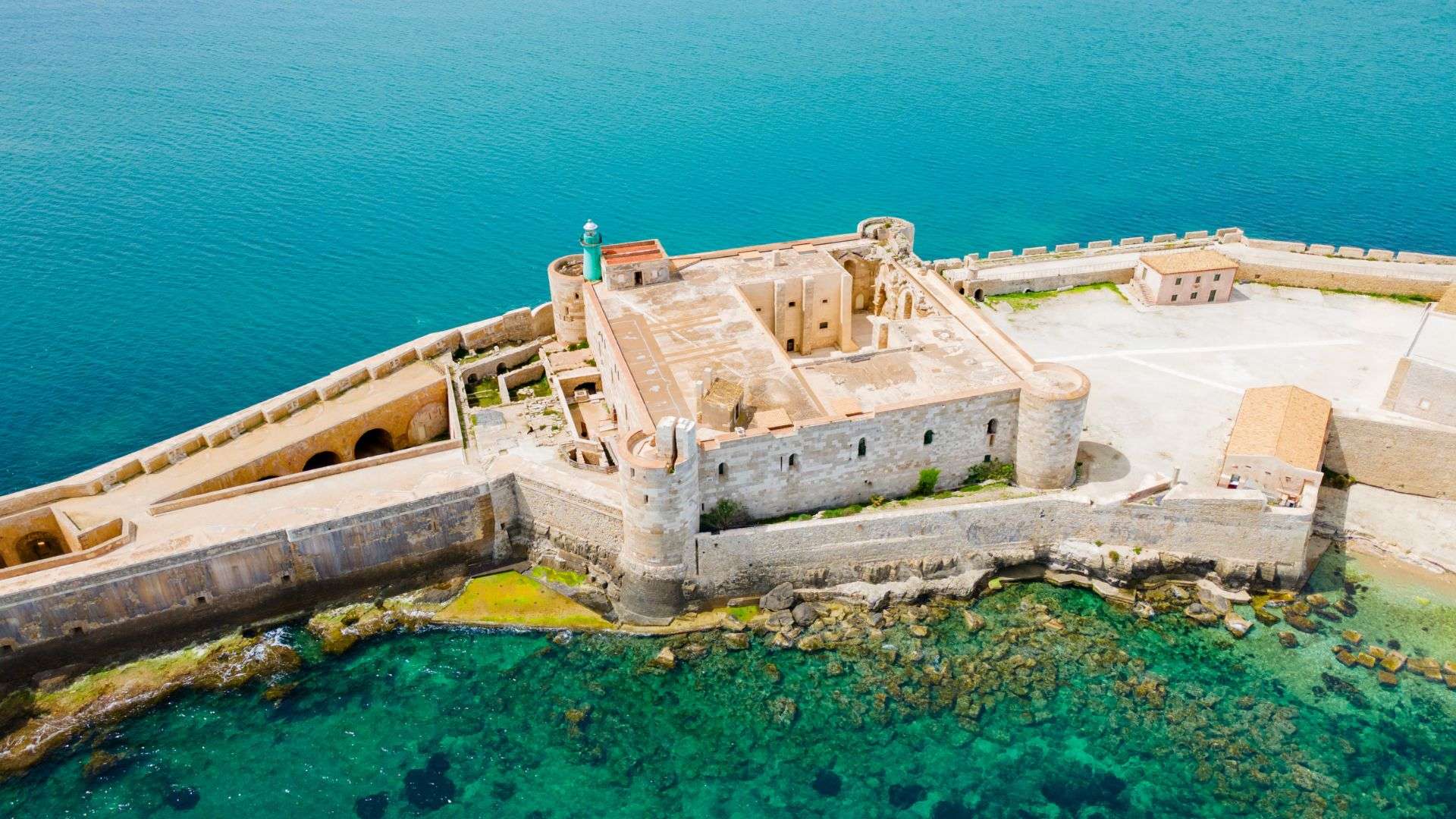
Ortigia is an island just over half a square kilometre, linked to the mainland by three bridges and inhabited without interruption for some three thousand years. You move on foot among Baroque alleys, palaces facing the water, and squares that smell of the market in the morning. Many areas are traffic-limited: here you leave the car outside and life returns to the scale of a footstep.
To live in Ortigia is to have the sea on every side and history underfoot. The Fountain of Arethusa, a pool of fresh water metres from the sea where papyrus grows wild, is tied to the myth of the nymph Arethusa; the Temple of Apollo, the oldest Doric temple in Sicily, opens the walk toward the cathedral. And the cathedral is perhaps the most powerful image of all: it was built inside the 5th-century-BC Temple of Athena, and the Greek Doric columns are still embedded in its walls. In a few hundred metres you cross three thousand years.
There is also a hidden treasure: the church of Santa Lucia alla Badia holds the Burial of Saint Lucy, the vast canvas Caravaggio painted in Siracusa in 1608, right after his dramatic escape from prison in Malta. Just nearby, the Giudecca — the ancient Jewish quarter, with its underground ritual bath — is the island’s most intimate and silent corner.
The flip side is cost and tourism: Ortigia is the priciest neighbourhood in Siracusa, and short-let pressure has partly emptied the centre of its long-standing residents. It’s a factor to weigh honestly before choosing to live there year-round.
Ortigia or the mainland: where should you live?
The choice is between living inside the postcard and living beside it. Ortigia offers absolute beauty and life on foot, but with the limits of a very touristy old town; within it, the Giudecca remains the most authentic quarter, lived in by residents and loved by those seeking quiet and community.
The mainland — areas like Umberto and the modern residential quarters — offers space, neighbourhood life and everyday services within reach: supermarkets, schools, the hospital. Many foreigners choose the mainland for daily life and keep Ortigia as the city’s drawing room, for evening strolls by the sea.
Greek Siracusa: Neapolis, the Greek Theatre and the Ear of Dionysius
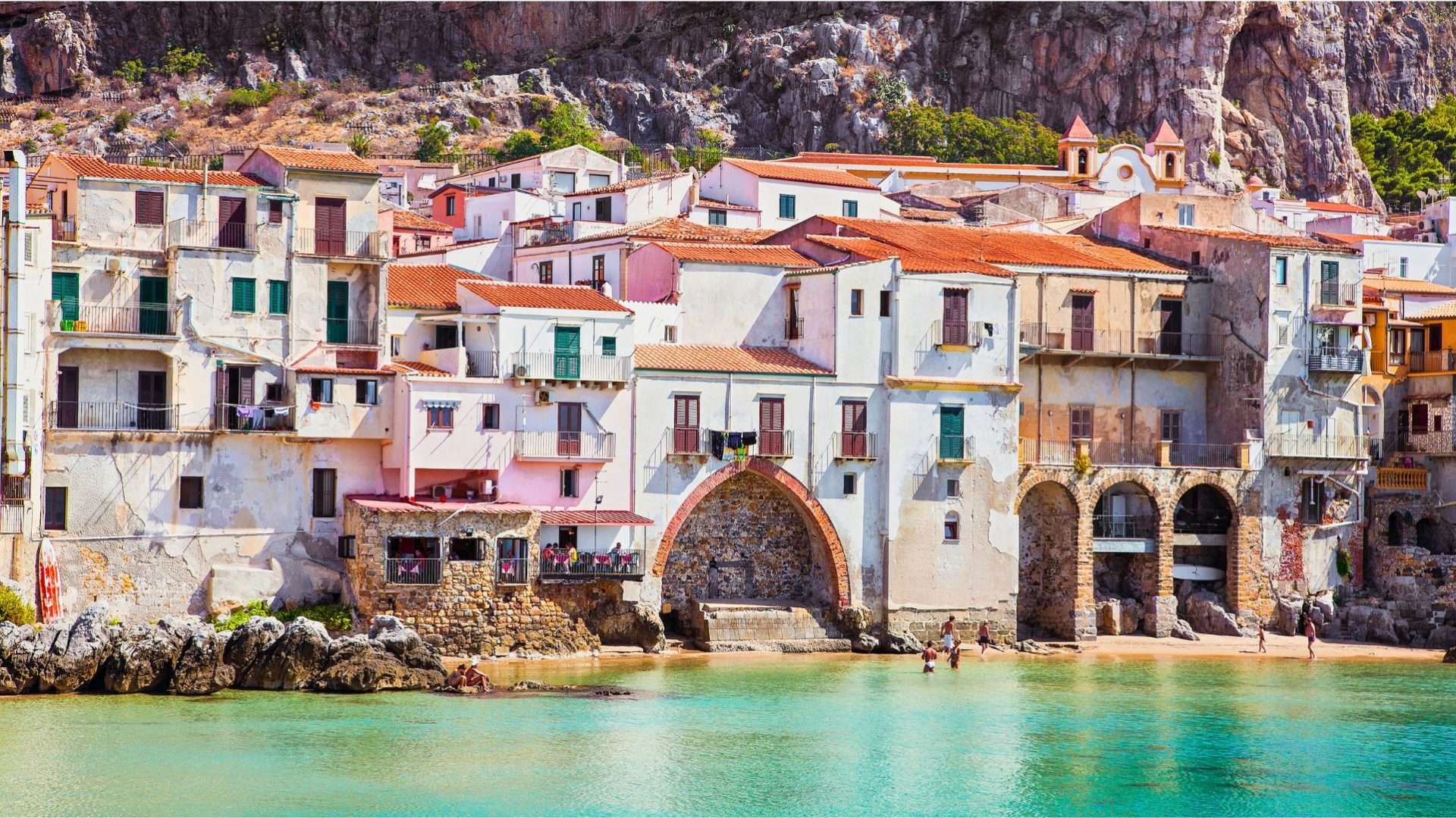
Those who move to Siracusa don’t live next to history: they live inside it. Founded by Archias’s Corinthians in 734 BC, the city was for centuries one of the most powerful of the ancient world, a rival to Athens and the birthplace of Archimedes, born here around 287 BC. That past is gathered in the Neapolis Archaeological Park, over 200,000 square metres a step from the centre.
Its heart is the Greek Theatre, carved into the rock in the 4th century BC and among the largest and best preserved of antiquity. It’s no ruin to look at: every spring and summer it hosts the Season of Classical Performances of the National Institute of Ancient Drama (INDA), which since 1914 has staged Greek tragedies and comedies under the stars — a cultural event of international draw. Beside it open the Ear of Dionysius, the cave of prodigious acoustics in the Latomia del Paradiso, the Roman amphitheatre and the ancient stone quarries, the latomie.
How much does it cost to live in Siracusa?
Let’s put the numbers on the table, honestly. Living in Siracusa has a real cost — Ortigia, in particular, is not cheap — but it’s the price of an everyday quality of life that’s hard to find elsewhere. A single person spends on average around €1,240 a month, with strong differences between the island and the mainland.
| Item | Siracusa (2025 estimate) | Notes |
|---|---|---|
| Ortigia rent (furnished) | €750-1,000/month | The priciest neighbourhood |
| Mainland rent | lower | Modern residential areas |
| Buying in Ortigia | often €3,000-5,000/m² | Giudecca slightly less |
| Cost of living (single) | ~€1,240/month | Indicative |
These are indicative average prices, “starting from”: they vary widely by area, condition and period, and change over time. Always check them for the specific property against the Revenue Agency’s OMI quotations and with a local professional.
For the comparison with Palermo, Catania and the other areas, our guide on the cost of living in Italy for foreigners lines up every item.
There’s also a tax lever a foreign retiree should know, with an important caveat. Article 24-ter of Italy’s Income Tax Code (TUIR) sets a 7% substitute tax on foreign-source income — pensions included — but only for those who move their residence to a southern town below a population threshold, raised to 30,000 from 7 April 2026 (Law no. 34/2026). Siracusa itself, with around 118,000 inhabitants, is excluded; many towns in the province qualify, however — from Floridia to Rosolini, from Palazzolo Acreide to Noto. Anyone aiming for this relief might look to a smaller town in the Siracusa area: the details are in our guide to tax benefits in Sicily, and it’s one of the things we handle in the Silver Move path.
Retiring abroad and want your move to Italy to be simple and secure? Silver Move guides you step by step, from residency to everyday life.
Why do Siracusa and Ortigia draw international buyers?
South-eastern Sicily is the epicentre of foreign property demand on the island, and Siracusa is one of its capitals. According to market analyses reported by the specialist press in 2026, the province of Siracusa accounts for around 30% of the international buyers of seaside homes in Sicily: the highest share on the island. Leading foreign demand for prestige homes in Italy are Americans (around 28%), ahead of the British (about 11%) and Germans (about 7%).
Ortigia is the focus of this interest: historic palaces over the water, restored and turned into homes or holiday houses. It’s beauty that becomes investment — with the flip side of rising prices and limited supply. For those after the right property without surprises, guided search makes the difference.
For many foreigners, buying in Ortigia is also an investment: they purchase to let, through the buy-to-let model and short-term rentals, much in demand in a city visited all year. It’s a real option, but one to weigh honestly: the same tourist demand that fuels yields cuts the supply for those wanting to live there full-time, and management takes time or a dedicated service. It’s worth assessing alongside how you plan to use the home — to live in, to rent, or both.
Looking for the right home in Ortigia or on the mainland? With Property Finder you find, assess and buy your property with dedicated support — no surprises.
Beyond the city: Avola, Palazzolo Acreide and a province that speaks to the world
Those who choose the Siracusa area don’t stop at Ortigia. The province is a mosaic of places that offer what many foreigners really seek: not the lowest price, but an authentic place to start again.
Avola, on the coast south of Siracusa, is an urban rarity: after the 1693 earthquake it was rebuilt down by the sea on a hexagonal plan, designed by the Jesuit architect Frate Angelo Italia around a great central square. Home of Nero d’Avola — the grape bears its name — and of the Avola almond, the prized Pizzuta variety known as the “queen of almonds”, Avola blends sea, Baroque and a food scene that’s already a reason to stay.
Up in the Iblei mountains lies Palazzolo Acreide, ancient Akrai, the first sub-colony founded by Siracusa in 664 BC. Its Greek theatre, set between sky and stone, is among the best preserved on the island; its Baroque centre, with the churches of San Paolo and San Sebastiano, earned it a place among the UNESCO Val di Noto towns and Italy’s most beautiful villages. It’s the kind of town where life is still on a human scale.
And there’s a treasure few know: about forty kilometres away, in the Anapo Valley, opens the rock necropolis of Pantalica, over five thousand tombs cut into the rock between the 13th and 7th centuries BC by a Sicel civilisation. Inscribed by UNESCO in the same listing as Siracusa and Ortigia, it’s a silent canyon of caves, paths and water: Sicily at its oldest and wildest, within a day trip.
For a wider look at the south-east — from Marzamemi to the Baroque towns inland — see our guides to buying a house in Sicily’s best villages and to the nearby Val di Noto, the Baroque heart that completes the picture of the Siracusa area.
Getting there and healthcare: reaching and being cared for in Siracusa
The reference airport is Catania-Fontanarossa, about 64 kilometres away: reached in 45-55 minutes by car or by a direct regional train in just over an hour. For those moving from the United States one detail counts: from Catania, Delta runs a year-round nonstop flight to New York (JFK).
On healthcare, the main hospital is Siracusa’s Umberto I, with Cardiology and a Coronary Intensive Care Unit, Oncology, Urology, Obstetrics and Gynaecology, Intensive Care and a notable Hyperbaric Medicine unit. Add to this access to the National Health Service, with low-cost public care for those who transfer their residence: we cover it in our guide to healthcare in Italy for foreign retirees.
What is daily life on the sea like, season by season?
In summer Siracusa lives by the sea, on long evenings and full squares; the beaches of Fontane Bianche, the Arenella and the Plemmirio marine reserve are minutes from the centre. But the truth of a city is learned in winter: in the cold season Ortigia empties of tourists and returns to its rhythms, with the residents’ bars, the morning market and a mild climate that allows seafront walks even in January.
Inside Ortigia you live on foot, and to reach the mainland and the coves a scooter is often handier than a car: it parks anywhere and makes the most of the mild climate for much of the year. Anyone arriving from abroad should factor in the seasonality — some tourist services close in winter — but it’s precisely in the low season that you learn whether a place can become home.
The market, the festivals and the community: everyday Siracusa
The authentic life of Siracusa is measured in the morning, at the Ortigia market: stalls of just-caught fish, cheeses, almonds and citrus, the chatter in dialect, residents stopping to talk. It’s here, more than in the monuments, that you learn whether a place can become home. Around it the old crafts endure — the papyrus workshops, for papyrus grows wild in Siracusa along the Ciane river — and a creative scene of artisans, artists and foreigners who chose the island to reinvent themselves.
The calendar sets the sense of belonging. On 13 December the city stops for Saint Lucy, its patron: the silver statue and the relics cross Ortigia on residents’ shoulders, from the cathedral to the church of Santa Lucia al Sepolcro, and in the streets people share the cuccìa, the sweet of boiled wheat with honey or ricotta. These are the rituals that turn a beautiful city into a community you belong to.
It’s not only a land of retirees. The same slowness the “silver” seek draws remote workers too: connectivity is good and Ortigia has coworking spaces — chiefly Impact Hub Siracusa, set in a restored historic building near the sea — plus cafés where you can work with the sea outside the window. For a professional free to choose where to live, it’s the place where work slows down and the day fills with meaning.
Work remotely and want to move to Italy without red-tape headaches? Nomad Landing handles the visa, residency and first steps, so you can focus on your new life.
What does Siracusa lack? Honest pros and cons
The pros are obvious: sea everywhere, one of Italy’s most beautiful historic centres, a relaxed pace, a mild climate and a genuine, unhurried quality of life. The cons need saying plainly: housing supply is limited and new construction almost absent, which makes finding a home at the right moment hard; short-let pressure has cut availability for those wanting to stay long-term; local work is limited, so Siracusa is ideal for retirees and remote workers, less so for those seeking a job on site.
In 1608 Caravaggio, fleeing Malta where he had been imprisoned, landed in Siracusa and within weeks painted the Burial of Saint Lucy, over four metres of canvas for the city’s patron saint. It’s still here, and seeing it in person — a few steps from home — is one of the quiet privileges of living in Ortigia.
Conclusion
Siracusa is the Sicily of those who want to live on the water and with the water. Ortigia gives a rare everyday beauty, but should be chosen with open eyes on tourism and on the housing market; the mainland and the towns of the province — from Avola to Palazzolo Acreide — offer other doors into the same land. It’s a place that rewards those who arrive wanting to rebuild their life more than to spend less: for a retiree or a remote professional, few places in Italy offer the same daily relationship with the sea, with history and with a more authentic idea of oneself.
- UNESCO World Heritage Centre — Syracuse and the Rocky Necropolis of Pantalica, inscribed 2005.
- Archaeological Park of Siracusa — Neapolis, the Greek Theatre, the Ear of Dionysius and Akrai.
- INDA Foundation — season of classical performances at the Greek Theatre.
- ASP Siracusa — Umberto I Hospital and health services.
- Catania-Fontanarossa Airport — connections and intercontinental flights.
- Italian Revenue Agency — OMI — property quotations by zone.
- ISTAT — resident population by municipality (1 January 2026).
Condividi su:
FAQ
Ortigia is stunning but it’s the priciest neighbourhood in Siracusa and very touristy, with strong short-let pressure. To live there year-round you should weigh the cost; many choose the mainland for daily life and Ortigia for evenings.
A single person spends on average around €1,240 a month. Ortigia rents run from about €750 to €1,000; the mainland is more contained. It’s pricier than the Val di Noto but of a different order of beauty.
Not to the city of Siracusa: with around 118,000 inhabitants it exceeds the 30,000 threshold required by the relief (art. 24-ter TUIR). Many towns in the province do qualify, though — from Noto to Floridia to Rosolini; Avola, with more than 30,000 inhabitants, does not. It should always be checked case by case with the Italian Revenue Agency.
Very much so: the province of Siracusa accounts for around 30% of the international buyers of seaside homes in Sicily, the highest share on the island. Ortigia in particular draws restorations and prestige homes.
Catania-Fontanarossa airport is about 64 kilometres away: 45-55 minutes by car or a direct regional train in just over an hour. From Catania, Delta also runs a year-round nonstop flight to New York (JFK).
Yes, the main hospital is Umberto I, with cardiology and coronary intensive care, oncology, urology, obstetrics, intensive care and hyperbaric medicine. Those who transfer residence gain access to the National Health Service.
Inside Ortigia you live on foot and many areas are traffic-limited. For the mainland, supermarkets and beaches you need transport: many residents prefer a scooter, handy for parking and climate.