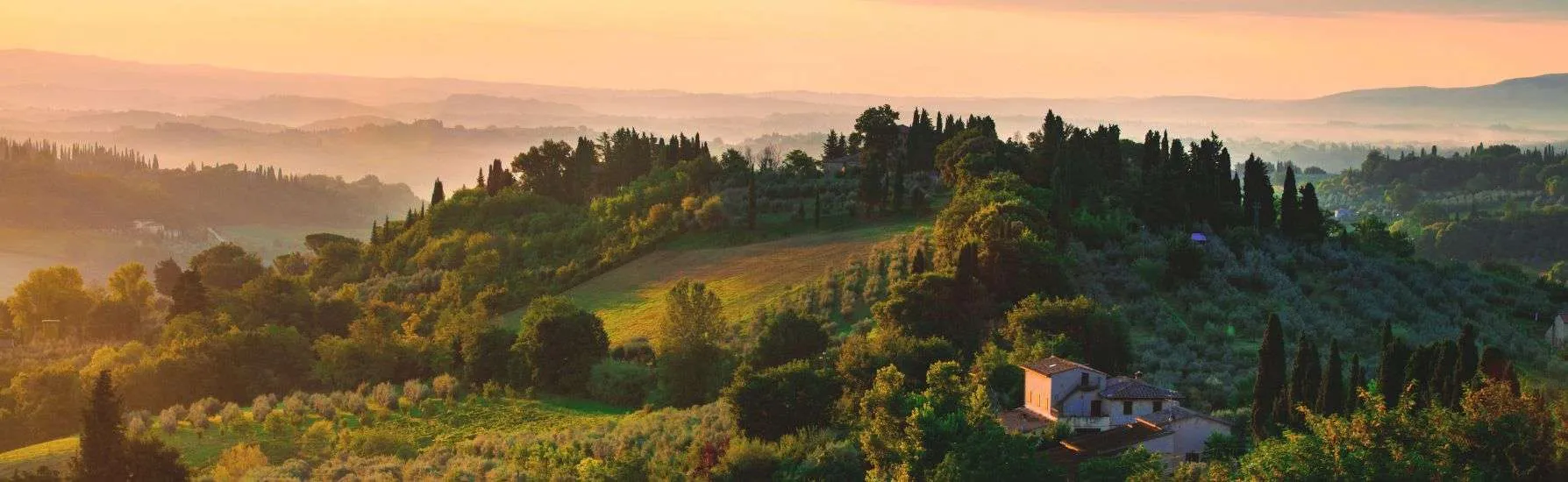
Taormina is Sicily’s most glamorous town, suspended over the Ionian Sea with a view of Etna, and the island’s most expensive: a couple should budget on average €1,800-2,500 a month. Nearby Giardini Naxos is the practical base for everyday life by the sea, while Acireale and the Riviera dei Ciclopi offer the same coast at more human prices. The international community is strong, the seasonality too.
What is it like to live in Taormina year-round, beyond the tourist season?
Taormina is a town suspended on a rock terrace two hundred metres above the sea, its ancient Greek Theatre framing Etna and the bay. It’s beautiful and it knows it: for over a century it has drawn writers, artists and travellers from around the world, and today a stable international community.
Living there year-round is different from a holiday. In high season the town is crowded and prices climb; in winter it empties, and those who stay discover a more intimate Taormina of strolls along Corso Umberto and a mild climate. It’s a life of great beauty, but it must be said honestly: it’s the most expensive area in Sicily, and some services follow the rhythm of tourism.
And there’s one more step above Taormina: Castelmola, a tiny medieval village at 529 metres, one of Italy’s most beautiful. From its viewpoints the eye takes in the Ionian Sea, Etna and, on clear days, the Calabrian coast; at the top stand the Norman walls of the Castle of Mola. It’s where Taormina locals escape when the town fills up — if only for a glass of almond wine at the historic Bar Turrisi.
Five habits that become everyday life in Taormina
Living in Taormina means turning into daily habits five things that elsewhere would be holiday treats. You get used to climbing to the Ancient Theatre at sunset, when the Greek-Roman theatre frames Etna and the Ionian bay; to going down to the sea at Isola Bella and Mazzarò, minutes from the centre by cable car; to the aperitivo along Corso Umberto and on the panoramic terrace of Piazza IX Aprile, the town’s social drawing room. And you learn that Etna, Europe’s tallest active volcano, is about an hour away: crater hikes, wineries on the lava slopes and, in winter, snow.
But above all you live in a town that stays an international stage all year. In June the Taormina Film Fest — one of Italy’s oldest film festivals, founded in 1955 in Messina and based permanently in Taormina since 1971 — brings the red carpet to the Ancient Theatre and, with it, international stars: the 71st edition ran 10-14 June 2025, directed by Tiziana Rocca. A few days later comes Taobuk, the Taormina International Book Festival founded in 2011 and directed by Antonella Ferrara, which fills the town’s landmark venues with writers, philosophers and artists from around the world: the 16th edition runs 18-22 June 2026, on the theme “Trust”.
Taormina or Giardini Naxos: where should you actually live?
Many who dream of Taormina end up living in Giardini Naxos, five kilometres below, on the same bay. It’s not a postcard village but a real seaside town, used as a practical base for daily life: compact, walkable along the seafront, about forty-five minutes from Catania airport. It offers the same sea as Taormina at more affordable prices and with services open all year.
The choice, essentially, is between Taormina’s prestige and scenery and Giardini Naxos’s everyday practicality. Those seeking real life on the coast, rather than a prestigious address, often choose the latter.
There’s also a historical reason to love Giardini Naxos: this is where Greek Sicily began. On the Capo Schisò headland, Naxos was founded in 734 BC — the first Greek colony on the island, established by Chalcidians from Euboea and destroyed in 403 BC by Dionysius I of Syracuse. Its remains — fortification walls, streets, sanctuaries — can be visited today in the Naxos Archaeological Park. To live here is to have the sea, the services and nearly twenty-seven centuries of history on your doorstep.
Those choosing Taormina for a property investment or second residence get tailored support through our Elite Residency service.
How much does it cost to live on the Ionian coast?
Taormina is the island’s priciest tier: a couple should budget on average €1,800-2,500 a month, with rents that can climb sharply in high season. Moving down the coast, prices become more human.
| Area | Character | Cost |
|---|---|---|
| Taormina | glamorous, panoramic | the island's highest |
| Giardini Naxos | practical seaside town | more affordable |
| Acireale / Riviera dei Ciclopi | Baroque and sea near Catania | cheaper |
For the full picture of Sicilian budgets, our guide on the cost of living in Italy for foreigners helps map out the expenses. Those who want to stay on the Ionian coast on a tighter budget find the best value in the alternatives south of Taormina.
For a retiree arriving from abroad there’s also a tax lever that can change the maths. Article 24-ter of Italy’s Income Tax Code (TUIR) sets a 7% substitute tax on foreign-source income — pensions included — for those who move their residence to a southern Italian town below a population threshold. From 7 April 2026, under Law no. 34/2026, that threshold rose from 20,000 to 30,000 inhabitants, so Taormina, Giardini Naxos and the coastal and inland villages qualify, while larger cities such as Acireale do not. The relief covers the tax year of the move plus the following nine, ten years in total (Article 24-ter, paragraphs 4 and 5, TUIR). It should be checked case by case with the Italian Revenue Agency: we cover it in our guide to tax benefits in Sicily, and it’s one of the things we handle in the Silver Move path.
Retiring abroad and want your move to Italy to be simple and secure? Silver Move guides you step by step, from residency to everyday life.
What international community is there in Taormina?
Taormina has one of the strongest and oldest international presences in Sicily. From Goethe to D.H. Lawrence, from Truman Capote to film stars, the town has been a cosmopolitan refuge for over a century, and that vocation endures: English is widely spoken, networks of foreign residents exist, and services aimed at an international clientele are the norm. For anyone fearing the linguistic and cultural isolation of a move to Sicily, Taormina is the island’s “softest” destination — which is part of why it’s the priciest.
Getting there and healthcare: reaching and being cared for on the Ionian coast
A practical question for anyone arriving from afar is how easy it is to reach Taormina — and to be cared for once there. The reference airport is Catania-Fontanarossa, about forty kilometres away: roughly 45 minutes by car on the A18 motorway, or an hour by regional train to the Taormina-Giardini station, served by some twenty trains a day. For those moving from the United States one detail matters: Delta runs a year-round nonstop flight between Catania and New York (JFK) — a rare intercontinental link for an airport of this size.
On healthcare, the Ionian coast is no backwater. The San Vincenzo Hospital in Taormina is a recognised centre of excellence: its hemodynamics unit is among the best in Sicily for the timely treatment of heart attacks, its cardiac surgery performs highly specialised operations, and its Pediatric Hemato-Oncology Centre is a reference point for all of eastern Sicily. Add to this access to the National Health Service, with low-cost public care for those who transfer their residence: we cover it in our guide to healthcare in Italy for foreign retirees.
Living in Acireale: Baroque, thermal baths and Carnival by the sea
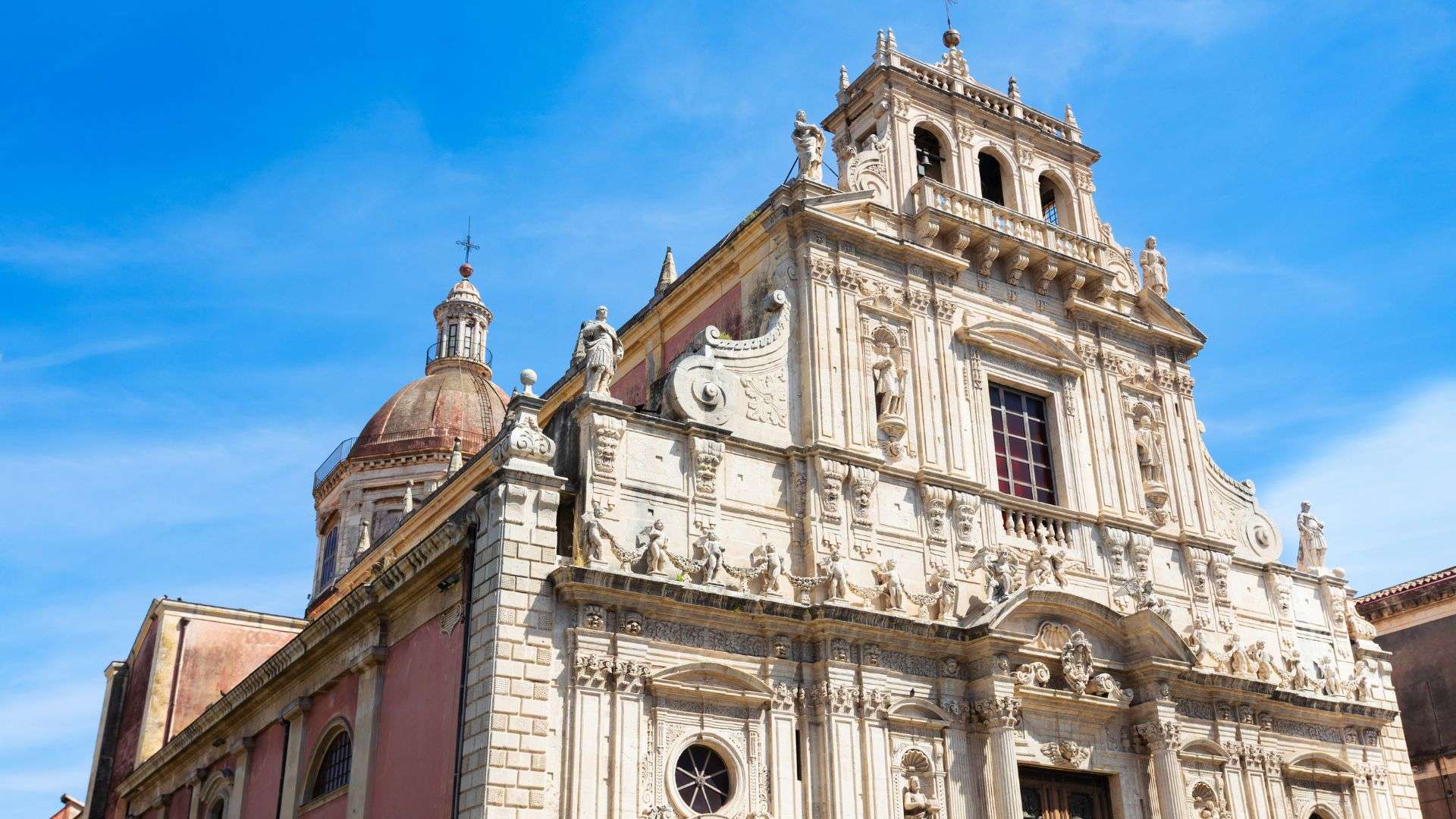
Heading down the coast toward Catania, Acireale is the largest and liveliest of the alternatives to Taormina: a Baroque city of around 50,000 people built on a lava plateau over the Ionian. Rebuilt after the 1693 earthquake, it belongs to the same late-Baroque Val di Noto cluster inscribed by UNESCO in 2002, and is nicknamed the “city of a hundred bell towers” for its dense weave of churches: the Cathedral of Maria Santissima Annunziata, the Basilica of Santi Pietro e Paolo and, above all, the Basilica of San Sebastiano, a Baroque masterpiece with frescoes by Paolo Vasta.
Two things make Acireale appealing for newcomers. The first is wellness: its sulphur springs, used since antiquity, still feed the Terme di Santa Venera. The second is nature dropping straight to the sea: the La Timpa nature reserve, a lava-rock headland about 80 metres high, descends from the centre to the little marina of Santa Maria La Scala, a fishing hamlet of seafood trattorias.
Then there’s the event that stops the city: the Carnival of Acireale, with its papier-mâché floats, is recognised by Italy’s Ministry of Tourism as an event of national interest and counted among the country’s finest, with roots some trace to the 16th century. To live here is to have a complete, authentic city, with Catania’s services about fifteen kilometres away, at costs well below Taormina.
The Riviera dei Ciclopi: Aci Castello and Aci Trezza
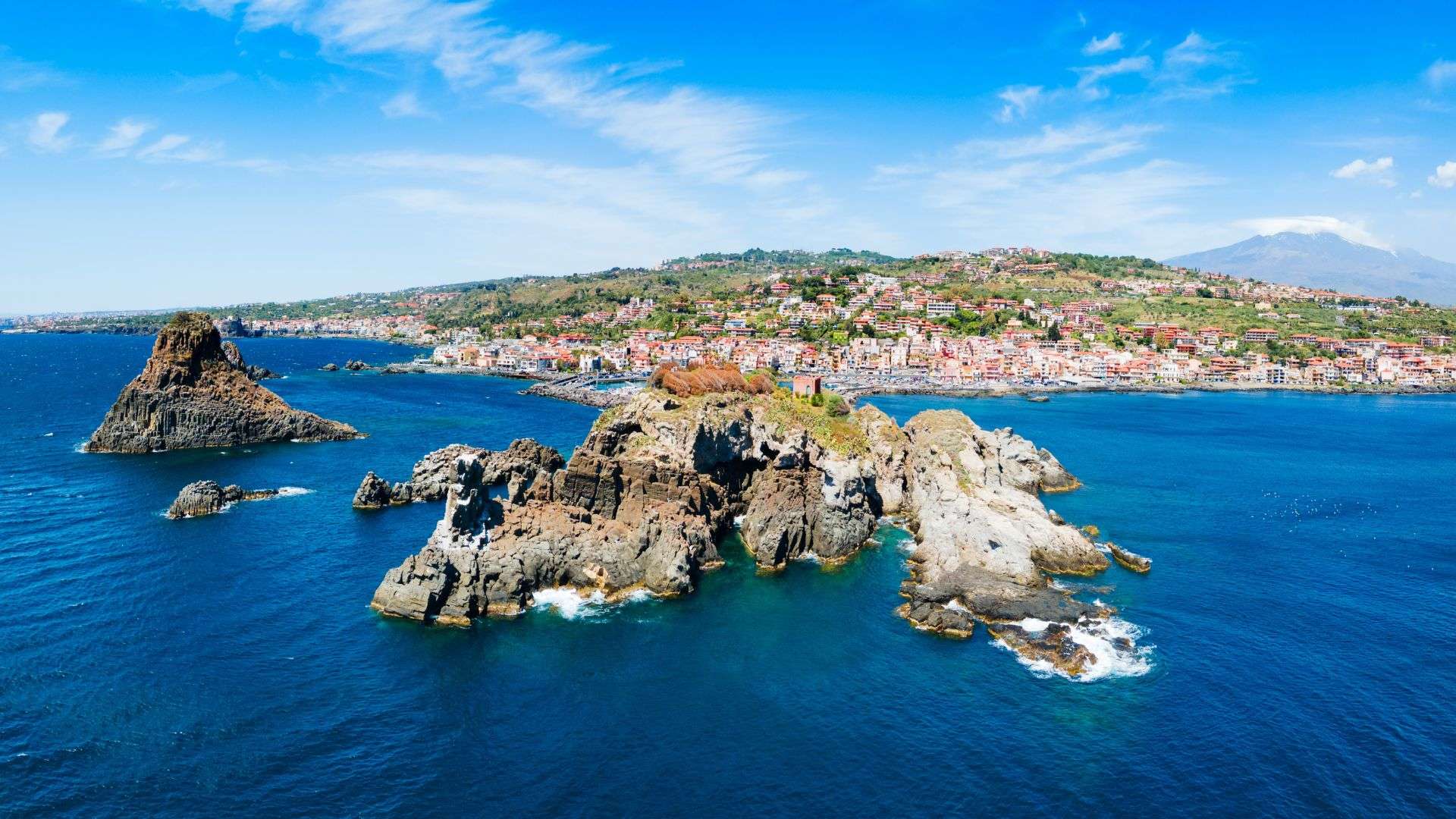
A little further south, the Riviera dei Ciclopi puts the sea about ten kilometres from Catania. At Aci Castello a Norman castle of lava stone looms over the water; at Aci Trezza, a fishing village, the Faraglioni dei Ciclopi — eight basalt stacks rising from the sea — are tied to the myth of Polyphemus, who hurled them at the fleeing Ulysses. It was here that Giovanni Verga set I Malavoglia: the same coast that today draws those seeking seaside life a step from city services, at prices far from Taormina’s.
Our Property Finder service helps identify and evaluate the right property along the Ionian coast, from Taormina to Acireale.
Inland: the Godfather villages, Savoca and Forza d’Agrò
Above the Ionian coast, in the hills of the Messina hinterland, two villages deserve a chapter of their own — including for anyone looking for a home away from Taormina’s prices.
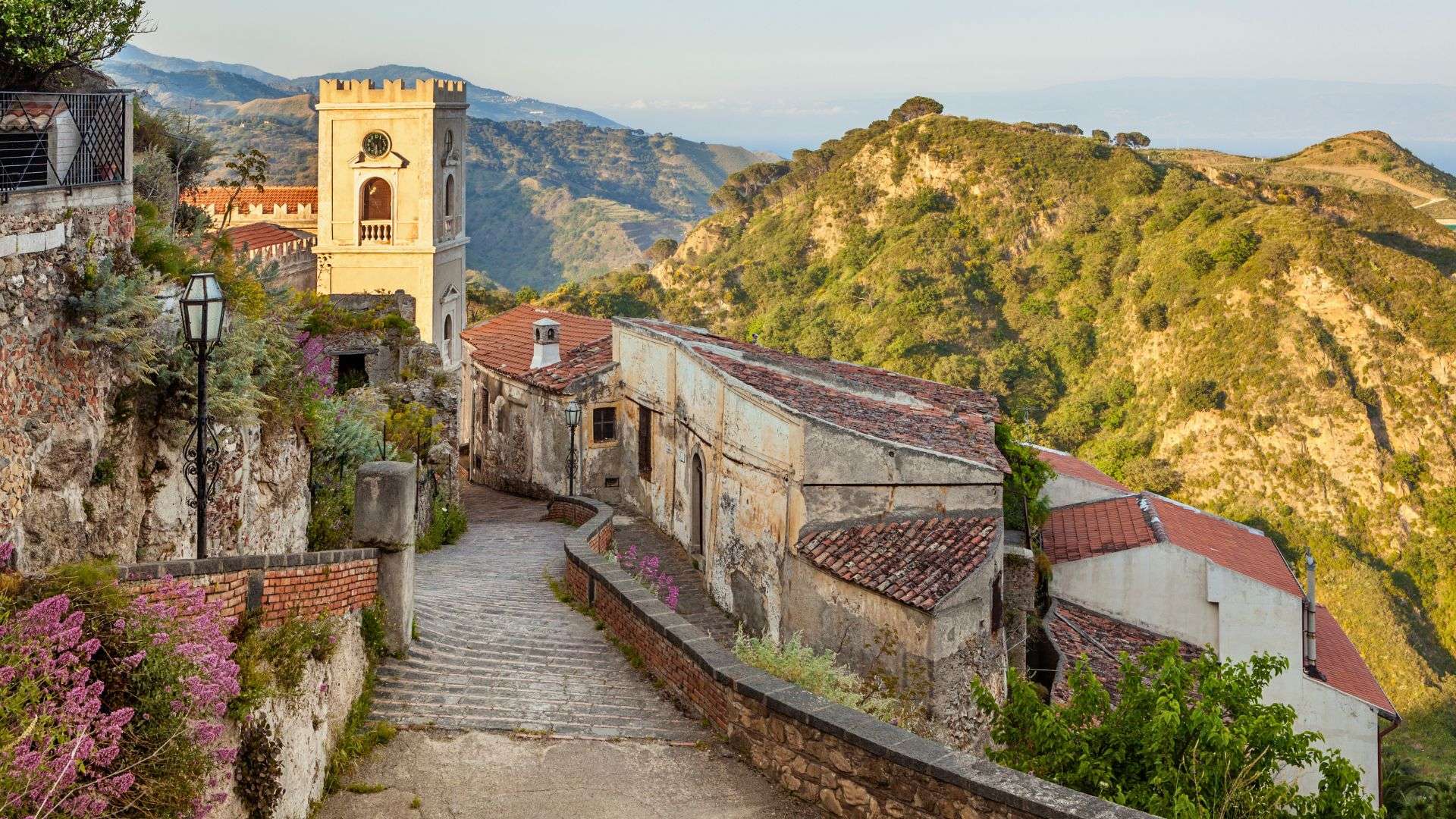
Savoca is the village Francis Ford Coppola chose in 1972 for some of the Sicilian scenes of The Godfather. Bar Vitelli, carved out of an old homestead, is where Michael Corleone asks Apollonia’s father for her hand: it’s still open, keeps film photos and memorabilia, and serves a famous lemon granita. Just above, the Church of San Nicolò — also known as Santa Lucia — is the one from Michael and Apollonia’s wedding. At Savoca a cinephile pilgrimage has run for half a century, alongside a rural Sicily that has stayed intact.
Forza d’Agrò, perched at 420 metres on a terrace over the Ionian, was also a set for the Corleone saga from 1971, with its Norman castle and the church of the Santissima Annunziata. It’s a tiny village — around 900 inhabitants, against nearly 2,000 at its 17th-century peak — and that depopulation, common to many inland towns, now opens interesting property opportunities for anyone after a home in an authentic village. Helped by the Godfather fame, recent years have seen hospitality geared to an international clientele grow alongside the fresh-fish trattorias that remain the village’s heart. If you’re weighing a home to restore in a village, see our guide to houses for sale in Sicily’s best villages.
Conclusion
The Ionian coast is the Sicily of panoramic sea and international vocation. Taormina is its symbol — stunning, cosmopolitan, expensive — but not the only path: Giardini Naxos offers the same bay on an everyday scale, and further south Acireale and the Riviera dei Ciclopi give the sea at human prices, close to Catania’s services. The right question isn’t “can I afford Taormina?” but “how much does the address matter to me, compared with the sea in front of me?”.
In 2022 Taormina returned to the world’s spotlight as the set of the second season of The White Lotus. The show’s resort is the San Domenico Palace, a former 14th-century convent now a luxury hotel above the Ionian Sea, and the “White Lotus effect” revived tourism and international interest across the whole Ionian coast.
- Naxos Taormina Archaeological Park — Ancient Theatre, Isola Bella and Naxos, Sicily’s first Greek colony (734 BC).
- Taormina Film Fest — Editions and programme (71st edition, June 2025).
- Taobuk — Taormina International Book Festival, editions and programme (16th edition, June 2026).
- Catania-Fontanarossa Airport — Destinations and connections (2026 season).
- Italian Revenue Agency — Optional regime for foreign retirees, 7% substitute tax (art. 24-ter TUIR).
- ISTAT — Resident population by municipality (1 January 2026).
Share:
FAQ
Yes, and in winter the town is more intimate and quiet. Bear in mind it’s the most expensive area in Sicily and that some services follow tourist seasonality. Many choose it for the beauty and the international community.
Taormina is the island’s priciest tier: a couple should budget on average €1,800-2,500 a month, with rents rising in high season. The alternatives on the Ionian coast cost noticeably less.
Taormina offers prestige and scenery; Giardini Naxos, five kilometres below on the same bay, offers everyday practicality and lower prices, with services open all year. For real life on the coast many choose Giardini Naxos.
Yes. Heading toward Catania, Acireale (Baroque, on the sea) and the Riviera dei Ciclopi (Aci Castello, Aci Trezza) offer seaside life at far more affordable prices and close to city services.
Yes, among the strongest and oldest in Sicily. English is widely spoken, networks of foreign residents exist, and services for an international clientele are the norm. It’s the island’s “softest” destination for those fearing linguistic isolation.
In the villages of Savoca and Forza d’Agrò, in the Messina hinterland above the Ionian coast, chosen by Coppola for the saga’s Sicilian scenes. At Savoca you can visit Bar Vitelli and the church of Michael Corleone’s wedding; Forza d’Agrò keeps its Norman castle and an intact historic centre, with affordable property prices.
Catania-Fontanarossa airport is about forty kilometres away: roughly 45 minutes by car on the A18 motorway, or an hour by regional train to the Taormina-Giardini station, served by some twenty trains a day. From Catania, Delta also runs a year-round nonstop flight to New York (JFK).
Yes. The San Vincenzo Hospital in Taormina is a centre of excellence, particularly for hemodynamics, cardiac surgery and pediatric hemato-oncology, with an emergency department and the main wards. Those who transfer residence gain access to the National Health Service and good-quality public care at low cost.