Western Sicily: What Life Is Like in Trapani, Erice and Marsala

The western corner of Sicily — Trapani, Erice, Marsala, San Vito Lo Capo and the Egadi — is the part of the island that faces Africa most closely. Crystalline sea, salt pans and windmills, medieval hill towns and wine: a slow pace and one of the lowest costs of living, for those seeking authenticity.

This article covers:

This article covers:

Make us your preferred source on Google
IN BRIEF

Western Sicily isn’t a city with a hinterland: it’s one continuous coast running from the salt pans of Marsala to the Gulf of Castellammare, with Trapani as the hinge, Erice suspended above it and the Egadi Islands offshore. It’s the part of the island where life happens outdoors almost year-round: the Stagnone lagoon is Europe’s kitesurfing capital, the Egadi hold the largest marine protected area in Europe, and the Zingaro Reserve can only be walked. Trapani-Birgi airport — 1.2 million passengers and 24 routes from summer 2026 — makes it far less remote than it looks. That balance is what draws both remote workers and retirees.

Why you think in coastlines here, not cities

In eastern Sicily you pick a city and accept its surroundings. In the west it works the other way round: you pick a stretch of coast, and the towns come after. It’s a practical distinction, not a rhetorical one, because it determines the kind of days you’ll have and how many months a year the place will feel alive.

The geography is simple. To the south runs the salt coast: from Trapani to Marsala, flat and luminous, drawn by salt pans and windmills, with the Stagnone lagoon and its Phoenician islands. To the north opens the Gulf of Castellammare: mountains dropping into the sea, coves, tuna fisheries, nature reserves. In between, as a hinge, sit Trapani on the water and Erice 750 metres above it, joined by a cable car that climbs from port to clouds in ten minutes. Offshore lie the Egadi.

Tunis is closer than Rome, and you feel it: in the light, in the couscous served as a local dish rather than an exotic one, in the Arabic place names — Marsala comes from Marsa Allah, “port of God”. People who move here aren’t choosing a cheaper version of Italy: they’re choosing a piece of the Mediterranean that has always faced two directions.

The salt coast: Trapani and the salt pans

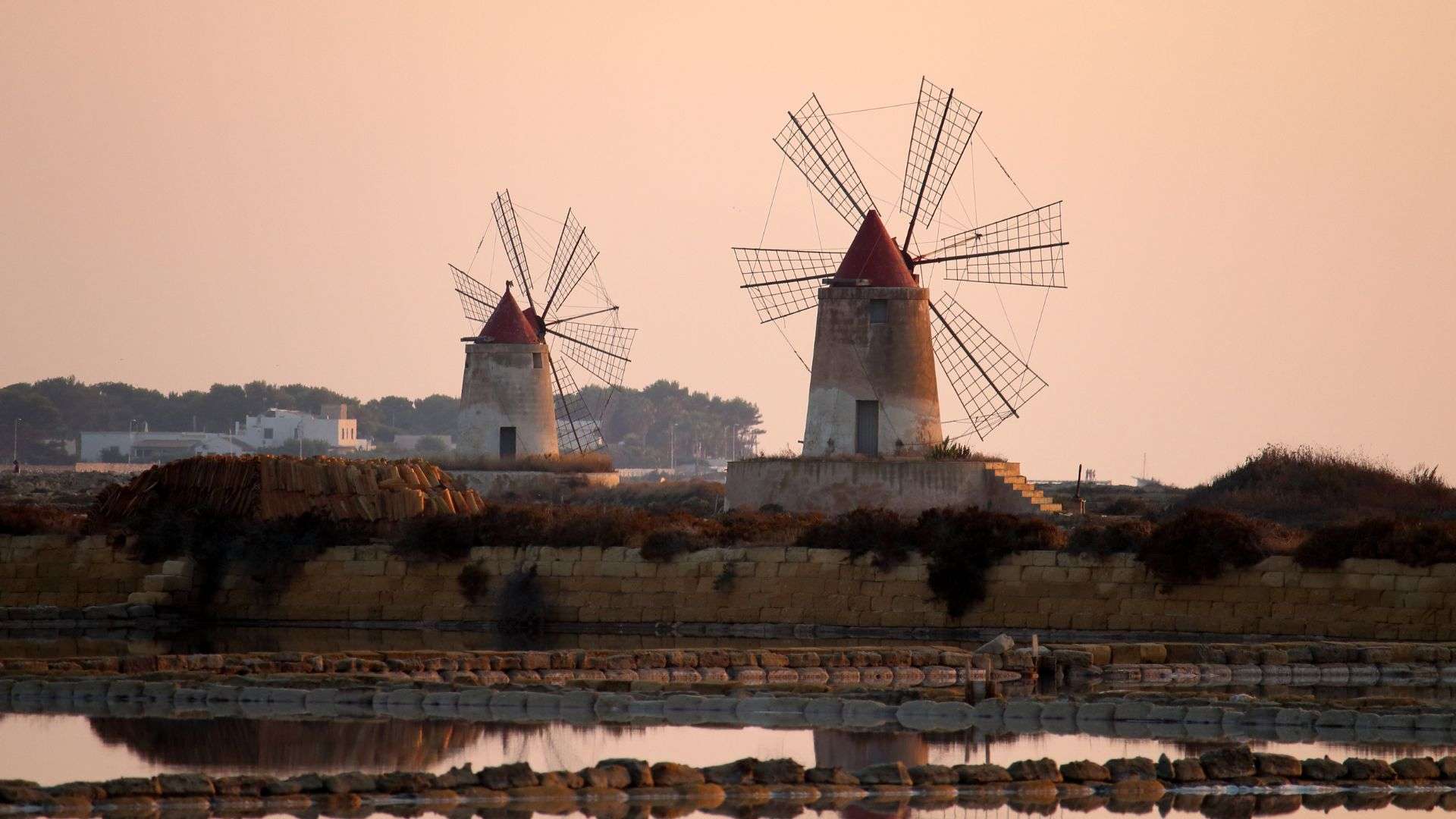
There’s a moment, on the road running south from Trapani to Marsala, when the landscape stops looking like Italy: pink water laid out in a chequerboard, white mounds roofed with terracotta tiles, windmills still against the sunset. The salt pans tell this coast’s story better than any guidebook. Production dates back to the Phoenicians, and Trapani sea salt earned PGI status in 2012: it’s still harvested by hand, as it was three thousand years ago.

La laguna dello Stagnone di Marsala, capitale europea del kitesurf
The Stagnone salt pans at sunset, windmills standing toward Mozia

Trapani — 54,636 residents (Istat, 1 January 2026) — is the practical base of the west: a compact provincial capital on a thin sickle of land (the Greek drepanon, hence the name) with sea on both sides. You cross the baroque centre on foot in twenty minutes, the port for the Egadi sits inside the city, the Sant’Antonio Abate hospital is a first-level emergency department, and the airport is twenty minutes away. It suits anyone who wants everyday services without ever losing sight of the water.

Marsala: the city of wine, salt and Lilybaeum

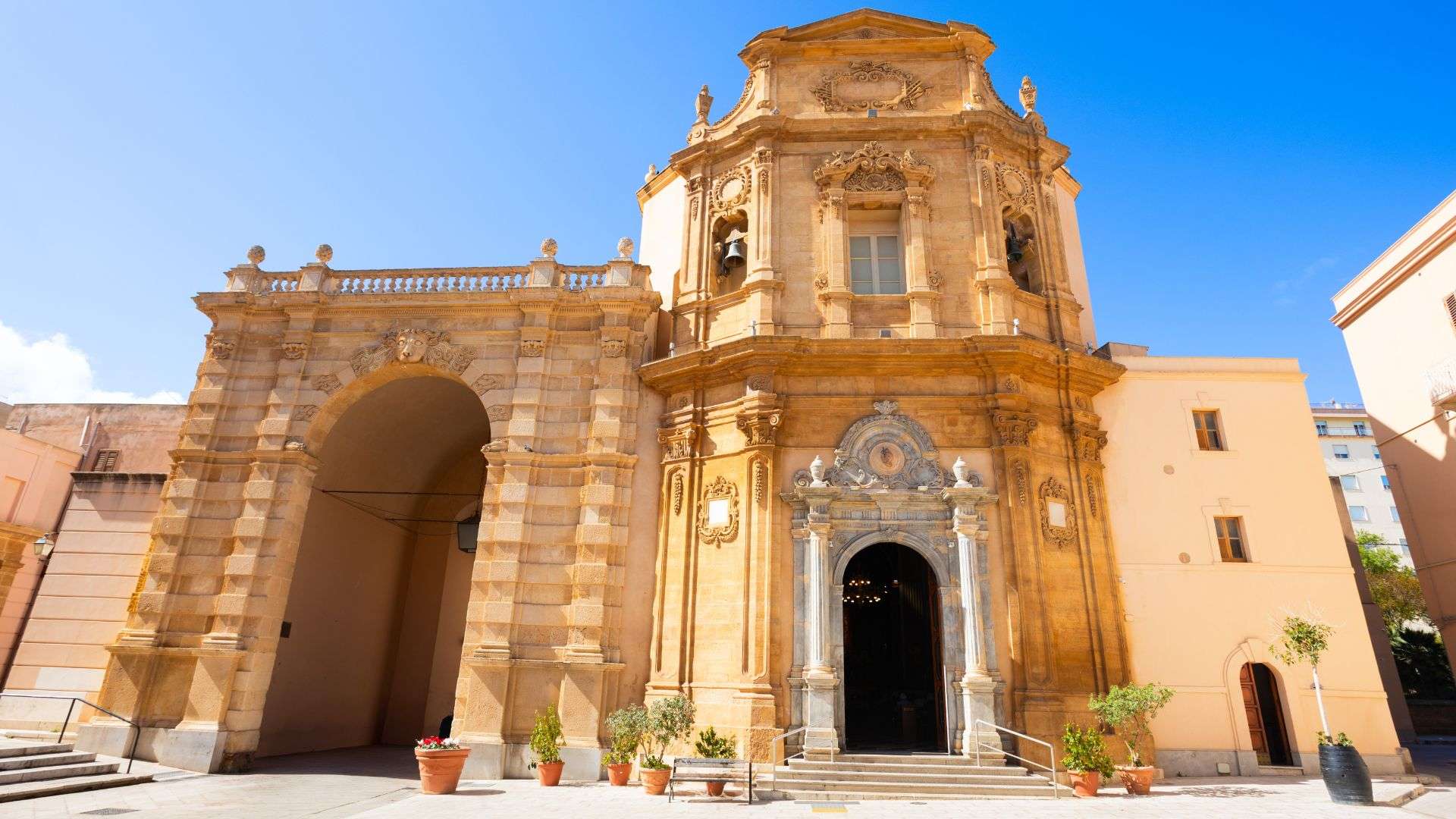
With around 80,000 residents, Marsala is the largest town in the west and the easiest to actually live in. Daily life is concentrated inside the old walls: you enter through Porta Garibaldi and walk the Cassaro — via XI Maggio — to piazza della Repubblica, where the cathedral opens up. It’s a pale-stone, pedestrian old town of wine bars and cafés, where summer evenings run late and winter doesn’t shut things down: this is a real city, not a seasonal resort. For someone working remotely or arriving in retirement, that’s the difference between having a community around you and staring at shuttered storefronts from October to May.

Porta Garibaldi, ingresso al centro storico pedonale di Marsala
Porta Garibaldi and the church of the Addolorata, the monumental entrance to Marsala's old town

There’s far more underfoot than you can see. Marsala stands on ancient Lilybaeum, Carthage’s last stronghold in Sicily: the Lilybaeum Archaeological Park covers 28 hectares on Capo Boeo, the headland facing the sea, with Roman houses and mosaics. Inside the park, the Baglio Anselmi Archaeological Museum — converted from a 19th-century Marsala wine works — holds the wreck of a Punic warship from the 3rd century BC, a rare survivor of the First Punic War. It is, literally, a Carthaginian warship preserved inside a wine cellar.

Then there’s the wine, which here is economy and social calendar rather than folklore. The great historic houses — Florio, Pellegrino, Donnafugata — welcome visitors year-round, and alongside fortified Marsala the area has rediscovered its native grapes, from Grillo to Catarratto. For anyone settling here that means a social life built around harvests, tastings and village feasts: one of the least touristic and most concrete ways into a community. Practically, Marsala has the Paolo Borsellino hospital, solid services and one of the most affordable property markets in Sicily.

DID YOU KNOW?

Marsala wine, today the symbol of the town, was effectively invented by an English merchant: John Woodhouse, who in 1773 fortified the local wine with alcohol so it would survive the sea voyage, and launched it on the British market. Eighty-seven years later, on 11 May 1860, it was in the port of Marsala that Giuseppe Garibaldi landed with his Thousand — shielded, tradition has it, by the English ships moored there for the trade in that very wine.

The Gulf of Castellammare: Scopello, the Zingaro, Macari

Past the cape the landscape changes character: the salt plain ends and the mountains begin to fall straight into the sea. This is the Gulf of Castellammare, and it’s the part of the west that most often makes first-time visitors fall in love.

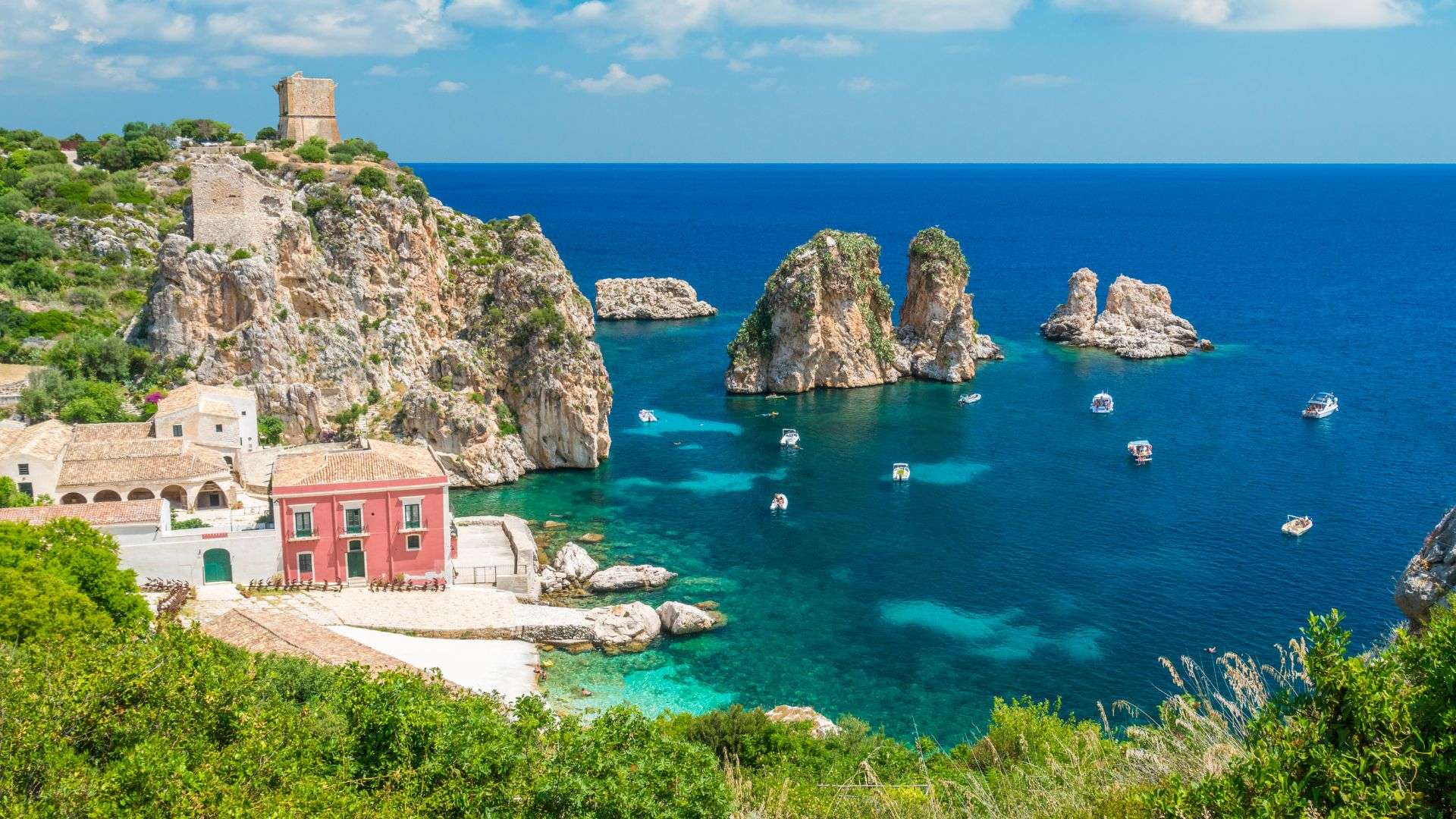
I faraglioni e la tonnara di Scopello, nel golfo di Castellammare
The sea stacks and old tuna fishery of Scopello seen from above

Castellammare del Golfo — about 14,600 residents — is a real town, not a beach resort in disguise. Its 12th-century Arab castle stands on a rock spur above the harbour: this was Castrum ad mare de gulfo, and before that the ancient seaport of Segesta. The old quarter is a maze of alleys, staircases and small squares over the water, with a marina that stays alive all year. For anyone looking for human scale with essential services — and a harbour that brings people even off-season — it’s one of the best balances on this coast.

A few kilometres on lies Scopello, a handful of houses around an 18th-century farmstead, and below it the tonnara with its sea stacks rising from the water like standing stones: one of the most photographed images in Sicily, and a wholly different experience seen in winter with nobody there. From here starts the Zingaro Reserve, the first nature reserve established in Sicily, in 1981, after a public protest march against a proposed coastal road: seven kilometres of coast with no tarmac, only footpaths and coves reached on foot. Having it twenty minutes from home means having an outdoor gym open all year.

At the far end of the gulf opens the natural amphitheatre of Macari, a cluster of houses on a slope above the sea just before San Vito Lo Capo. Its belvedere is the point where the whole coast reveals itself at once — coves, cliffs and the silhouette of Monte Cofano in the distance — and it became familiar to millions of Italians through the RAI series Màkari, filmed here. San Vito Lo Capo, a little further on, has fewer than 5,000 residents, three kilometres of white sand at the foot of Monte Monaco and, every September, the Cous Cous Fest, celebrating the dish that symbolises the meeting of Sicily and North Africa.

The Egadi: what living on a small island actually means

The Egadi Islands deserve a separate conversation, because people who choose them aren’t after a prettier version of the coast: they’re after something different. And the right question isn’t about summer — it’s about January.

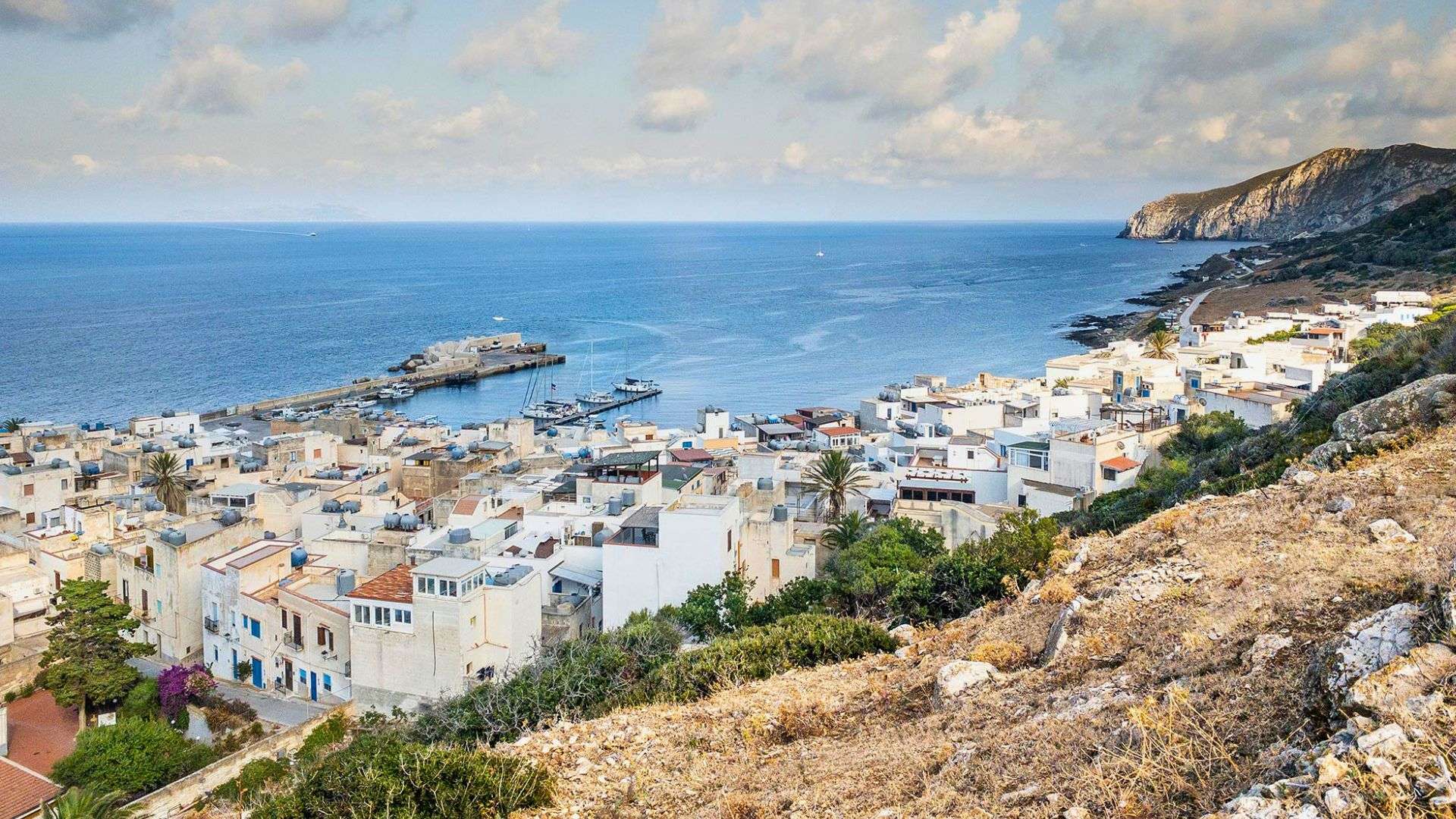
Il villaggio bianco di Marettimo, la più remota delle isole Egadi
Marettimo, its low white village gathered around the harbour

In summer these islands are the opposite of isolation. The municipality of Favignana counts about 4,500 residents across the whole archipelago, but on August days Favignana alone can host tens of thousands of visitors a day: full ferries, queues, high-season prices. Anyone picturing quiet and arriving in August is in for a shock.

Then September ends, the islands empty, and the real numbers begin. On Favignana around 1,800 people remain: it’s the largest and best equipped, with shops, a pharmacy, schools and daily connections to Trapani. On Marettimo, the furthest and most mountainous, roughly a hundred of some 400 official residents stay through winter: there’s a grocery, a bakery turning out bread every morning, and one bar that serves as the village square. The island school has about twenty children in total across primary and middle school. On Levanzo, the smallest, around thirty people live year-round, many of them elderly.

The hard part, said plainly

This has to be said honestly, because it decides everything. Healthcare on the smaller islands is basic: Levanzo and Marettimo have a clinic with a doctor present year-round, while nursing cover was historically guaranteed only in the summer months — cover that has recently been extended with the introduction of a community nurse. For a serious emergency you depend on transfer by sea or helicopter to Trapani, and in winter the sea doesn’t always cooperate. In bad weather the connections stop: they can be down for days, and that applies to people and supplies alike. You learn to keep a full pantry and to plan nothing rigidly.

Then there’s the factor that weighs most and that no guidebook mentions: in winter much of the island turns to maintenance — houses, boats, buildings readied for summer — and the community shrinks to a few dozen people who all know each other. It’s a life that grants no anonymity: you’re inside it, recognised and involved, or you’re outside. For some that’s exactly what they were looking for; for others, after a few months, it becomes suffocating.

Why some people do it anyway

Those who stay describe things you won’t find elsewhere. A winter in which background noise disappears completely. The paths of Marettimo dropping sheer to the sea, without meeting anyone. Favignana’s tuff quarries, cut into the rock like open-air cathedrals, and the former Florio tuna fishery, once the largest in the Mediterranean and now among Europe’s major sea museums. The Genovese Cave on Levanzo, with prehistoric paintings and engravings among the most important in the world, minutes from home. And a sea unlike others: the Egadi Islands Marine Protected Area is the largest in Europe at almost 54,000 hectares, holding the widest Posidonia meadow in the Mediterranean. For anyone who dives or sails, that alone is reason enough.

The practical advice is single and worth more than any analysis: rent for a winter before you buy. Not a week in August — a full February. Those who pass that test have usually found home.

Property Finder

Looking for the right home among the salt pans, the gulf or a hill town? With Property Finder you find, assess and buy the property with dedicated support, no surprises.

A life outdoors: wind, water, trails

Here lies the real reason some people never go back, and it has nothing to do with prices.

The Stagnone lagoon, facing Marsala, is regarded as the kitesurfing capital of Europe: the wind blows reliably around three hundred days a year and the water, across most of the lagoon, stays under a metre deep — flat as a mirror and safe for beginners. Certified schools have operated on its shores for decades, with a season running from March-April into late October. It’s a magnet that has brought a young, stable international community here: instructors, enthusiasts, and professionals who work online and build their day around the hours of wind.

But it isn’t only kite. The Egadi offer diving inside Europe’s largest marine protected area; the Zingaro Reserve and Monte Cofano give trails walkable even in January, when half of Europe stays indoors; the salt pans are a birdwatching paradise, with flamingos and herons stopping over on migration. The mild climate allows an outdoor life for most of the year: it’s why this coast works as well for a fifty-year-old working remotely as for someone newly retired who wants to walk, swim and be outside. Unsurprisingly, the west features regularly among the best places to settle in Sicily.

The setting for all this is the table, which here is a frontier cuisine: couscous alla trapanese — made with fish, not meat — brought by North African fishermen and now a badge of identity, tuna bottarga, Trapani-style pesto with almonds and tomato, and the almond pastries of Erice.

November is the real test

There’s one test we suggest to anyone weighing up this coast, and it has nothing to do with houses: spend a week here in November. In summer the west is one long celebration, and that tells you almost nothing about living here.

Off-season the picture divides sharply, and the table below sets out what actually matters before choosing an area: whether it stays alive in winter, who it suits, and roughly what buying costs.

AreaCharacterCost
Trapanipractical seaside cityaffordable
Ericemedieval hill townmodest
Marsalawine cityaffordable
San Vito / Egadisea, very seasonalvariable

These are indicative average prices, “starting from”: they vary widely by area, condition and period, and change over time. Always check the individual property against the Italian Revenue Agency’s OMI valuations and with a local professional.

Neither scenario is wrong: they’re different lives. But choosing one without having seen it in winter is the commonest mistake people make when buying by the sea. The climate helps — mild days allow coastal walks even in January — but the real question isn’t temperature: it’s how many people you meet when you step outside. For the comparison with the rest of the island, our guide on the cost of living in Sicily lines up every item.

Erice, or choosing to live above the clouds

It deserves its own section, because it resembles nothing else. Erice is a medieval maze of stone at 750 metres, often wrapped in a mist locals call “the kiss of Venus”. You walk herringbone-paved lanes between flowering courtyards and pastry shops turning out almond sweets from convent recipes.

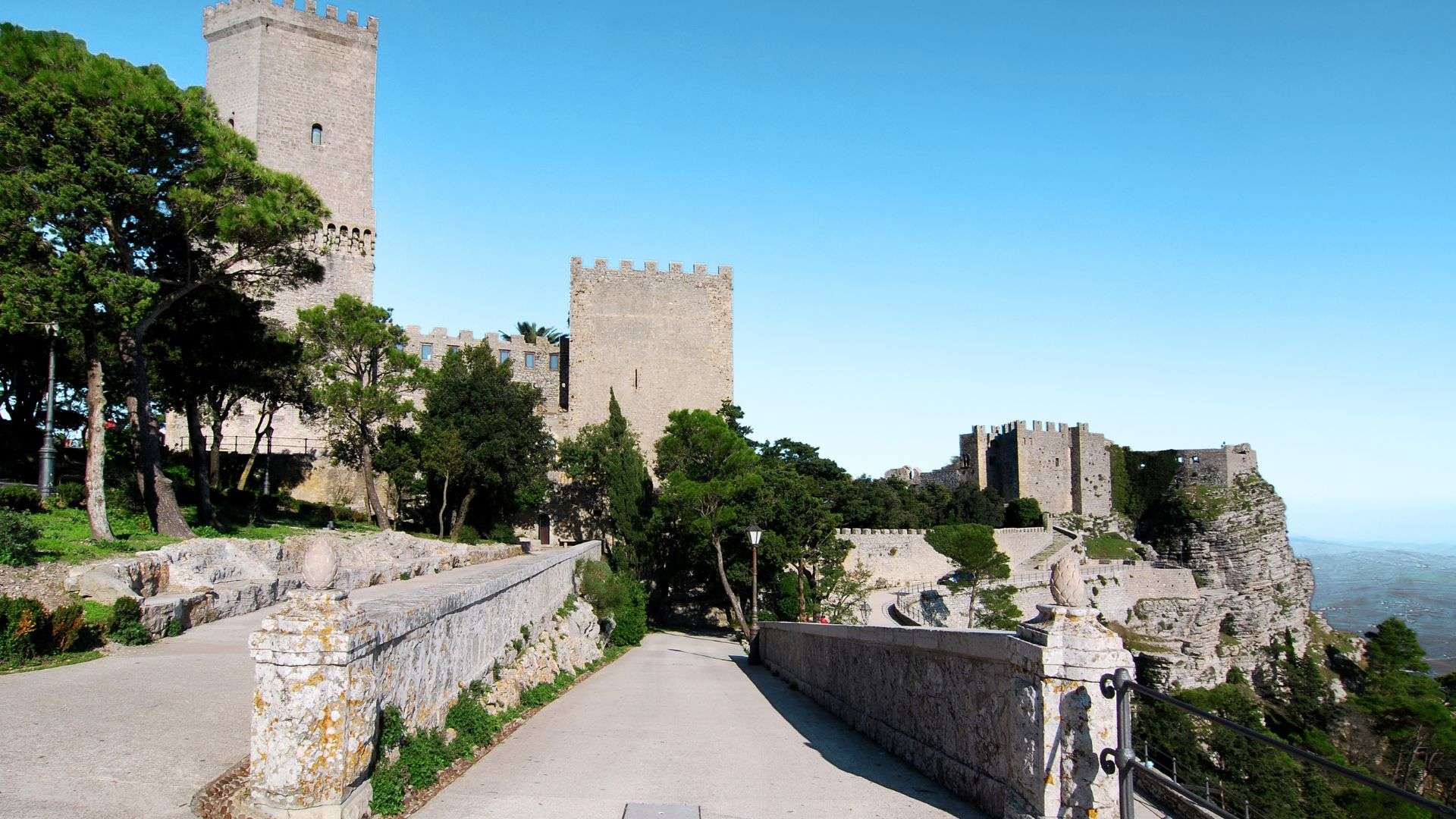
Le Torri del Balio e il Castello di Venere a Erice, a 750 metri sul livello del mare
The Torri del Balio and the Castle of Venus at the far end of Erice, 750 metres above the sea

This was the site of the sanctuary of Venus Erycina, one of the most venerated in the ancient Mediterranean: sacred to the Phoenicians as Astarte, to the Greeks as Aphrodite, to the Romans as Venus, it was the spiritual beacon of sailors across the sea. On its ruins the Normans built the Castle of Venus in the 12th century, still commanding the precipice.

Living here means accepting a bargain: you gain rare silence and a beauty that doesn’t tire, with hospital and airport a few minutes down the hill; you give up warmth, some convenience and street life. Winter at altitude is damp, the mist that enchants the visitor becomes a housemate, and for real shopping you drive down to the valley. Those who sign that bargain gladly tend not to leave.

Getting there, healthcare, working

The airport, the genuine advantage

This coast’s calm is deceptive: it’s far better connected than it looks, and for anyone working remotely or hosting visitors from abroad that’s often the decisive argument. Vincenzo Florio airport at Trapani-Birgi closed 2025 at around 1.2 million passengers, and the opening of a Ryanair base changed its scale, with international traffic up 341%: London Stansted, Charleroi, Baden-Baden, Bratislava, Katowice. From summer 2026 a second based aircraft brings the total to 24 routes, adding Stockholm and Bournemouth. It means living by the sea and reaching northern Europe in a few hours, cheaply, from a terminal twenty minutes from home. Those arriving from the United States usually connect via Rome, Milan or Palermo, an hour and a half away by car.

Healthcare

The province relies on two main hospitals, both classified as first-level emergency departments: Sant’Antonio Abate in Trapani-Erice and Paolo Borsellino in Marsala, the latter in its current building since 2009. For more complex cases the reference point remains Palermo and its centres of excellence. Those who transfer residency gain access to the National Health Service at low cost: the terms for non-EU citizens are in our guide to healthcare in Italy for foreign retirees.

Working remotely: what to expect

Connectivity in the main towns is reliable and fine for online work, video calls included. But it should be said plainly that the coworking scene is small compared with Palermo or Catania: people work mostly from home, from cafés, or from spaces attached to the kite world and to guesthouses, which in winter become informal meeting points. Anyone who needs a structured office and a large community will find more in the regional capital; anyone who can organise themselves gains in the quality of the day. On paperwork, the underlying choice is between two different routes — the digital nomad visa and the elective residence visa — which we compare in our guide to the digital nomad visa versus the elective residence visa.

Getting around

A car is genuinely needed here: distances between towns are real and public transport is basic. For short hops along the coast and inside the old quarters, a scooter remains the easiest option, helped by a mild climate for most of the year.

The tax angle, briefly

One final note, useful above all to those arriving on a foreign pension. Article 24-ter of the Italian Income Tax Code (TUIR) provides a 7% substitute tax on foreign-source income for ten years (the tax year of the move plus the following nine), for those transferring residency to a southern municipality of under 30,000 inhabitants (the threshold rose on 7 April 2026 under Law no. 34/2026). Here almost every municipality qualifies — Erice, Castellammare del Golfo, San Vito Lo Capo, Favignana — while Trapani and Marsala fall outside. It isn’t a reason to move, but it can weigh on which town you choose: full requirements are in our guide to tax benefits in Sicily and the current list in the map of municipalities eligible for the 7% regime.

Silver Move

Retiring and want your move to Italy to be simple and secure? Silver Move walks you through every step, from residency to choosing the right town.

Conclusion

Western Sicily has neither Taormina’s glamour nor Palermo’s monumentality, and those who move here usually count that as a benefit. It’s a coast you inhabit by being outside: with the wind setting the rhythm at the Stagnone, the Zingaro trails walkable in January, a sea protected as nowhere else in Europe, and an airport that — against all appearances — keeps all of it a few hours from northern Europe. The right question isn’t which town to choose, but how much solitude you’re willing to accept: the answer differs radically between Marsala, a city alive all year, and Marettimo, where a hundred people winter. Everything sits in between — Trapani for services, Erice for silence at altitude, Castellammare for balance, San Vito for the sea. People who come this far usually aren’t after a long holiday: they’re after days worth living all the way through.

Sources

Share:

Frequently asked questions

Marsala and Trapani for services and year-round town life; Castellammare del Golfo for the balance of human scale and services; Erice for silence at altitude; San Vito Lo Capo for daily sea, with strong seasonality; the Egadi for those seeking genuine isolation.

Yes, with one caveat. Connectivity in the main towns is reliable and Trapani-Birgi airport offers 24 low-cost European routes from summer 2026. The coworking scene is small, though: people work mostly from home or cafés. In exchange, the Stagnone has drawn a stable international community around kitesurfing.

Almost. The wind blows reliably around three hundred days a year, with the main season running from March-April into late October. The lagoon is shallow, mostly under a metre, and hosts certified schools: it's regarded as Europe's kitesurfing capital.

Yes, but it's demanding. In winter about 1,800 people remain on Favignana, a hundred on Marettimo and thirty on Levanzo. Connections depend on the sea and can stop for days in bad weather. The advice is to rent for a winter before buying.

The main hospitals are Sant'Antonio Abate in Trapani-Erice and Paolo Borsellino in Marsala, both first-level emergency departments; for complex cases the reference is Palermo. On the smaller islands care is basic, with a doctor year-round and transfers to Trapani for emergencies.

Yes. Trapani-Birgi closed 2025 at around 1.2 million passengers and, with the Ryanair base, connects London Stansted, Charleroi, Baden-Baden, Bratislava and others; from summer 2026 routes rise to 24. For the United States you connect via Rome, Milan or Palermo.

Largely yes: Erice, Castellammare del Golfo, San Vito Lo Capo, Favignana and most municipalities in the province qualify, all under 30,000 inhabitants (art. 24-ter TUIR). Trapani and Marsala are excluded. Requirements should always be verified with the Italian Revenue Agency.

DISCLAIMER

The information provided on this website is for general informational and illustrative purposes only. It does not constitute legal, tax, financial or professional advice and should not be relied upon as such.
While we strive to ensure the accuracy and timely updating of all content in accordance with current laws and regulations, we accept no responsibility for any errors, omissions, misinterpretations, or changes in legislation that may occur after publication. Any decisions or actions taken based on the information contained on this website are undertaken at the user’s sole risk.

Our services

Did you enjoy
this article?

Discover how we can help you relocate or invest in Italy with our dedicated services.

Tailored planning to live or invest in Italy.

Property purchase and management in Italy.

Relocation assistance for visas and residence permits.

Support for businesses and investors choosing Italy.

MAgazine

Stay up To Date!

Subscribe to our newsletter to stay up to date with the latest news.