A village shaped by altitude
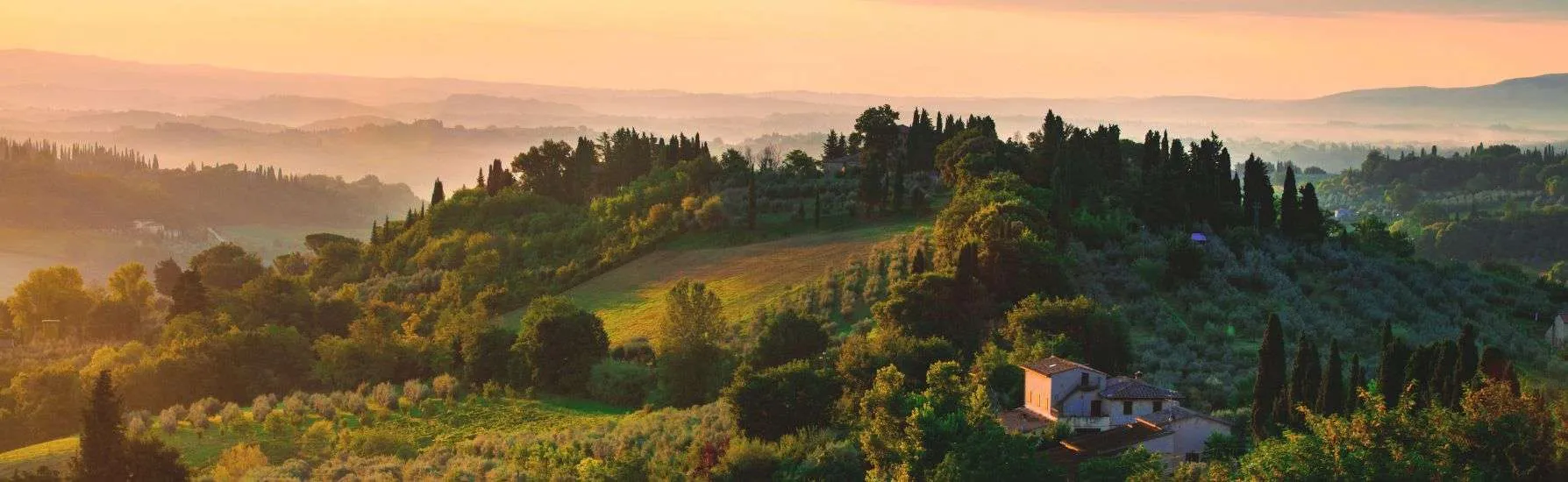
You arrive in Montalbano Elicona by climbing. There is no other way. Provincial roads unwind in long curves through the forests of the Nebrodi — the green spine of north-eastern Sicily — and each turn delivers a new piece of landscape: a stream, a pasture, a ridge that opens toward the Tyrrhenian Sea. When the village finally appears, perched on its summit, it looks as though it had always been there.
The name carries the geography. Mons Albus — white mountain — is the first half: the peak that whitens before the others in winter. Elicona is the Greek inheritance, a reference to Mount Helicon, the home of the Muses. Just over two thousand people live here year-round. Not many, but enough to keep the village alive — and that makes the difference.
In 2015, the Italian public broadcaster Rai 3 ran Borgo dei Borghi, a national competition naming Italy’s most beautiful village. Among ninety finalists, Montalbano Elicona won. The same year, the village formally joined I Borghi più Belli d’Italia — “The Most Beautiful Villages of Italy” — an association that recognizes small towns for their architectural integrity and cultural character. The accolade alone explains nothing. But it is a useful starting point for anyone who has never heard of the Nebrodi.
The Aragonese castle and the Catalan court of King Frederick III
Everything in this village leads upward. The streets climb, the houses press together, and at the summit stands the Castle of Montalbano Elicona, one of the most recognizable medieval fortresses of inland Sicily.
Its history runs through two dynasties. Around 1233, Frederick II of Swabia ordered the destruction of the original settlement after a popular uprising. What remained on the rock was a defensive structure, embryonic, that the shifting fortunes of the Kingdom of Sicily passed from hand to hand. But it was under Frederick III of Sicily — Frederick II of Aragon — born in Barcelona in 1272 and king from 1296 to 1337, that the castle assumed the form we still see today. The king chose Montalbano as his summer royal residence. The fortress became a court: more articulated rooms, a chapel, a seasonal administrative life.
This is a Sicily international visitors don’t always recognize. Frederick III ruled the island as part of the Aragonese-Catalan Mediterranean network — a kingdom culturally as close to Barcelona and Valencia as to Palermo. His court spoke Catalan as readily as Latin. At the heart of the castle, the Royal Chapel, small and silent, holds the tomb of Arnau de Vilanova — Arnaldo da Villanova in Italian — a Catalan physician, alchemist and Spiritual Franciscan whose ideas genuinely shaped Frederick’s spiritual circle around 1310. He is one of the most fascinating intellectual figures of the medieval Mediterranean, and he rests in this mountain village.
A few steps away are the Museum of Bladed Weapons and the Museum of Ancient Musical Instruments. Together they sketch a complex picture of the medieval Mediterranean: the conflicts and the art, the defense and the festivities, the same territories crossed by armies and by musicians. From the panoramic walkway, on a clear day, the eye reaches the Tyrrhenian Sea and the Aeolian Islands on one side, the deep undulation of the Nebrodi on the other. That is the moment one understands why a king chose this mountain, and not another.

The Argimusco — Sicily's "Stonehenge" that isn't
A few kilometers from the village, beyond the pastures and the woods, the Argimusco plateau opens like a threshold. About 1,200 meters above sea level, in a territory administratively shared between Montalbano Elicona, Tripi and Roccella Valdemone, inside the Bosco di Malabotta Nature Reserve.
Quartzitic sandstone boulders punctuate the plateau in shapes that local imagination has long named. There is the Eagle, with its perfect profile. The Praying Figure — a feminine form with arms folded across the chest. The Monk. They are presences. Walking among them, alone, at first light or in the slanted glow of sunset, is an experience that lingers.
It is worth saying plainly: the science is less romantic than the legend. Geomorphologists and archaeologists agree that these stones were shaped by wind and water erosion, not by human hands. The phrase “Sicilian Stonehenge”, which circulates in travel writing, is evocative but inaccurate. What does remain genuinely interesting is that for at least three decades local scholars — most notably Professor Gaetano Maurizio Pantano, author of Megaliti di Sicilia (1994) — have noted significant astronomical alignments at the site, particularly with the summer solstice sunrise. You don’t have to believe anything to feel that the sky matters here. The light, the distances, the silence are ancient ingredients.

Bosco di Malabotta — one of Sicily's last old-growth forests
The Argimusco plateau belongs to a larger system: the Bosco di Malabotta Nature Reserve, established by regional decree on 25 July 1997. Three thousand two hundred hectares of old-growth forest, distributed across five municipalities — Montalbano Elicona, Roccella Valdemone, Malvagna, Francavilla di Sicilia, Tripi — with an exceptional altitude range, from 700 to 1,300 meters above sea level, up to the summit of Monte Croce Mancina at 1,341 meters.
This is one of the oldest forests on the island. Inside the reserve you walk among monumental oaks, century-old turkey oaks with trunks more than two meters wide, beech groves that recall central European forests, hollies, maples. The locals call them the Patriarchs of the Wood, and a marked trail — the Sentiero dei Patriarchi — lets you walk among them for a few hours, on a loop accessible even to non-expert hikers. Up here, in spring, you can hear the peregrine falcon calling. Deeper in, with luck, you might glimpse a golden eagle. In the Licopeti stream the rare native macrostigma trout still survives.
The forest is not scenery. It is an infrastructure the village breathes. It shapes the climate, the cuisine, the silences.
Provola dei Nebrodi — the cheese that flakes
You understand a place through what it makes. In Montalbano Elicona, the matter is milk. The eastern Nebrodi produce Provola dei Nebrodi, a Slow Food Presidium and a traditional agri-food product (PAT) of the Sicilian Region, a stretched-curd raw cow’s milk cheese rooted in these valleys for centuries. A protection consortium has been working since 2019 towards recognition as a Protected Designation of Origin (PDO): the first official marking of the wheels took place in July 2019, at Randazzo.
Its distinctive feature is what Italians call sfogliatura — flaking. Before stretching, the curd is kneaded by hand at length, with a movement similar to bread dough. This manipulation is what produces, on the palate, a cheese that opens in soft layers on the tongue. In Montalbano and the surrounding villages, where wheels can reach five kilos, longer aging transforms the initial sweetness into a deep, lasting peppery note.
The cheese is not alone. The Nebrodi are also hazelnut country, a second presidium of agricultural identity, central to local sweets like the nuvolette — small, soft, fragrant cookies. In the village shops the cheese wheels hang from the ceiling, and hazelnuts arrive in autumn, whole or processed. These are not just shops. They are places of relationship. You walk in for a hundred grams of cheese and walk out, half an hour later, knowing something new about the village.

What daily life actually looks like
A mountain village is not chosen only for its landscape. It is chosen for what it allows in everyday life. A few practical references are worth giving.
Getting there. The reference international airports are Catania Fontanarossa (CTA) and Palermo Falcone-Borsellino (PMO). From either, the drive to Montalbano takes about two hours, with the final stretch crossing the Nebrodi plateau. The nearest train station is Falcone, on the Palermo-Messina line, roughly forty minutes by car from the village. For anyone planning to stay longer than a few days, a car remains the practical choice.
Healthcare. Montalbano Elicona has the basics on site: general practitioner, paediatrician, pharmacy, and an after-hours doctor for non-urgent care in the evenings and on weekends. For hospital emergencies and specialist visits, residents drive to Patti, Milazzo, Barcellona Pozzo di Gotto, or the University Hospital in Messina. These distances are normal for Italian mountain villages — but anyone arriving from a city where a hospital is around the corner needs to factor this honestly into the decision.
Climate. You are above 900 meters. Winters are cold and occasionally snowy. Summers are cool — fresh enough to feel like another Italy when the coast is melting in August. This is part of the reason the village has been loved as a summer retreat since Frederick III. For anyone coming from North America or northern Europe, the climate feels familiar, only partly Mediterranean, with four distinct seasons.
Language. Italian is required. There is no Anglophone expat community here, and shopkeepers, doctors, town hall staff and most professionals speak Italian only. For some, this is a barrier; for others, it is the appeal — a chance to learn the language inside an actual community, rather than alongside other expats.
Connectivity. Internet is present and adequate for everyday use. Video calls are workable but variable depending on the area of the village. Anyone who relies on remote work with strict bandwidth needs should test connectivity in the specific street before signing a lease.
Why Montalbano Elicona is on the international radar in 2026
There is a concrete reason why this village is being noticed by people who live far from Sicily. Montalbano Elicona is one of the Sicilian municipalities eligible for Italy’s 7% flat tax for foreign retirees, set out in Article 24-ter of the Italian Income Tax Code (TUIR), introduced by Law 145 of 30 December 2018 and updated on 7 April 2026 by Law 34/2026, which raised the eligible municipal population threshold from 20,000 to 30,000 inhabitants in southern Italy. With just over two thousand residents, Montalbano qualifies easily.
In short: foreign retirees who transfer their tax residence to Italy under this regime apply a 7% substitute tax to all foreign-source income — pensions, dividends, capital gains, rental income — for ten tax periods. It is a stable, regulated tool, used by hundreds of European and American retirees who have moved to villages like Montalbano. The exact numbers, eligibility requirements, transfer timing, and the interaction with the US-Italy and UK-Italy double taxation treaties deserve a personalized assessment.
And one important caveat. The 7% is a consequence, not a motivation. Those who move to Montalbano Elicona only to optimize their tax position tend not to stay. Those who stay choose the village for the altitude, the light, the forest, the cheese, the way a greengrocer recognizes them on the second visit. The fiscal advantage is genuine, and worth structuring properly. But it is the coherence between the place and one’s life that decides whether the choice holds over time.
Dedicated pathway for foreign retirees who choose Italy

What this village is, and what it isn't
Not every place is for everyone. Montalbano Elicona is a real mountain village. It requires car-based mobility, comfort with distances, and a certain disposition toward silence. It suits those looking for high environmental quality, slow rooting, a stable fiscal framework, and a layered cultural context. It is less suited to those who need specialist healthcare around the corner, an existing English-speaking expat ecosystem, or immediate access to a dense international flight network.
This is not a destination to photograph and leave. It is a place that asks to be stayed in. The confraternities that still carry their saints in procession, the families who have lived for generations in the same houses, the few new arrivals who slowly weave into the village fabric — all of them keep a fragile, real equilibrium in motion. In Montalbano, community is not scenery. It is part of the urban organism.
Perhaps that is the meaning of climbing this far. You do not arrive in Montalbano Elicona to visit a castle. You arrive to notice that, somewhere along the switchbacks, your hurry stopped having a reason. Time, here, takes altitude. In an age that accelerates everywhere, that is a rare quality — almost a privilege.
Share on:
Faq
The village is about twenty minutes by car from the Tyrrhenian coast of Messina province, via the Falcone-Montalbano connecting road. This is one of the most distinctive features of the location: living at 920 meters of altitude, in a fully mountain context, while still being able to reach a beach in under half an hour during the warm season.
Two international airports are within driving distance: Catania Fontanarossa (CTA) and Palermo Falcone-Borsellino (PMO), both about two hours away by car. The nearest train station is Falcone on the Palermo-Messina line, roughly forty minutes from the village. A car is the most practical option for anyone staying more than a couple of days.
Yes. With just over two thousand residents, Montalbano Elicona is well within the threshold for Italy's 7% substitute tax regime under Article 24-ter of the Italian Income Tax Code, whose population limit was raised to 30,000 inhabitants from 7 April 2026 by Law 34/2026. The regime applies a 7% rate to all foreign-source income for ten consecutive tax periods.
Limited. There is no established Anglophone expat community in the village. Public administration, healthcare and most professional services operate in Italian only. Younger residents and tourism-facing businesses often speak some English, but new residents should plan to learn Italian or work with bilingual relocation, legal and tax advisors during the transition.
The Argimusco is a sandstone plateau at 1,200 meters of altitude near Montalbano Elicona, inside the Bosco di Malabotta Nature Reserve. It is known for large quartzitic boulders shaped by wind and water erosion, sometimes referred to as Sicily's "Stonehenge" in travel writing. Geomorphologists agree that the formations are entirely natural, not human-made, though local studies have noted significant astronomical alignments at the site.
Montalbano Elicona offers a general practitioner, a paediatrician, a pharmacy and an after-hours doctor for non-urgent care. For hospital emergencies and specialist visits, residents travel to the hospitals in Patti, Milazzo, Barcellona Pozzo di Gotto, or the University Hospital in Messina, all within reasonable driving distance for an Italian mountain village.