Why Retiring in Italy Is Not Just a Dream — but a Possible, Beautiful Life Choice
There are desires that travel through the years like underground currents. The world changes, our habits evolve, and even the standards we use to evaluate quality of life shift over time — and yet certain desires remain intact, stubborn, luminous, almost untouched by fashion. Italy, for those who observe the world from a distance, belongs to this intimate category of deep desires. It is not a rational choice, not a destination one selects by comparing scores or tables, not even a project that takes shape through spreadsheets. Italy is an interior image, something people carry inside long before the concrete idea of living here is born.
And yet, it is curious — almost ironic — how the magnetism Italy exerts, especially on foreign retirees, coexists with international rankings that rarely reward it. In the Global Retirement Index by International Living, which every year attempts to measure where retirement might be most convenient, secure or advantageous, Italy almost never reaches the top. It sits at the margins, surpassed by countries promising streamlined procedures, low costs, simplicity, generous incentives.
And yet, year after year, in the personal accounts collected from their international readership, Italy returns as one of the nations most deeply imagined, longed for, dreamed about.
This contradiction is not a flaw — it is the key:
Italy is not the perfect destination, it is the desired one.
And desire does not operate through subtraction or logical calculus. It works through attraction, cultural resonance, symbolism, memory.
You understand this when you speak with those who have spent years cultivating the dream of moving here. They rarely describe choosing Italy because it is “affordable” or because “residency is straightforward” or because “property is cheap.” More often, they speak of sensations:
the clinking of cups in cafés at sunrise,
the sight of people who stop in the piazza to talk,
the smell of bread baked in a wood-fired oven,
the sense of community that still survives in historic centres.
They describe a specific feeling: the impression that in Italy, time moves differently — slower, more human, more compatible with the stage of life they are entering.
When International Living refers to Italy as a “lifestyle favorite,” it recognises that the measure of living well is not always the same as the measure of living cheaply. And indeed, Italy rises to the top not when people are asked “Where is it easiest to retire?” but when they are asked: “Where would you want to live your next life chapter, if anything were possible?”
Choosing convenience is one thing; choosing meaning is another.
The desire for Italy is not merely foreign. Italians themselves recognise it — especially when they return after years abroad. A country that is imperfect but profoundly alive, where sometimes a simple drive along a country road or a lunch in a small provincial restaurant is enough to awaken a sense of belonging that seemed lost.
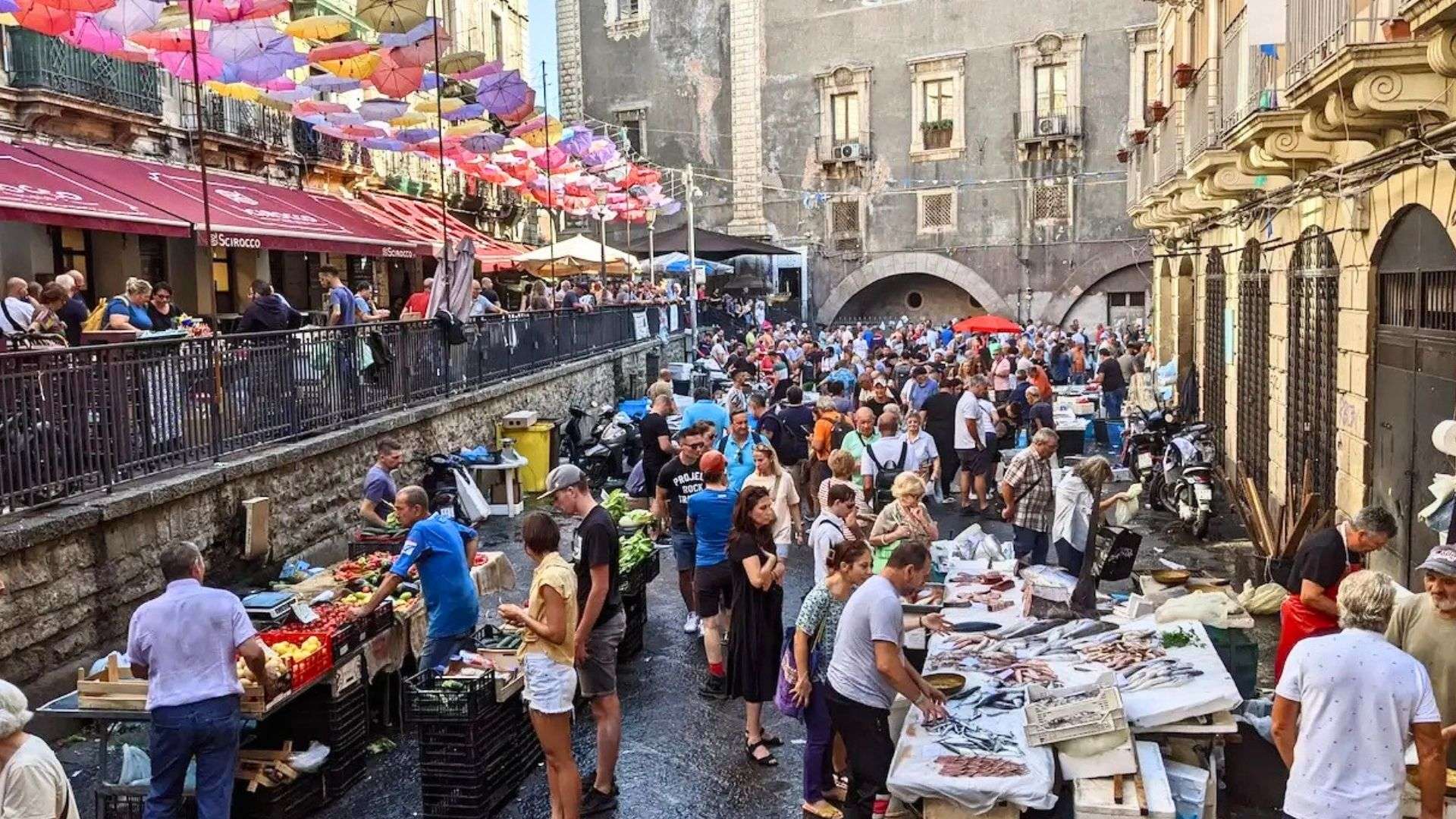
For foreign retirees studying Italy from afar, this desire takes shape in circulating images: hilltop villages, fish markets, the southern light bouncing off baroque facades, seasons that still feel like seasons, basil perfuming a balcony. What strikes many is that these images are not fictional. They are authentic reflections of a real Italy: not the tourist Italy, but the daily, lived-in, neighbourhood Italy.
Discover the wonderful village of Gangi in Sicily
This is why, when comparing international rankings with the force of desire, we understand that the two speak different languages.
A ranking measures criteria.
Desire measures imagination.
Rankings tell you what is convenient.
Desire tells you what is missing.
Why then, despite costs, bureaucracy, complexity, and territorial differences, does Italy remain so important for foreign retirees? Because it offers something extraordinarily difficult to find elsewhere: a combination of everyday beauty, cultural depth, human relationships, and life quality that is unique — non-replicable — and understood immediately by those who feel it.
Healthcare — often surprisingly accessible for retirees arriving from abroad — is one of the pillars of this desire. It is not just about numbers; it is the sensation of being taken care of, of belonging to a public system that feels more humane than many Anglo-Saxon models. Climate amplifies everything: not because Italy is tropical, but because it allows people to live outdoors for many months, walk, rediscover routines made of simple gestures.
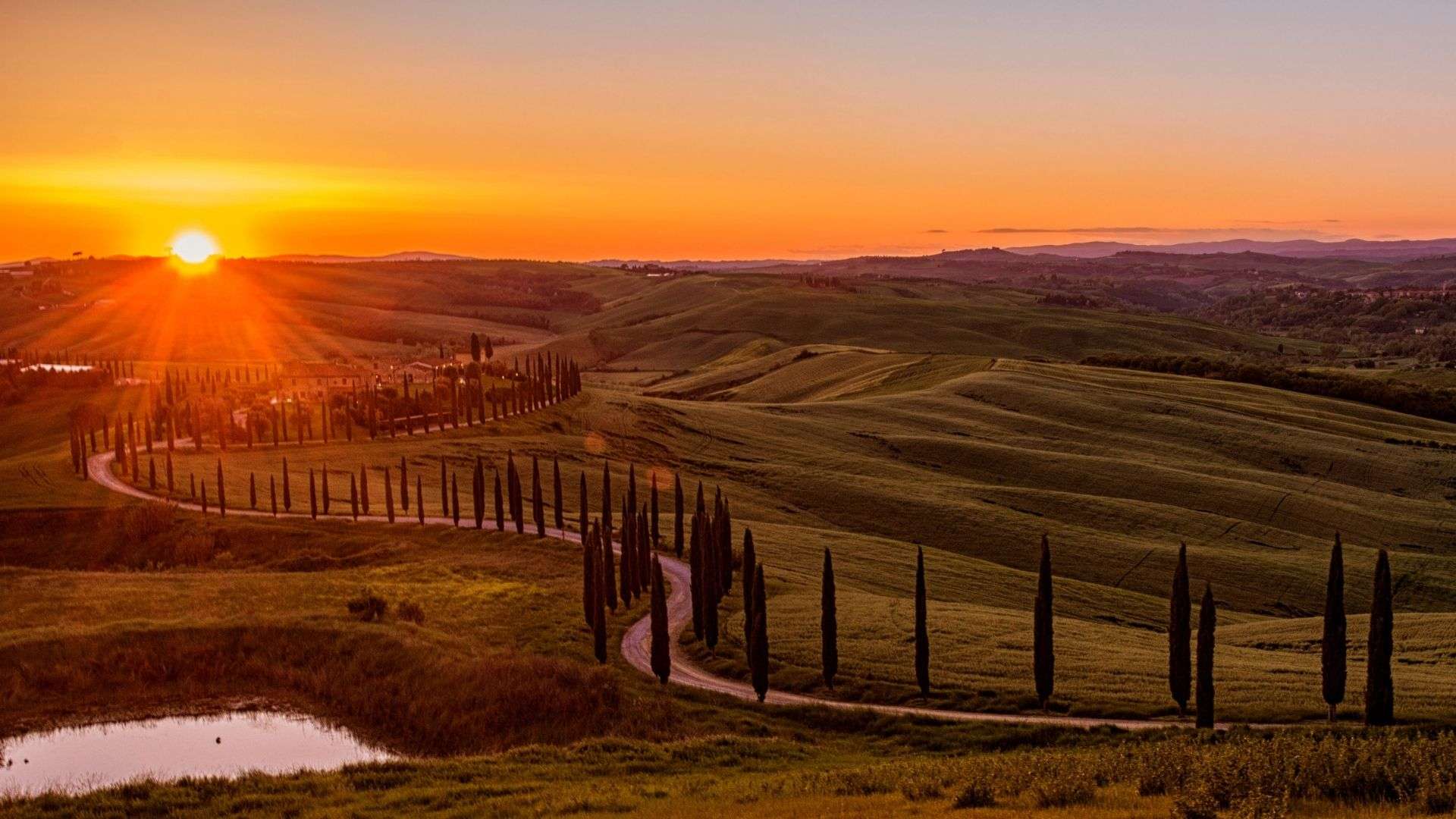
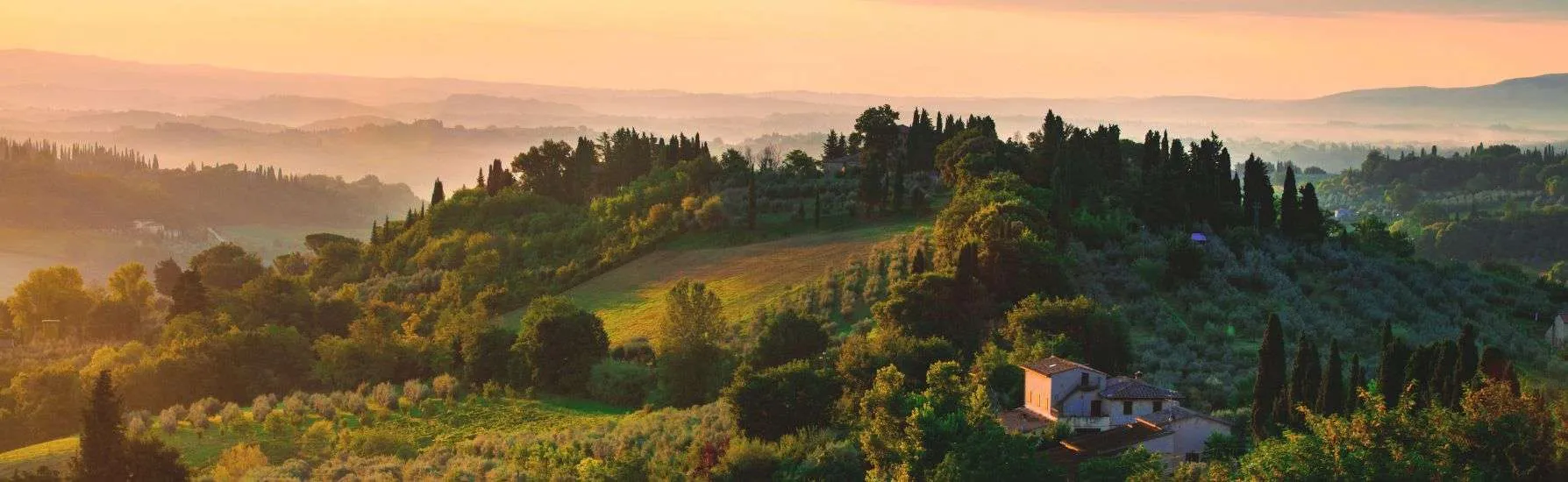
And then there is the landscape. Not only the iconic Val d’Orcia or the luminous coastlines of Puglia, but the more intimate landscapes of small towns, where every street is a story, every stone holds memory, every shopkeeper knows your name.
There is an Italy outside the guides, outside crowded destinations — made of silence, slow days, lived spaces.
This is the Italy that attracts those who want a future different from their past.
Ultimately, the desire for Italy is the desire for a life that still has flavour, that still has rhythm, that still has meaning.
And it is from this desire — not from rankings — that every true relocation begins.
Discover “Silver Move”: Impatria’s pathway to retire in Italy
The Real Italy
If the desire for Italy is born from interior images and collective memory, the real Italy is the moment imagination encounters everyday life. And it is precisely here that many foreign retirees discover something unexpected: the country they dreamed of not only exists — in many cases, it is even richer, more layered, more deeply human than they had imagined.
The real Italy is not an ideal. It is a living organism — contradictory, sometimes slow, sometimes demanding, always profoundly human. And it is in this space, between imagination and daily life, that the truth of relocation takes shape.
Those who arrive and stay more than a few weeks quickly discover a form of daily rhythm that has little to do with what is shown in tourist guides. Days unfold around small rituals: the café opening early, neighbours greeting each other, the Wednesday market, fruit that tastes like fruit because it comes from fields a few kilometres away, the silence of afternoon hours, life slowing as the sun sinks.
For many foreign retirees, this dimension feels immediately familiar — as if they had been waiting for it without knowing its name.
Healthcare often surprises them. Not because it is perfect — no system is — but because it is accessible. For those coming from countries where a specialist visit may cost as much as a small holiday, or where private insurance consumes a large share of the budget, the Italian system is a revelation. The possibility of being followed, treated, accompanied, without feeling excluded for economic reasons, becomes invaluable at a stage of life when health is central.
And then there is time — not weather time, but experienced time. Italy has a particular relationship with time: it does not undergo it — it shapes it.
In small towns and mid-sized cities, rhythm is not dictated by productivity but by life unfolding: elderly people sitting outside their doors in summer, chairs placed outside at dusk, children playing in the street, voices filling the piazza.
This slowness is not inactivity — it is depth.
Quality of life in Italy does not arise from grand gestures. It emerges from a sum of micro-events: a walk in a historic centre, a good bottle of wine at a fair price, a tomato warm from the sun, a sunset that lasts longer than necessary, a spontaneous chat with a neighbour that becomes a ritual.
Those who relocate soon discover another truth: Italy is not a single country — it is a mosaic of worlds. There are efficient cities and disordered ones, dynamic towns and towns suspended in time; regions where healthcare runs like clockwork and regions where patience is needed.
This diversity can be a gift or a challenge.
There is the Italy that lives in the quiet rhythm of Umbrian hilltop villages, where every church holds a fresco and every restaurant seems to know the story of its patrons.
There is the Italy of the Puglian coast, where the sea dictates the pace of days and the light changes with every season.
There is the Italy of Marche’s inland towns, discreet and composed, where hills seem drawn specifically to soften silence.
There is the Italy of eastern Sicily, where warmth is not only climatic but human, where every stone carries centuries of history.
And then there are the contrasts — inevitable and necessary.
Bureaucracy can be a real obstacle. Administrative fragmentation can confuse those used to more linear systems. Winters in some areas can be harsher than expected. Infrastructure varies.
But to those who choose Italy, these imperfections do not cancel the positives — they make them more authentic, more tangible.
Many retirees describe a shared sensation: in Italy, they find themselves again.
Not because everything becomes easy, but because life stops being a process to manage and returns to being an experience to live. Italy does not deliver pre-packaged happiness; it offers the space to create your own — through simple moments and genuine relationships.
The real Italy rarely disappoints those who arrive with the right desire. It disappoints those who arrive with the wrong expectation: imagining a perfect country, thinking slowness means instant efficiency, confusing beauty with practicality.
Italy is beautiful precisely because it is imperfect: because it does not present itself as a product, but as a place to understand, interpret, inhabit.
And when this awareness settles — when desire meets reality without collision — that is when real life in Italy begins. Not an extended vacation, but a return to the human dimension of living.
It is here that the dream stops being imaginary and becomes everyday life.
Territories and the Lives They Make Possible
When you truly begin to imagine a life in Italy, the question is no longer “Why move?” but rather: “Where could this new life take form?”
This is where many foreign retirees discover a plural Italy — a constellation of landscapes that do not resemble one another, of rhythms that change valley by valley, coast by coast.
There is no single Italy; there are many Italies, each offering a different possibility.
Understanding this is the first step toward a conscious, grounded choice.
Often, the first place people look is the South — because the South holds what many seek: light, a mild climate, human warmth, food with a distinct flavour, living costs that feel more humane.
But it is not only a question of affordability: the South is an emotional condition, a different lens through which everyday life appears.
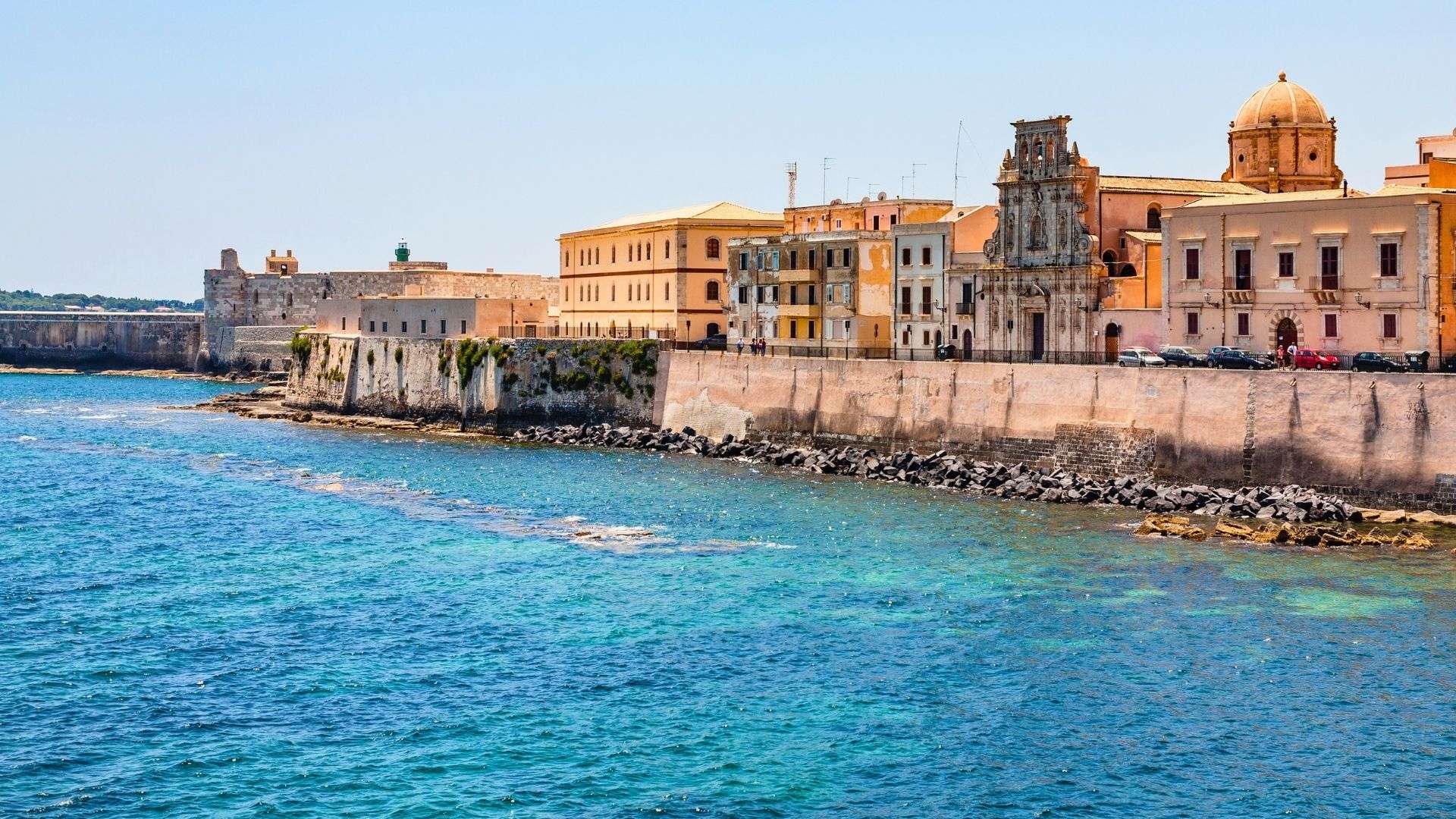
Among all the regions, southeastern Sicily has perhaps attracted the most international newcomers in recent years. Syracuse and Ortigia, for example, are places where the sea enters the streets, where light cuts through the alleys like a blade.
Those arriving from California, Colorado, South Africa, or Australia often recognise something familiar: not in the architecture, but in the way climate shapes human behaviour.
Life here happens outdoors almost all year, and sociality is not event planning — it is the natural consequence of the weather.
People who settle here often describe the same sensation: the feeling of being “wanted” by the place, even if they knew no one upon arrival.
Noto, Modica, Ragusa Ibla, Scicli — each town with its own personality, its own internal music. Days marked by the sound of church bells, voices echoing on Baroque stone, the rhythm of the morning market, the wind arriving from the sea.
An ancient Italy, but alive; a place where routine becomes more pleasant than any holiday.
After a few months, many retirees speak with a kind of humble amazement about the simplest things:
the bakery downstairs,
the doctor who recognises you,
the fisherman calling you by name.
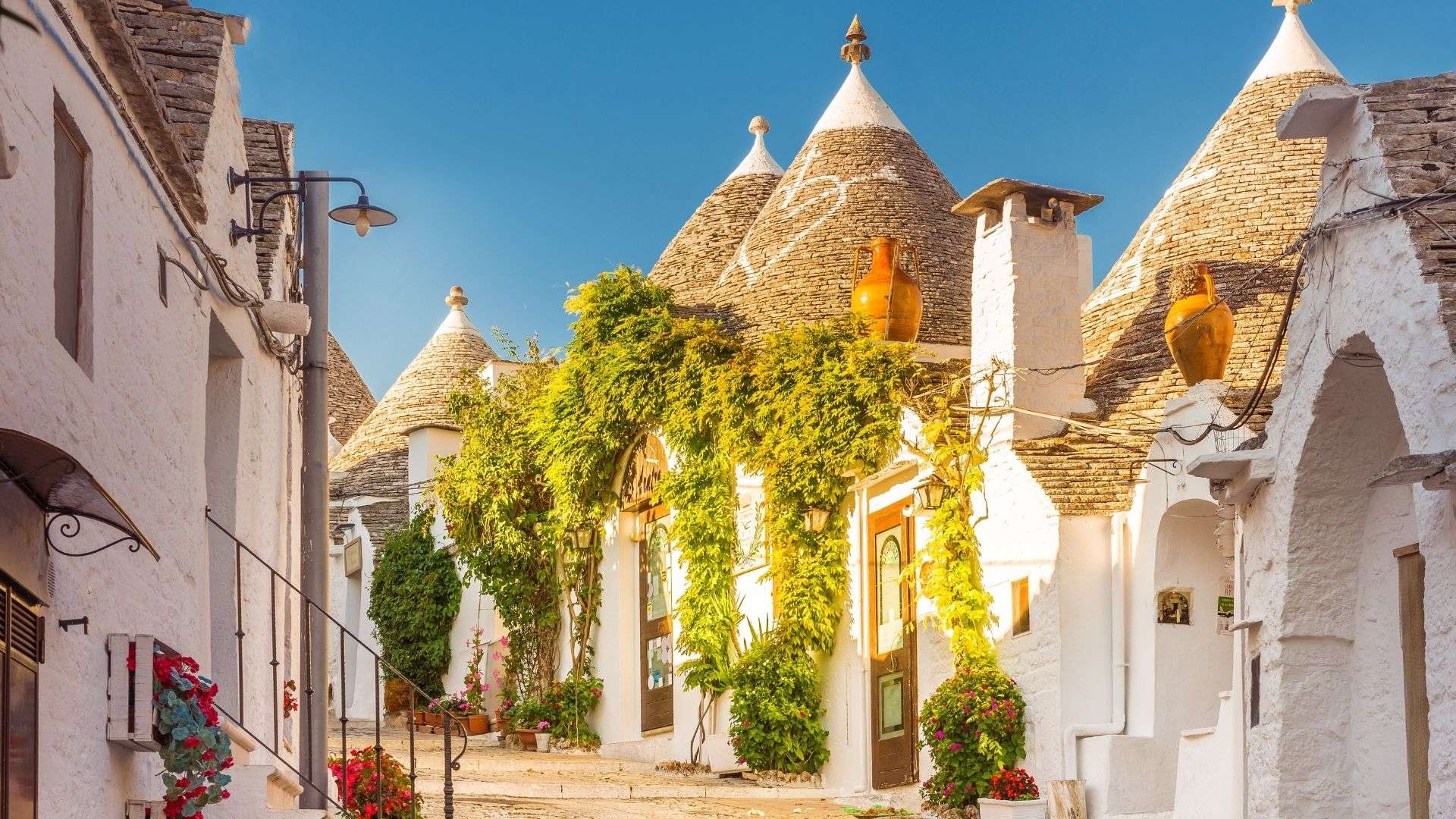
From Sicily, the gaze naturally widens toward Puglia, where the landscape softens and the stones reflect a suspended light.
The Itria Valley is a place where beauty is never loud: it is geometric, calm, harmonious.
Retirees often say they are struck not by trulli or postcard landscapes, but by the normality of village life — the ability to walk without hurry, to choose a different café each day, to recognise the ancient rhythm of the white towns.
Here, time seems to have a different temperature: warm but not scorching, slow but not inert, everyday yet never banal.
A similar harmony is found in Le Marche, a region many describe as “the silent Tuscany” — not because it is less beautiful, but because it is less exposed to international attention.
This discretion is one of its greatest strengths.
Towns such as Recanati, Corinaldo, Offida, Sarnano offer a life that flows with composure. There is no Tuscan glamour, no international spotlight — and yet, there is a surprisingly high quality of life: efficient services, small squares that fill slowly, hills that change colour with the seasons.
For Northern Europeans in particular, this region often represents a near-perfect balance: dynamic enough to provide everything needed, quiet enough to rediscover oneself.
Then there is Umbria, which does not seduce with light like Sicily, nor with Puglia’s photographic perfection, but with something deeper: a sense of intimacy.
Umbria does not embrace you — it accompanies you.
It does not impose its beauty — it reveals it slowly, curve after curve, village after village.
Perugia, Spello, Bevagna, Todi — those who relocate here speak of a spiritual, contemplative Italy, where each day seems to contain an extra thought, an extra breath.
A land that does not need to shout its value, because it emerges naturally.
For retirees seeking equilibrium, Umbria becomes a quiet but solid harbour.
And then there are territories less often discussed, such as Abruzzo and the Apennine regions, where nature dominates.
Winters are colder, landscapes more rugged, life simpler.
But for mountain lovers, silence seekers, and those who appreciate stone houses and vast horizons, these areas are a rare refuge.
Living costs are low, communities welcoming, the relationship with the surrounding landscape immediate and intimate.
Here one finds an Italy that feels like a return to origins — an authenticity many foreigners only discover once they arrive.
What unites these regions is not their aesthetics — Italy has countless — but the interior experience they offer: the possibility of building a daily life that is beautiful, not perfect, not effortless, not free from challenges — simply beautiful.
This is what many foreign retirees seek, far more than advantageous tax rates or low property prices.
Each territory allows a different life to take shape.
Some find a home near the sea, others in a Baroque city, others in a hidden valley, others in a medieval hilltop village.
In each of these places, Italy gains a new character — and the foreign retiree, slowly, begins to become part of the landscape.
And precisely when this quiet integration unfolds, when one realises that life in Italy is as much a geographical choice as an emotional one, one reaches the heart of the entire journey:
it is not about finding the perfect house — it is about finding the place where your life can breathe best.
Do you want to live in Italy, but don’t know where yet?
The Invisible Pitfalls
Every relocation begins with an image, but it unfolds in reality.
And reality — especially when changing countries later in life — is made of as much fragility as fascination.
There are pitfalls no official guide mentions, because they belong not to the realm of regulations, but to the realm of emotions, habits, expectations.
These pitfalls are not enemies of the Italian dream; they are part of it. Recognising them means approaching Italy with clarity; ignoring them means risking that desire becomes weight.
The first pitfall, perhaps the most common, is confusing holiday Italy with everyday Italy.
Those arriving from afar carry with them memories of light summer evenings, long outdoor dinners, slow walks through sunlit alleys scented with basil.
But living is not vacation: it is moving through full seasons, learning winter winds, understanding autumn rain.
Many retirees say their first Italian winter is a revelation — sometimes gentle, sometimes disorienting.
Not because winter is harsh, but because it marks the boundary between imagining Italy and knowing it.
In villages especially, winter silence can be melancholic for some and deeply comforting for others.
It requires a certain appetite for stillness, creativity, intimacy with one’s own space.
Those unprepared for this passage may feel more isolated than they expected.
The second pitfall is bureaucracy.
Not bureaucracy as a concept — but the lived experience:
offices closing at lunchtime, documents needing cross-checks, procedures differing between municipalities, situations that seem solvable only if you know the right person.
For those coming from more linear or digitalised systems, this can feel labyrinthine.
The truth is that Italian bureaucracy has its own internal logic: not impossible, simply different.
Approached without guidance, it can cause frustration, delays, misunderstandings.
This is where the need for support often begins — not because the system is unmanageable, but because no one wants their new life to begin in confusion.
The third pitfall concerns property.
Buying a home is a delicate decision anywhere, but in Italy — especially in historic towns — homes are ancient, structures layered, buildings carriers of centuries, not decades.
A misplaced stone may mean nothing — or everything.
A thick wall might be a treasure, not a flaw.
Foreign retirees, charmed by aesthetics and by prices lower than in their home countries, often buy too quickly.
Months later, some discover that winter in that village is more isolating than expected, that neighbours are few, that transport is scarce, that the nearest shop requires a car ride.
Others discover that the charming house requires complex work, heritage authorisations, long timelines.
Italy demands decision-making that is slow, not in the sense of doubt, but in the sense of understanding.
A subtler pitfall is psychological: identity shift.
Retiring means leaving behind a role, a routine, a social context. Doing so while moving to another country amplifies everything.
Relationships must be rebuilt, habits redefined, language reconstructed, daily rituals reimagined.
Some experience this as liberation; others as suspension.
Here the local community becomes essential.
Another pitfall concerns distance from services.
Many Italian villages are beautiful, but not all the same.
Some have a hospital thirty or forty minutes away; some have a pharmacy open only a few hours; some have unstable internet.
For a retiree, these are not details — they are part of quality of life.
Choosing a village requires listening to the life of that village — not only its aesthetic charm.
And then there is the quietest pitfall: idealisation.
When you first arrive in Italy, everything seems poetic:
the grocer’s voice, the sound of the moka pot, cats in sunlit alleys, lemon trees on balconies.
But aesthetics alone cannot sustain the weight of life.
Italy is beautiful, yes — but it is lived, not staged.
A life built only on aesthetics risks collapsing at the first inconvenience.
Recognising these invisible pitfalls is what allows the most authentic version of relocation to emerge.
Not an escape into a postcard image, but a movement toward a truer way of living.
Those who understand this before arriving — or who are accompanied in understanding — reach Italy with clearer eyes: more open, more grounded, more ready.
And for this very reason, they are more capable of building a life that is not only beautiful, but right for them.
The Life That Truly Awaits You
At the end of every reflection — beyond statistics, rankings, costs, landscapes — one simple question remains:
What kind of life do you truly want to live?
It is a question that does not concern Italy as such — it concerns you.
And Italy, perhaps more than many other countries, forces you to answer it honestly.
Those who arrive imagining retirement as an ending — a closing chapter, a slow descent — quickly discover that this image has little to do with how Italy lives maturity.
Here, old age is not a drawer that closes; it is a season one enters.
You do not stop living — you change rhythm.
And it is this shift in rhythm that foreign retirees feel most powerfully.
In Italy, the day is not divided into productivity and rest, but into moments: coffee at the bar, a walk through the town centre, the small everyday shop for fresh ingredients, lunch prepared simply, the afternoon spent at home or outside, conversations with neighbours, a slow dinner, the television murmuring in the background, the steady sound of church bells marking time.
Foreign retirees often say that what surprises them most is not Italy’s beauty — they expected that — but the beauty of routine.
Routine, in their home countries, was often an accumulation of obligations, responsibilities, deadlines.
Here, it becomes the connective tissue of life — comforting, recognisable, almost therapeutic.
Then there is the matter of relationships — something no ranking ever measures.
In Italy, the “other” is not an intrusion.
They enter your life whether you plan it or not: the neighbour who helps carry your groceries upstairs, the baker who knows you prefer your bread more toasted, the doctor who listens longer than you speak, the elderly woman on the balcony who watches you walk past each day and, without asking anything, becomes a quiet presence in your life.
This informal social fabric — often invisible to tourists — is the backbone of Italian quality of life.
It cannot be bought or organised; it is given to you, provided you are willing to become part of it.
And then there is the landscape — not simply a backdrop, but an active presence in daily life.
The sea changing colour from morning to evening.
The hills shifting shade with the seasons.
The baroque city that sounds different in summer than in winter.
It is a form of companionship.
Many retirees say they stop feeling lonely not because they immediately make new friends, but because opening the window is often enough.
The landscape gives something back — sometimes more than a large metropolis ever could.
The life that truly awaits you in Italy is not perfect.
It is full.
It is made of seasons that you truly feel, relationships that grow slowly, small obstacles that require patience, rewards that arrive quietly.
It is made of beauty that does not need to be exhibited, but that reveals itself in details: a stone street warmed by the sun, the golden light at five in the afternoon, the smell of ragù on a Sunday, the sound of a procession, the wind arriving from the sea.
It is a life that requires presence.
It asks you to really be there — with your body, your mind, your time.
It asks you to accept that some days will feel harder, that some bureaucratic steps will be slow, that some distances will require effort.
But all of this belongs to the same truth: Italian life is real, not imagined.
And precisely for this reason, it gives more than it promises.
Many retirees describe a precise moment — almost symbolic — in which they realise they have “become part” of the place where they live.
Not a grand event: something small.
The greengrocer’s greeting arriving spontaneously.
The first invitation to a village celebration.
A word of Italian understood without thinking.
A small gesture of care from a neighbour.
These micro-events — tiny in scale, enormous in meaning — are the moments when relocation stops being a project and becomes a life.
And then there is a deeper truth, worth stating plainly: for many, relocating to Italy is an identity choice. It is choosing that the final part of one’s life will not be a slowing down, but a different form of fullness.
Choosing that one’s time will have quality, not only quantity.
Choosing a place where relationships still matter, where history is not a museum but a presence, where beauty is not reserved but diffused.
In this journey — between desire, reality, territory, and awareness — the role of those who guide is not to replace the person, nor to simplify what is complex.
It is to make visible what the newcomer cannot yet see, turning a dream into a path.
This is what Impatria does every day: not because Italy is difficult, but because Italy deserves to be lived deeply.
Deserves to be chosen with care, with love, with clarity.
The life that truly awaits you in Italy is not made of postcards.
It is made of days that carry weight, of gestures that matter, of relationships that weave slowly, of a sense of time that reconciles you with yourself.
And it is exactly this — this quiet, profound, lived truth — that makes Italy, for so many, the right choice.
Share on: