Introduction
There are two ways to read the data on Italian emigration to the United States. One makes it abstract: four million people, seventy years of flows, provinces and percentages. The other: finding your great-grandfather’s name on a 1907 ship manifest, tracing the town he declared at customs — in New York, Baltimore, New Orleans, San Francisco — opening a map and seeing that place still exists, still with a main street, a parish church, a cemetery full of surnames you recognise.
This article does the second thing. It takes ten villages in the Mezzogiorno that fuelled the American diaspora — each with a specific, verifiable, unrepeatable story — and gives them back as coordinates: geographical, archival, human. According to ISTAT historical data, Calabria alone lost around 700,000 residents between 1900 and 1930. Those villages still exist.
Why did the great Italian emigration to the USA come almost entirely from one geographical area?
Look at a map of Italian emigration to the United States and you notice something quickly: the flow doesn’t come from all of Italy — it comes from half of it. The North and Centre sent workers and settlers to Brazil and Argentina. The South — Sicily, Calabria, Basilicata, Campania, Puglia, Abruzzo, Molise — sent almost everything to the United States. This is not a geographical coincidence: it is the result of at least three decades of pressures that accumulated until emigration became the only rational option.
Structural causes. After Italian Unification (1861), the new state’s fiscal policies weighed asymmetrically on southern farming communities. The grist tax (tassa sul macinato), in force from 1869 to 1884, hit southern families already impoverished by a land system built on large estates. Then came phylloxera: in the 1880s and 1890s it destroyed the vineyards of Sicily and Calabria, eliminating the main source of income for thousands of families. This was not ordinary poverty: it was the end of an entire economy.
Chain migration. The emigration was not spontaneous or scattered. It organised itself through networks of fellow villagers — the so-called chain migration — which guided new arrivals towards neighbourhoods already inhabited by people from the same town. A man would leave, find work, write home. His brother would leave. His cousin would leave. Within twenty years, entire villages found themselves concentrated in specific blocks of New York, Philadelphia, Boston and New Haven.
Why Brazil is Venetian and America is Southern. The flows to Brazil and Argentina involved primarily Veneto, Friuli and Trentino: land to farm was on offer there. The United States instead needed labour for the mines, railways and factories of the industrial Northeast. According to the Association for Studies on Italian Emigration (ASEI), after 1890 more than 80% of Italian emigrants to the USA came from the regions of the Mezzogiorno.
American ports of entry. There was no single Italian port. New York — with the Ellis Island station active from 1892 to 1954 — was the main gateway, but not the only one. Sicilians made heavy use of New Orleans until the early twentieth century. The port of Baltimore (Locust Point terminal) was the preferred entry point for many Calabrians and Lucanians; those bound for California disembarked in San Francisco. Ship manifests from all these ports have now been digitised, but on different platforms: the Liberty Ellis Foundation covers only the port of New York; Ancestry.com and FamilySearch hold records for Baltimore, New Orleans, Boston and Philadelphia.

The 10 villages
Among the roughly four thousand municipalities in the Mezzogiorno that lost residents between 1880 and 1924, almost all sent someone to the United States. But not all of them left traces that are still readable. These ten stand out because each has something specific on the other side of the ocean: a formal twinning with an American city, a descendants’ association with its own archives, a famous name that points to a specific house, a community still identifiable by origin. They were not chosen for emigration volume — they are the ones where the thread between a Calabrian or Sicilian street and a New York or New Jersey neighbourhood can still be held in the hand.
Mussomeli (CL) — Sicily
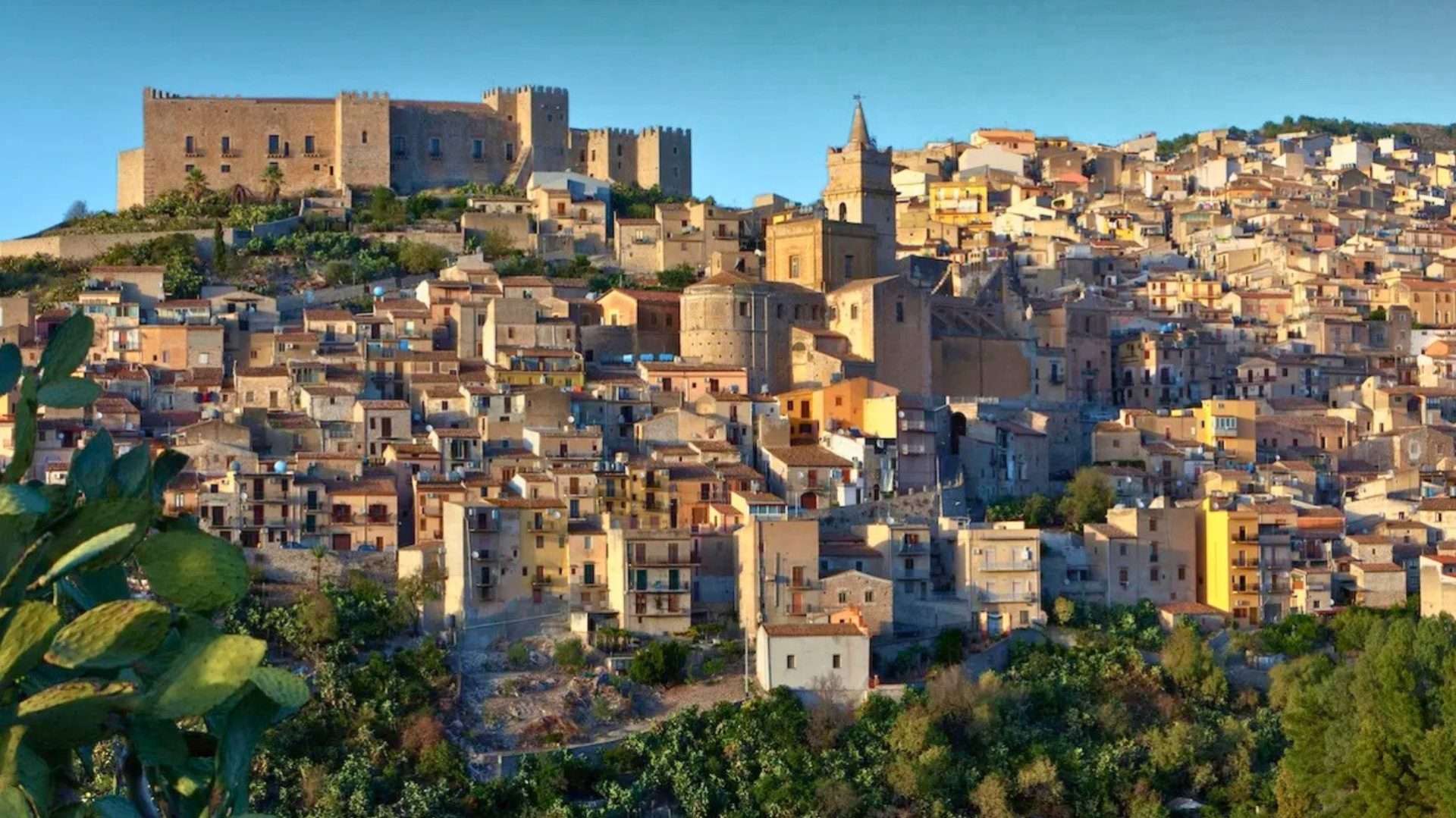
The first thing that shaped the history of Mussomeli lies underground, literally: sulphur. The province of Caltanissetta was at the heart of the Sicilian sulphur district, one of the most productive in the world throughout the nineteenth century. When the sulphur market collapsed — crushed by competition from American sulphur extracted in Louisiana with the Frasch process from the 1890s — the miners found themselves without work and without alternatives. What got exported instead were people: the destination was almost always New York or New Jersey.
Mussomeli today has around 9,700 inhabitants (source: ISTAT 2023), down from over 15,000 in 1951. Dominating the town is the Manfredonico-Chiaramontano Castle, built in the fourteenth century on the orders of Manfredi III Chiaramonte: a structure that rises directly from a tuff outcrop and, from certain angles, seems to grow from the stone itself.
Since 2018, the municipality has run the one-euro houses programme, with around 450 properties sold to buyers from 18 nationalities. A portion are descendants of emigrant families who come to buy the great-grandfather’s house, or what remains of it. The CISEI archive shows a concentration of departures from the province of Caltanissetta toward New York, with surnames such as Faraci, Vaccaro, Mistretta and Farruggia. Reference airport: Palermo Falcone Borsellino (PMO), about 120 km by road.
Roseto Valfortore (FG) — Puglia
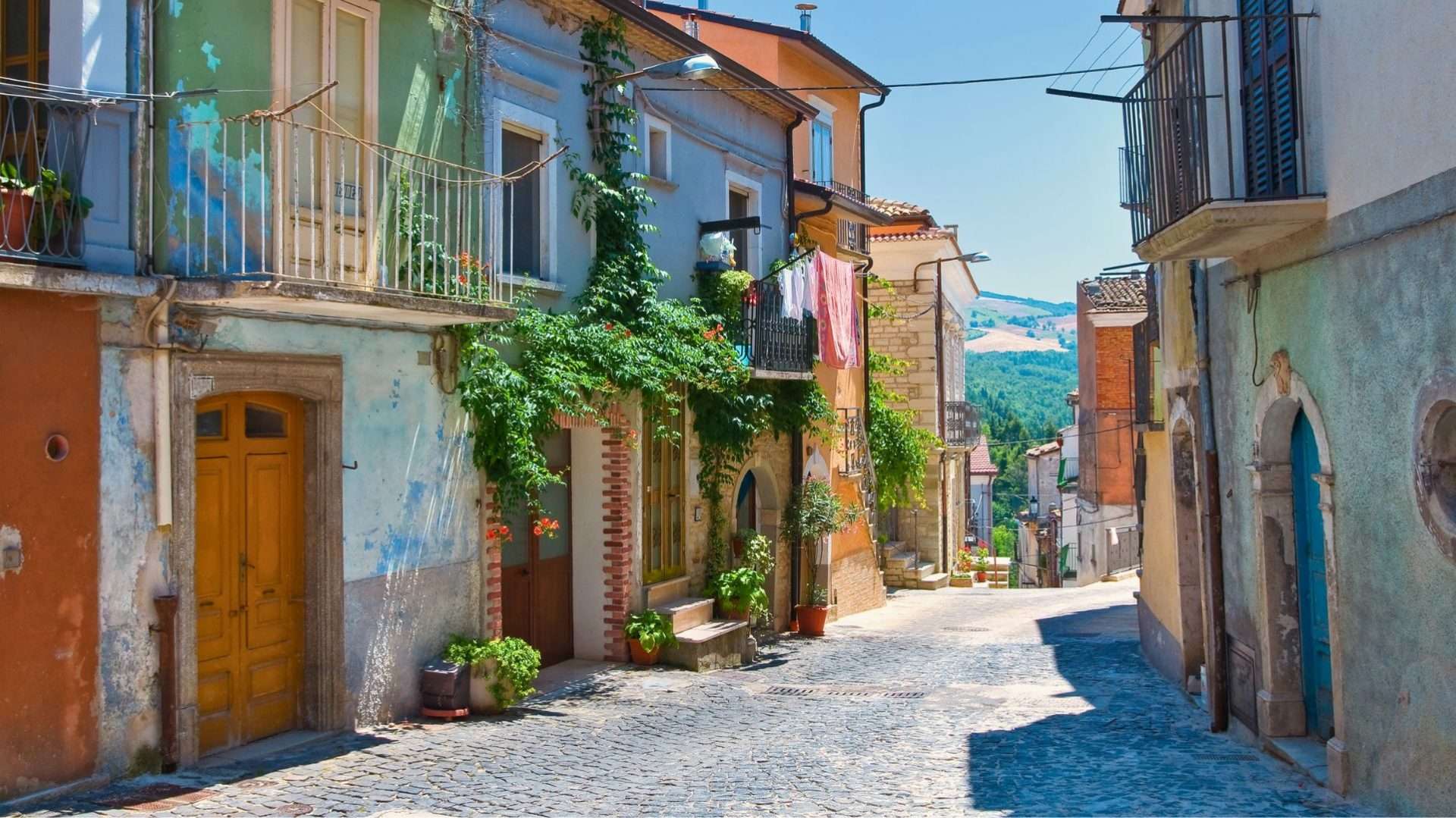
Roseto Valfortore sits on the hills of the Subappennino Dauno, roughly 50 km from Foggia «Gino Lisa» airport (FOG). A compact historic centre in yellow stone, with the remains of a Norman castle at the highest point. It has 997 inhabitants (source: ISTAT 2023); in 1946 there were 5,400. The distance between those two numbers has a precise story.
In 1882, eleven men from this village sailed for New York — not as individuals, but as an organised group already oriented toward a specific destination: the slate quarries of Bangor, Pennsylvania. They found work and sent for their fellow villagers. Within a few decades an entire town had formed: Roseto, Pennsylvania, founded by Nicola Rosato, Lorenzo Falcone and Giovanni Policelli, all born here.
In 1961, the physician Stewart Wolf noticed something anomalous: the men of Roseto, Pennsylvania, were dying of heart attacks at a far lower rate than the national average, despite poor diet and smoking. He published his findings with John Bruhn in The Roseto Story (1979) and The Power of Clan (1998); the explanation was social cohesion. The sequel is equally instructive: by the 1970s, when the third generation had adopted mainstream American lifestyles, heart-attack rates aligned with the national average. The diaspora had been assimilated, and had lost its shield.
Pisticci (MT) — Basilicata
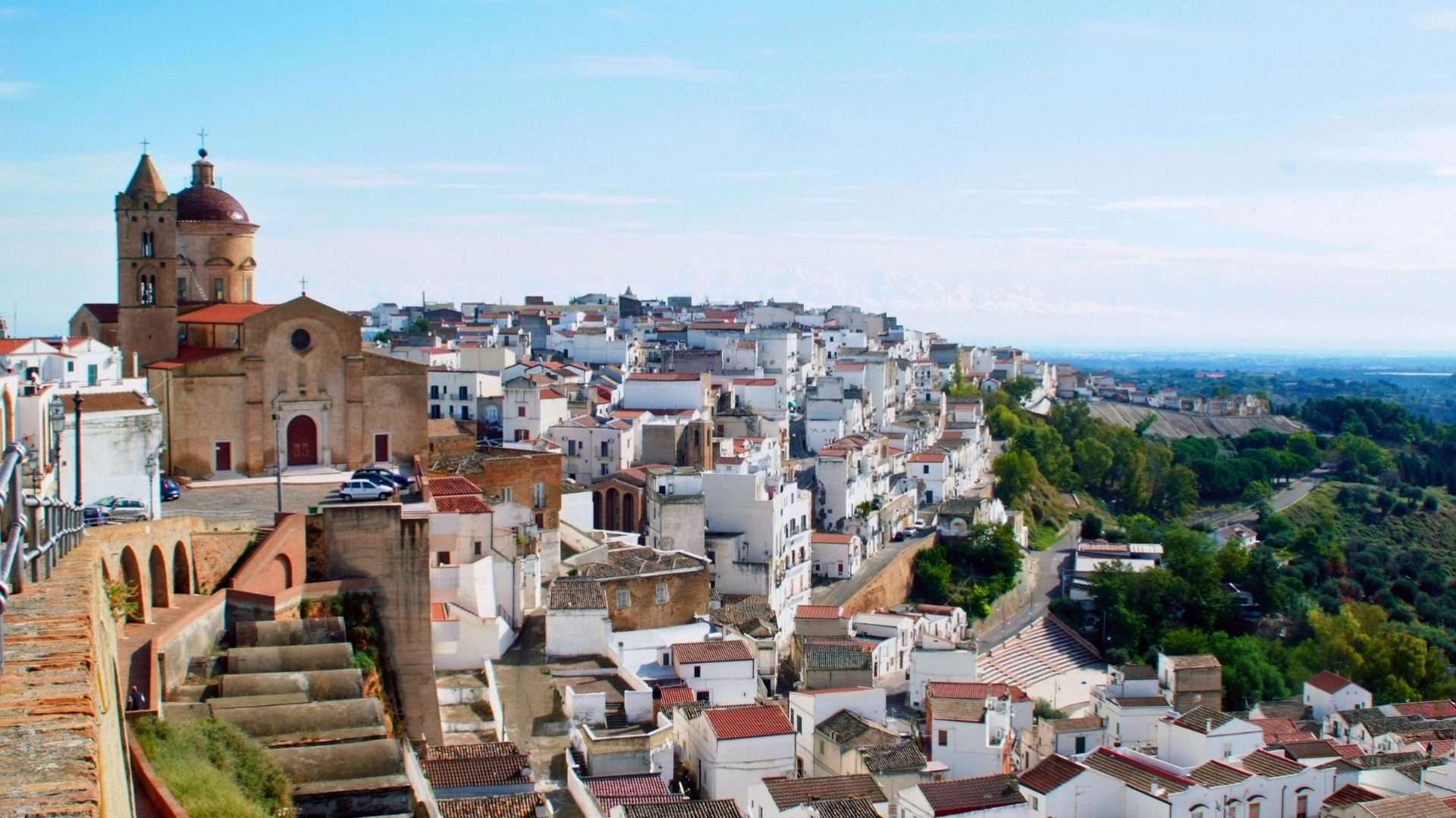
In 1688, a landslide hit Pisticci. It did not destroy the town: it displaced it. The inhabitants rebuilt on parallel terraces descending like steps toward the Basento river, and that form survived three and a half centuries — the white houses arranged in levels above the valley, the almost planned geometry of people who learned the ground can shift.
Between 1880 and 1920, thousands of Pisticci residents took the road to the port of Naples, bound for New York via Ellis Island, but also toward Baltimore — from where many found work in the coal mines of western Pennsylvania. The community spread across New Jersey, Pennsylvania and New York, keeping mutual-aid networks based on shared origin for decades.
In the second half of the twentieth century, Enrico Mattei chose the Basento valley for one of ENI’s petrochemical complexes, and the town grew again toward the valley floor. That era too has ended. Pisticci has around 16,500 residents today (source: ISTAT 2024) and is among the largest municipalities in Basilicata by surface area. Served by Bari Karol Wojtyła airport (BRI), about 112 km by road.
Verbicaro (CS) — Calabria
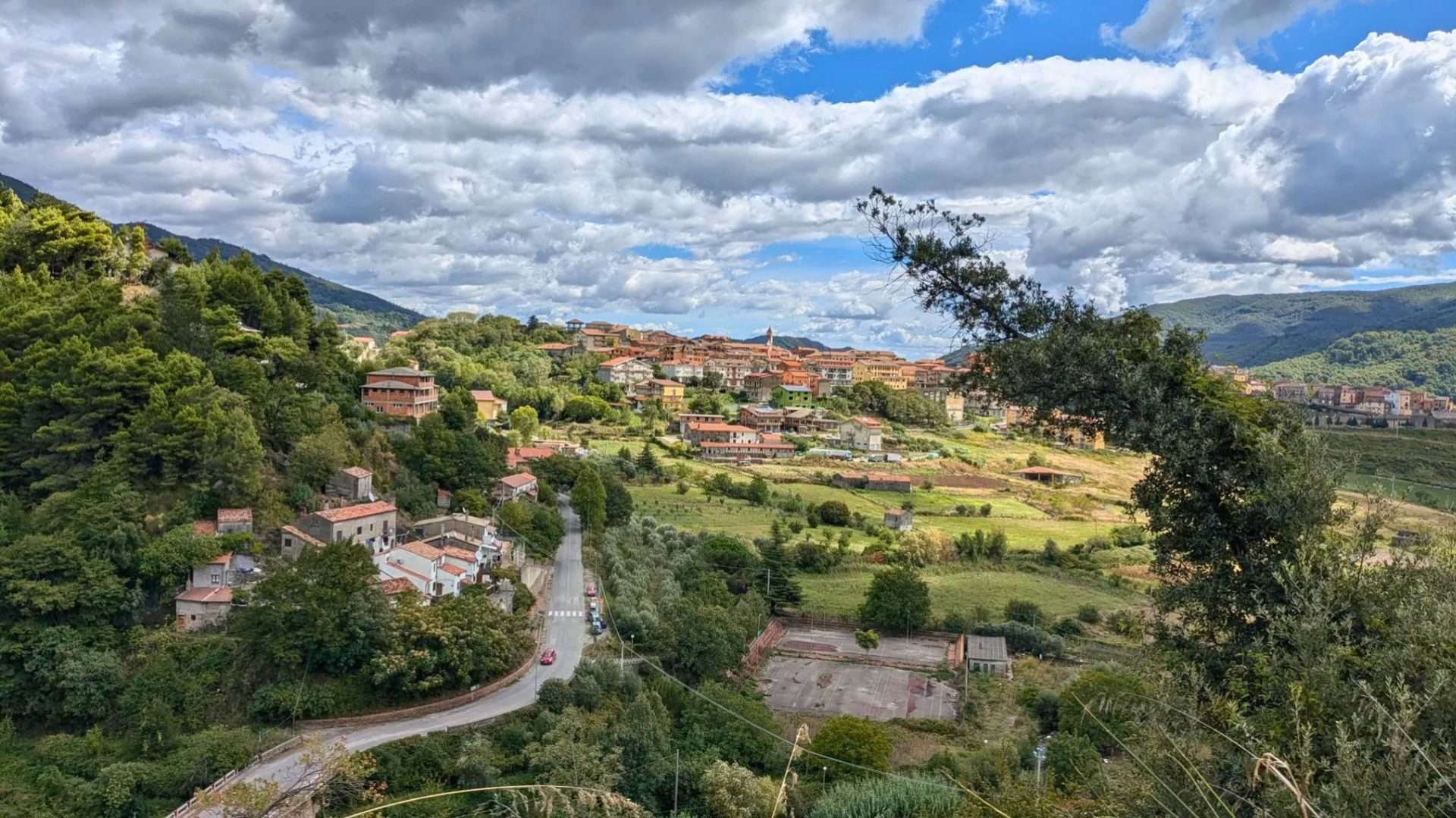
What is striking about Verbicaro is the direction its diaspora took. While the Calabrian villages of the Ionian coast sent almost everyone to New York and New Jersey, the Verbicaro emigrants took the opposite route: California, the West Coast, San Francisco and Los Angeles. They arrived after longer crossings, on routes through the Strait of Magellan or across Panama, and settled far from the great Italian clusters of the Northeast.
The reason probably lies in the local economy. Verbicaro was known for citron cultivation — the Calabrian variety used in the Jewish celebration of Sukkot — and for viticulture. When phylloxera and a collapse in agricultural prices combined, the village lost its economic base within a few years.
The internal Italian story has a postscript: after 1945, a portion of the Verbicaro emigrants moved to Taggia, in Liguria, where their descendants today number around 1,500 — enough for Taggia to be called the other Verbicaro. Verbicaro has around 2,500 residents today (source: ISTAT 2024). Reference airport: Lamezia Terme (SUF), about 130 km by road.
Sant’Elia a Pianisi (CB) — Molise
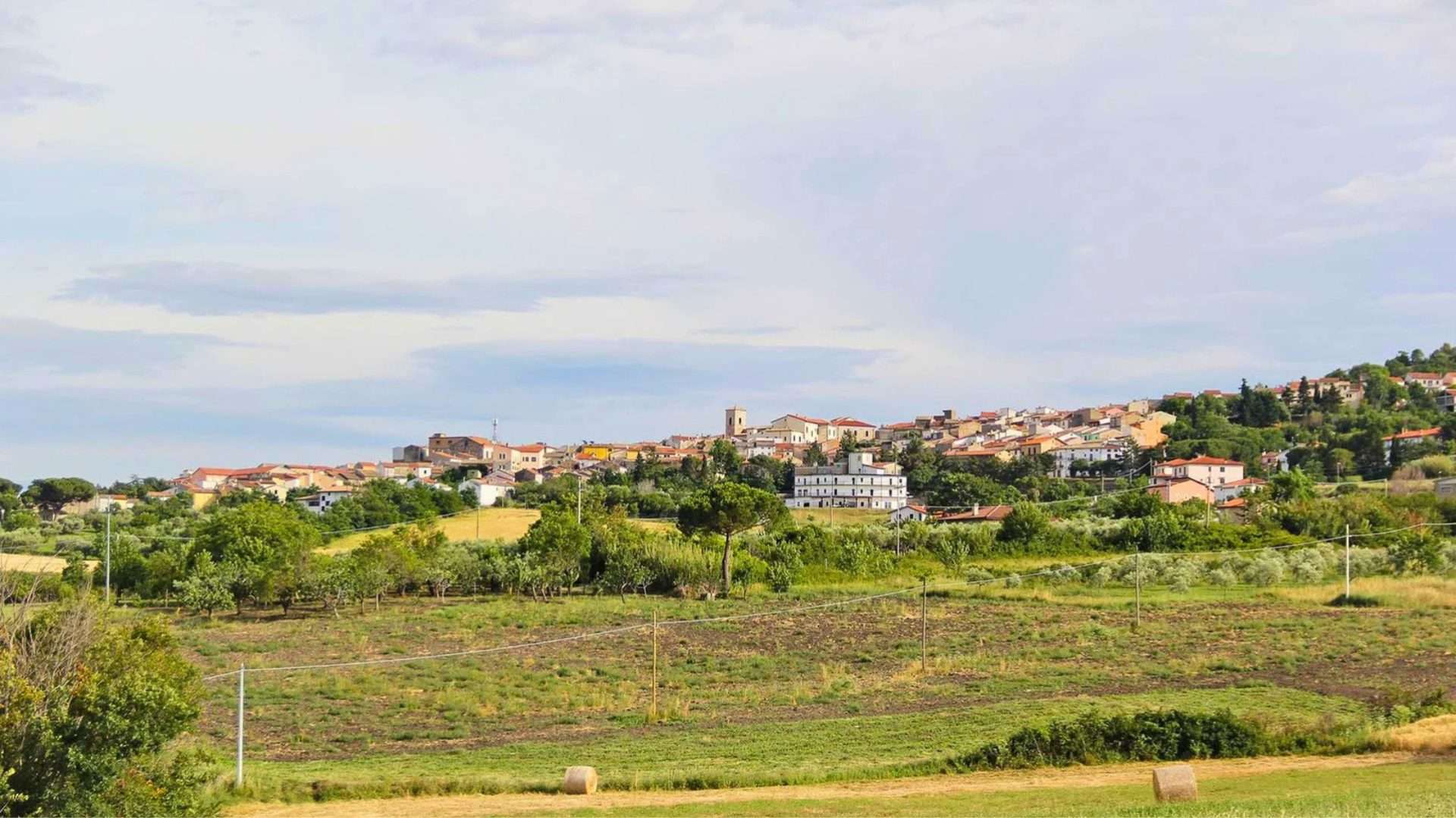
Sant’Elia a Pianisi is one of those towns where demographic loss is written into the landscape before you reach the statistics. In the 1960s, while some families were still receiving letters from relatives who had emigrated decades earlier to New York and Utica — where the Molisano-American community clustered on and around Bleecker Street — the Italian state built a dam on the Fortore river and submerged part of the same land those families had farmed for generations. Lake Occhito arrived after the diaspora: first the people left, then the land went underwater.
The Sant’Elia community in Utica, New York, is documented from the early twentieth century. Molisani in America are one of the least studied communities of Italian emigration: Molise only became an autonomous region in 1963, which complicates the statistical mapping of origins. Sant’Elia a Pianisi has around 1,500 residents today (source: ISTAT 2024). Closest airport: Foggia «Gino Lisa» (FOG), about 80 km by road.
Acri (CS) — Calabria
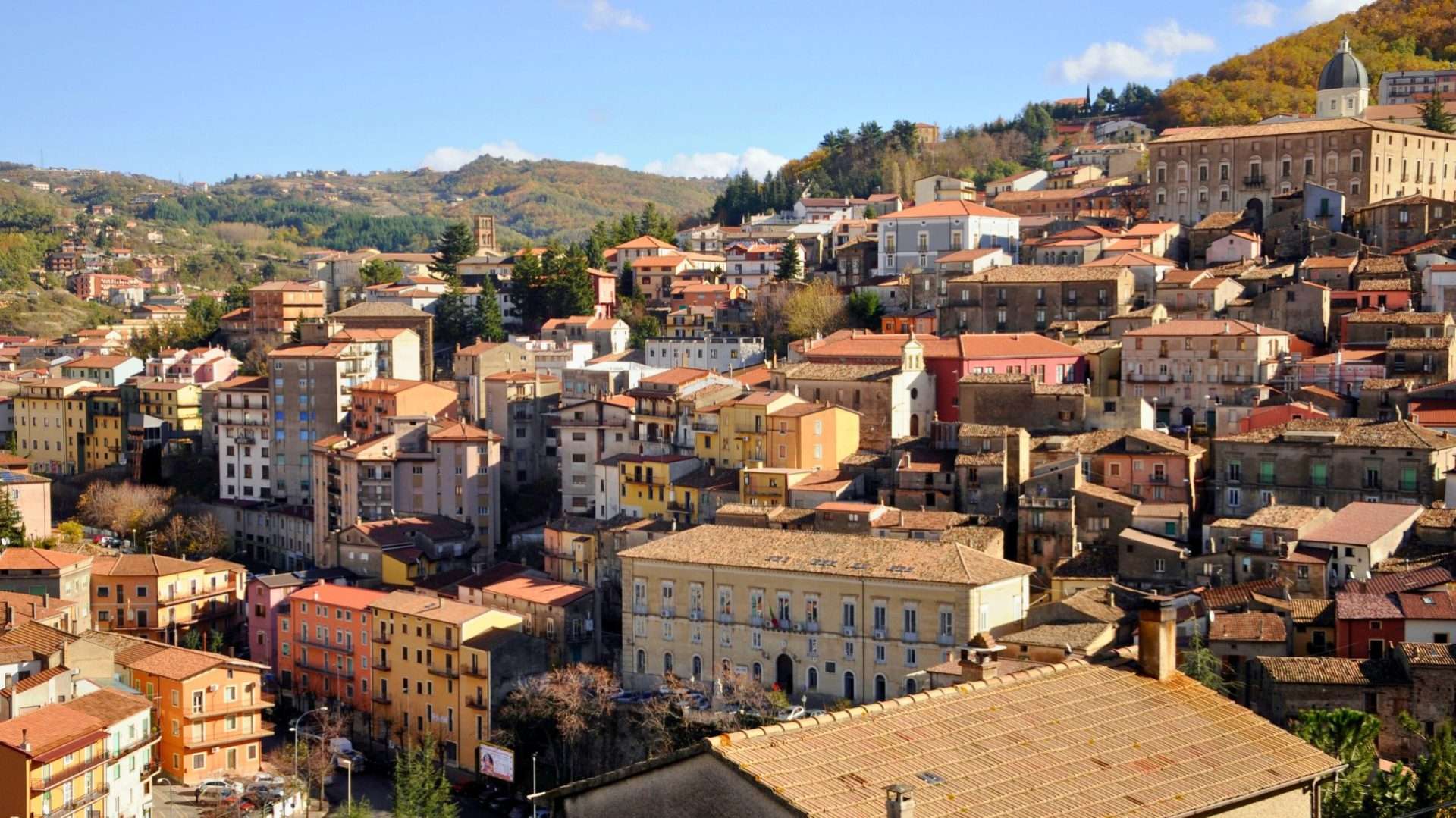
Acri is one of the larger centres of northern Calabria: around 20,000 residents (source: ISTAT 2024), in the province of Cosenza, on a hillside spur overlooking the Crati valley. A layered historic centre, with a documented medieval Jewish presence and a memory of American emigration that for a long time remained without monuments.
Yet from here, in 1904, a boy of around ten named Angelo Siciliano departed — born in Acri on 30 October 1892. He arrived in Brooklyn via Ellis Island: slight, frightened, a habitual target of bullies. The turning point came at the Bronx Zoo, watching a lion tense its muscles against one another. He built an exercise system on that principle — Dynamic Tension — changed his name to Charles Atlas, and transformed his self-image. His advertisements in American comics — the boy who gets sand kicked in his face, then returns stronger — reached tens of millions of readers in the 1930s and 1940s, selling a narrative of masculine redemption that entered American culture.
Served by Lamezia Terme airport (SUF), about 105 km by road.
Polizzi Generosa (PA) — Sicilia
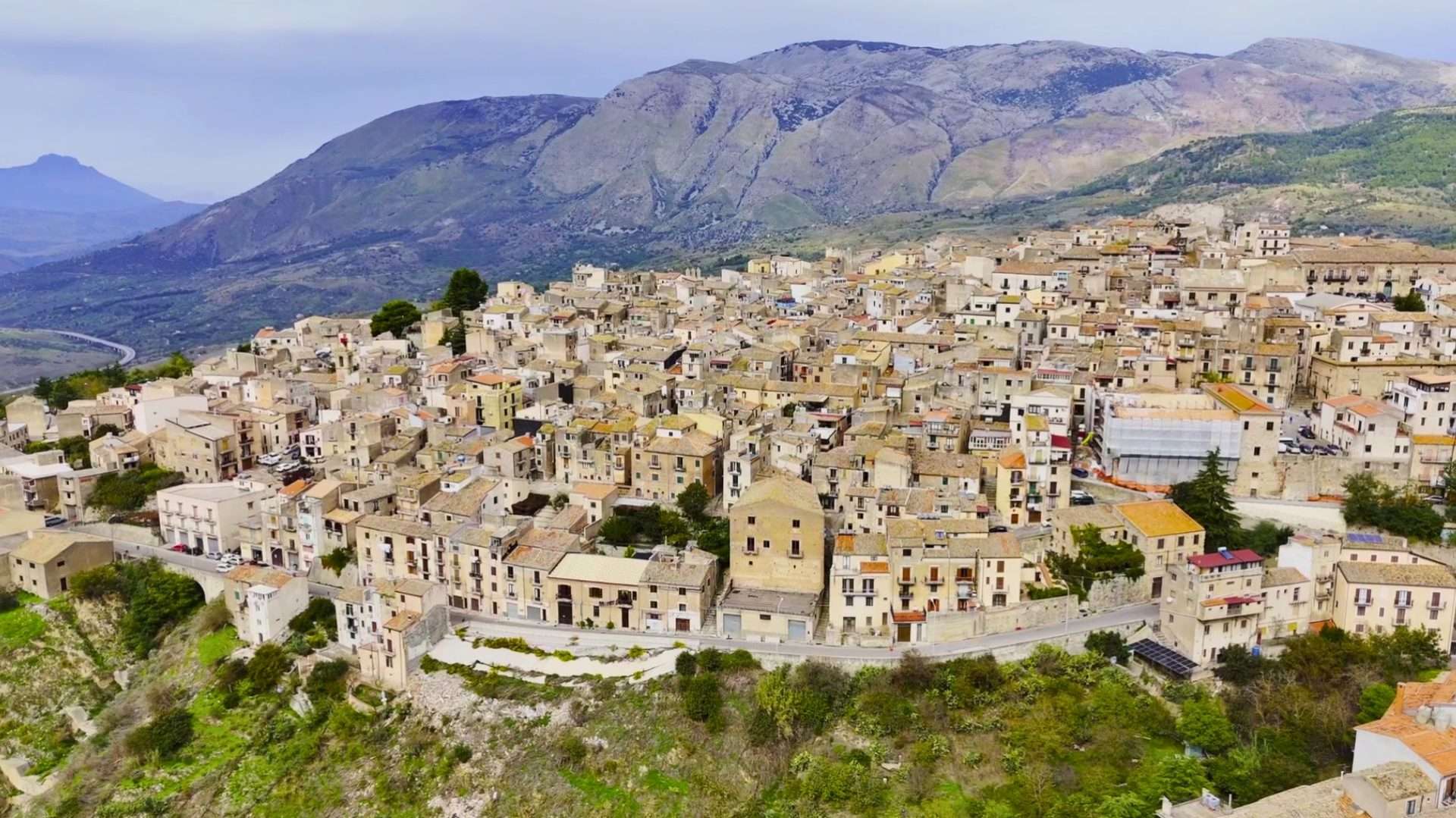
Polizzi Generosa is a village in the Madonie mountains at 1,000 metres of altitude, among the Most Beautiful Villages in Italy, with around 2,700 residents (source: ISTAT 2024). Unlike other Sicilian emigration villages, Polizzi lost its people not to factories in the North but to New York — where those who left already knew where to go, because one of their own had built the reception infrastructure on the other side.
That person was Vincenzo Sellaro, born here on 24 April 1868. He earned his medical degree in Naples in 1895, emigrated to the United States in 1897, and opened a practice on Grand Street in Little Italy, Manhattan. He saw how Italian immigrants were treated in American emergency rooms — frightened, not understanding the language, often treated with contempt. On 22 June 1905, with five other Italian immigrants, he founded the Order of the Sons of Italy in America, to defend immigrants’ rights at a time when the American press portrayed them as criminals. Today, renamed the Order Sons and Daughters of Italy in America (OSDIA), it has over 600,000 members and has distributed more than 164 million dollars in scholarships and aid (source: osdia.org).
Served by Palermo Falcone Borsellino airport (PMO), about 115 km by road.
San Fele (PZ) — Basilicata
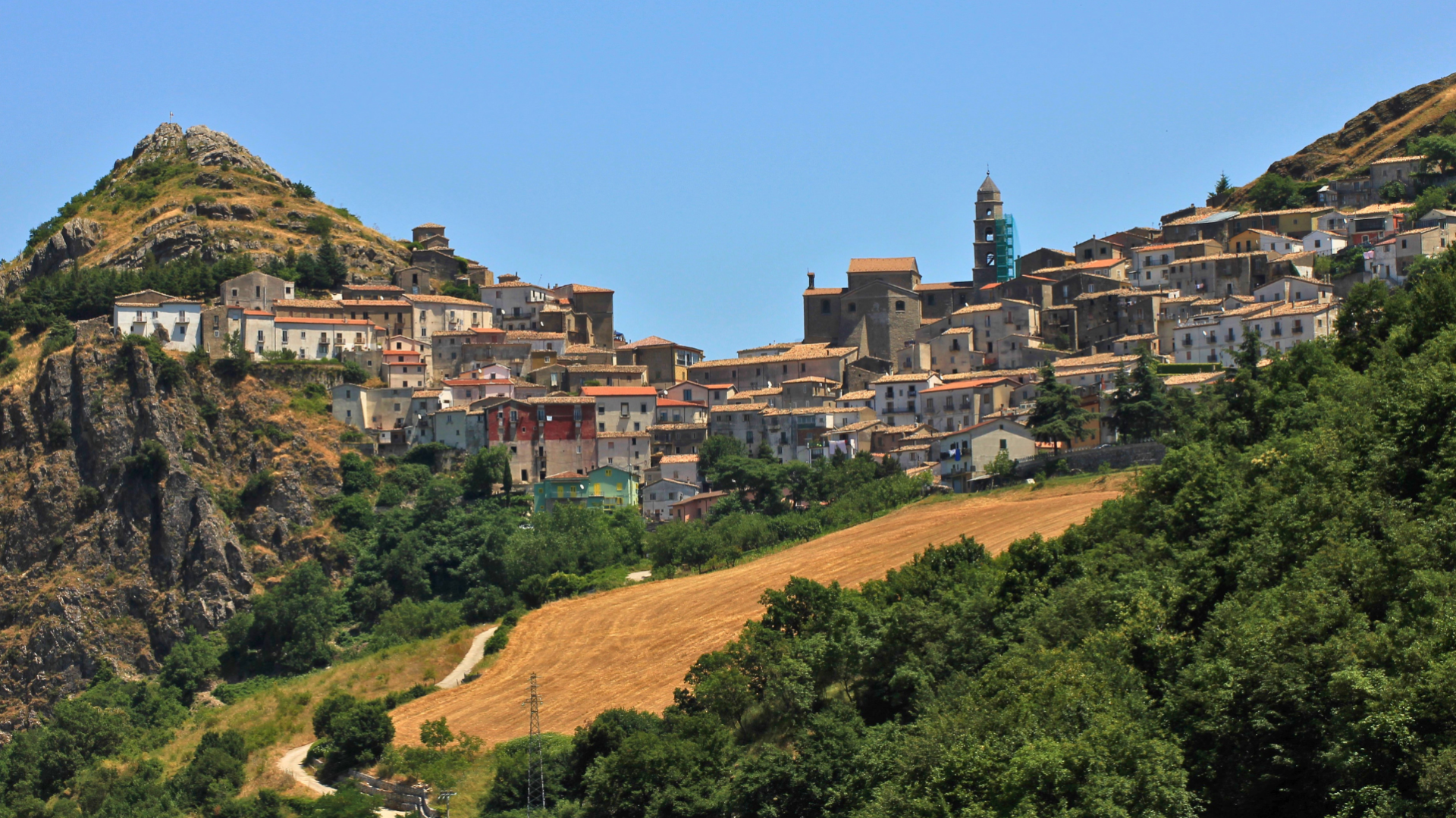
Before mass emigration emptied San Fele, the village had over 10,000 inhabitants. Today it has around 2,500 (source: ISTAT 2024). Among the families who made that journey were the DeVitos: Danny DeVito‘s paternal grandfather, Michele DeVito, emigrated from San Fele to New Jersey, where Danny’s parents — and then Danny himself, on 17 November 1944 — were born.
But the history of San Fele in the American diaspora is broader and older than a single famous surname. The San Felese Society of New Jersey is one of the oldest Italian-American societies in the state, founded on 10 April 1902 in Trenton. Over the decades it has built a freely accessible digital archive: the most valuable document is A Book of Passage, which reconstructs departures for America between 1880 and 1920 with names, surnames and dates — gathered generation after generation by volunteers.
Closest airport: Naples Capodichino (NAP), about 140 km by road.
Pacentro (AQ) — Abruzzo
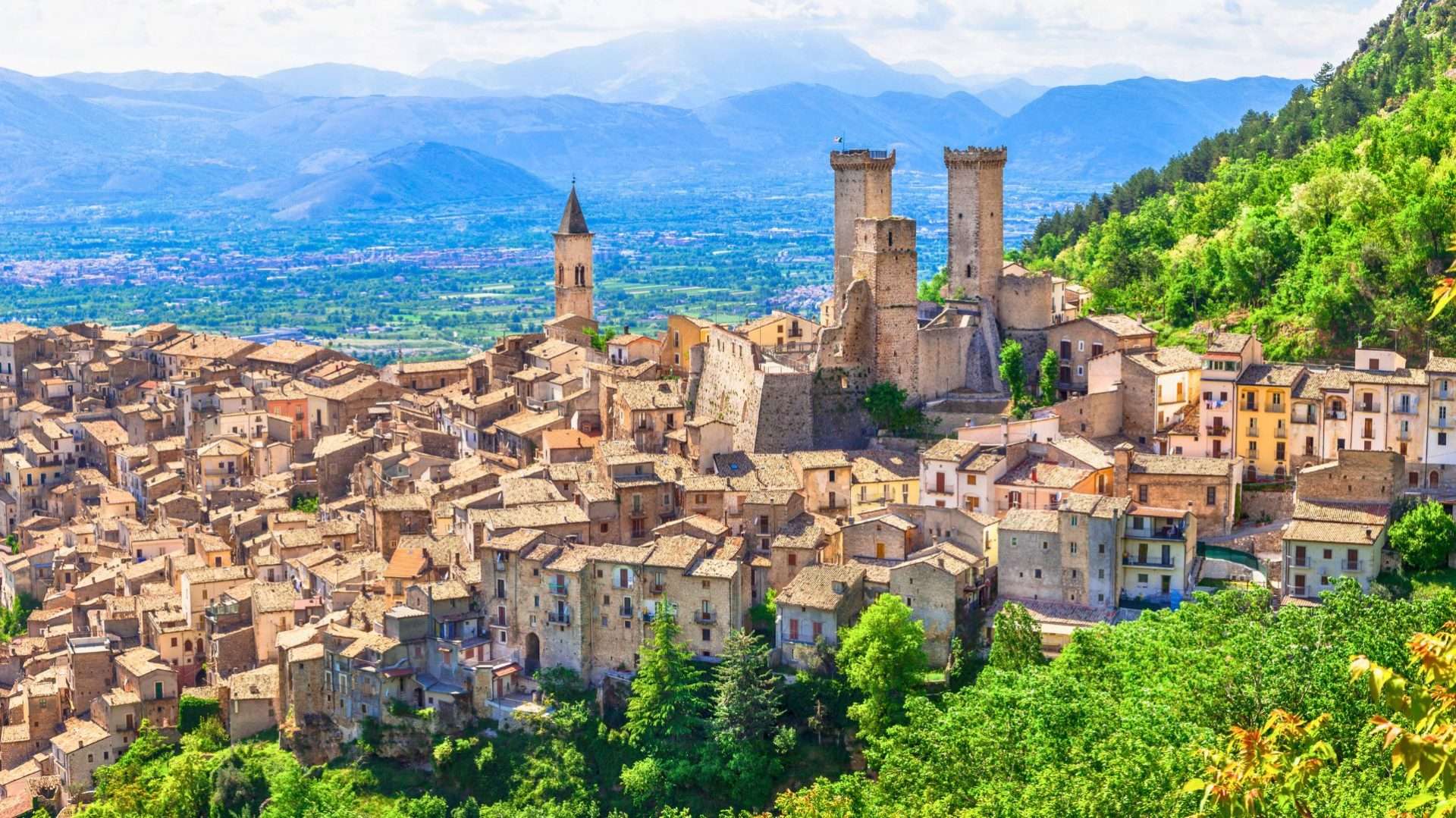
In Pacentro there is a church built in 1616, outside the village walls, overlooking the Peligna Valley: Madonna dei Monti. On its interior walls hang dozens of ex-votos donated by American emigrants or their descendants — votive plaques, yellowed photographs with English writing on the back, objects brought from across the ocean. It is one of the few places in the Mezzogiorno where the history of emigration to America is physically present and visible.
The paternal grandparents of Madonna Louise Veronica Ciccone emigrated from Pacentro: Gaetano Ciccone left in 1920 for Aliquippa, Pennsylvania, followed by his wife Michelina Di Iulio in 1922. Their son Silvio later moved to Michigan, where Madonna was born in 1958; in 1987 she visited Pacentro for the first time and met relatives still living there. The village today has around 1,100 inhabitants (source: ISTAT 2024) and three medieval towers.
The Pacentro emigration cycle toward the USA involved primarily the Paterson, New Jersey area: Amy Bernardy, in L’Abruzzo che emigra (1913), describes it as old and practised immigration. Served by Pescara airport (PSR), about 70 km by road.
Melilli (SR) — Sicilia
In the municipal archives of Melilli, two old registers were found containing the lists of families who left for the United States in the early twentieth century. They are not aggregate statistics: they are names, surnames, addresses — family by family. The destination was almost always the same: Middletown, Connecticut, where the Melilli emigrants founded a community so cohesive it remains recognisable today, four generations on.
The mechanisms of chain migration partly explain that concentration: the first to leave found work in Middletown, wrote home, and the route was set. Ship manifests show passengers from Melilli declaring Middletown, Conn. as their final destination well into the 1920s. The families were so close-knit that, according to local memory, they gathered at the Connecticut riverbank to welcome every steamship arriving with new emigrants.
The continuity remained concrete: the formal twinning between Melilli and Middletown dates to 1979, and the Melilli-Americans brought with them the Feast of San Sebastiano, still celebrated in Middletown every year. Melilli has around 13,000 residents today (source: ISTAT 2024). Served by Catania Fontanarossa airport (CTA), about 44 km by road — the most convenient connection among the ten villages.
How to prepare before visiting your ancestors’ village?
Arriving in a small southern Italian municipality without preparation means losing weeks of potential research. These five steps, in order, reduce the margin of error.
- Before booking the flight: search the Portale Antenati to check whether the municipality’s records are digitised, and search the CISEI database for the surname in ship manifests. The Liberty Ellis Foundation covers only New York: if ancestors disembarked at Baltimore, New Orleans, Boston or San Francisco, manifests are on Ancestry.com or FamilySearch.
- Contact the municipality by email at least three weeks before, specifying the surname, the time period, and any data you already have.
- Identify the relevant historic parish: before 1865, records were kept only by parishes; the Diocesan Archive can indicate which one covered the neighbourhood of origin.
- Build a list of all known names and surnames, approximate dates, and the spouse’s name if known.
- Book accommodation in advance (at least three weeks) during the peak months of July–August: capacity is limited.
What to bring to make the most of archival research?
- Digitised family documents: birth, marriage and death certificates, photographs with names on the back, letters, passports, American naturalisation papers.
- A printed list with name, surname, approximate date of birth and spouse’s name for at least two generations.
- Ship manifests already found online (Ellis Island, or the ports of Baltimore, New Orleans and Boston): they contain the declared town of origin and the destination address in America.
- A request form in Italian with name, surname, approximate date of birth and the type of document requested.
- A few key phrases in Italian for the archivist: Sto cercando un atto di nascita, di matrimonio o di morte; il mio antenato si chiamava [name] e nacque intorno al [year].
Conclusion
These ten villages are not destinations. They are coordinates. They lead to a birth record in a dusty register, to a gravestone bearing a surname known only from a grandfather’s identity card, to a third cousin still living in the stone house where it all began.
The Italian diaspora to the United States was the largest migration of a single people toward a single nation in the history of the nineteenth and twentieth centuries. It is not over: it has transformed. Millions of descendants carry surnames that point to specific provinces, specific villages, specific parishes. Many do not know it yet; many are beginning to ask.
What they find, when they arrive, depends almost entirely on how prepared they were before leaving. And that preparation begins with an online search, a surname entered into a database, an email written to a municipality that — often, more often than you might expect — replies.
Sources and bibliography
- ISTAT – municipal demographic data: demo.istat.it.
- CISEI – Centro Internazionale Studi Emigrazione Italiana: ciseionline.it.
- Portale Antenati – Ministry of Culture, digitised civil registry records: antenati.cultura.gov.it
- Ellis Island Foundation – Port of New York ship manifests (1892-1957): libertyellisfoundation.org
- Ancestry.com / FamilySearch – ship manifests: Baltimore, New Orleans, Boston, San Francisco.
- OSDIA (osdia.org) and San Felese Society of New Jersey – A Book of Passage (sanfelesesocietynj.org).
- Stewart Wolf, John G. Bruhn, The Roseto Story (1979) and The Power of Clan (1998); Amy Bernardy, L’Abruzzo che emigra (1913).
Share on:
FAQ
The reference municipality is the birthplace declared by the emigrant, not the family's current place of residence. Every Italian municipality has an Ufficio Anagrafe (registry office) reachable by email or phone: contacts are on the municipal website. The request must be written in Italian, specifying name, surname and period of interest. The response can take from a few days to several weeks.
The CISEI database lets you filter by province and municipality of origin. Ship manifests — from Ellis Island for New York arrivals, or Ancestry.com and FamilySearch for Baltimore, New Orleans, Boston and San Francisco — almost always contain the town of origin declared by the emigrant. If you have an American Certificate of Naturalization, it records the applicant's declared birthplace.
After two weeks without a reply, try again with a second message or call during opening hours (generally Monday, Wednesday and Friday mornings). Alternatively, contact the parish priest of the village's main church: they often know local families going back decades.
This is a possible outcome, for three main reasons: name change at the border (common for surnames hard to transcribe into English); internal transfer (the family may have moved to another municipality before emigrating); non-digitised records (the Diocesan Archive often covers longer periods than the unified civil registry, post-1865).