Living in Agrigento: The Temples, the Towns Reborn, the Coast

Nowhere else in Italy do you live this close to ancient Greece. But the most interesting stories in the Agrigento area aren't 2,500 years old: one begins in an abandoned old quarter of Favara, the other along thirty kilometres of road that gave Italy three of its greatest writers.

This article covers:

This article covers:

Make us your preferred source on Google
IN BRIEF

The province of Agrigento holds the Valley of the Temples, a UNESCO World Heritage Site since 1997 and one of the largest Greek archaeological complexes in the world, and in 2025 Agrigento was Italian Capital of Culture. Around the city — 55,118 residents — run very different stories: Favara and the regeneration of Farm Cultural Park, Sambuca di Sicilia and its 1-euro houses, some 80% of them bought by Americans, the coast at Realmonte and Porto Empedocle, and the literary triangle of Pirandello, Sciascia and Camilleri, all born within a few kilometres of each other. Lampedusa and Linosa belong to this province too. It’s the most affordable stretch of coastal Sicily and also the least connected: the choice here rests on how honestly you weigh the trade-offs.

Living beside the temples: what it actually means

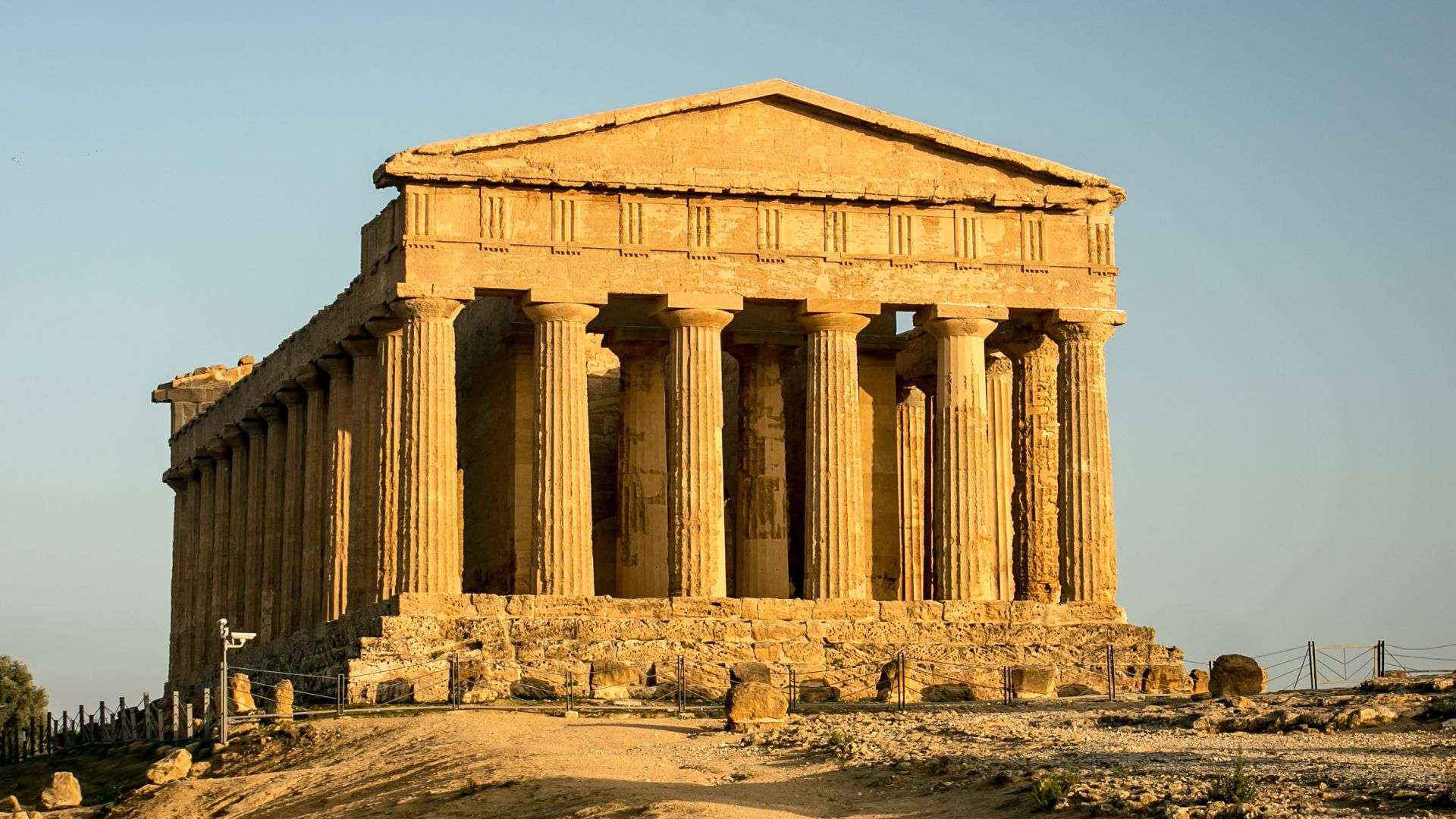
One thing strikes everyone arriving in Agrigento for the first time: the temples aren’t in a museum, they’re inside the everyday landscape. You see them from the road, from houses, from balconies. The Temple of Concordia — one of the best-preserved Doric temples anywhere, more intact than almost anything left in Greece — stands on a ridge of olive and almond trees that residents cross on their evening walk.

Il Tempio della Concordia nella Valle dei Templi di Agrigento
The Temple of Concordia in the Valley of the Temples, among the best-preserved Doric temples in the world

The Valley of the Temples has been a UNESCO World Heritage Site since 1997 and draws over a million visitors a year: it is one of the most extensive Greek archaeological complexes in existence, what remains of Akragas, the city Pindar called the fairest of those built by mortals. In 2025 Agrigento served as Italian Capital of Culture, a year that brought exhibitions, restorations and international attention, and left behind a city more conscious of itself.

Inside the Valley there’s also a place few expect: the Kolymbethra Garden, a small valley of citrus, olives and almonds where the tyrant Theron, around 500 BC, had the city’s water system built. Abandoned for decades, since 1999 it has been entrusted to FAI, the Italian environmental trust, and is once again a working garden: you walk down among the temples and find yourself in an orchard with Greek water tunnels beneath your feet. For residents, it’s where you take visitors for a walk.

DID YOU KNOW?

The Temple of Concordia reached us almost intact for a paradoxical reason: in the 6th century AD it was converted into a Christian basilica by Bishop Gregory, and that conversion is precisely what saved it from the demolitions that erased the other temples. The gaps between the columns were walled in and twelve arches were opened in the walls of the cella. Only in the eighteenth century were the additions removed and the Greek form restored: today it is one of the best-preserved Doric temples in the world, and we owe that to the people who had repurposed it.

The city itself, though, deserves realism. Agrigento has 55,118 residents (ISTAT, 1 January 2026) and an old town set on a ridge, beautiful and partly in need of restoration, with via Atenea as the spine of daily life. It’s a genuine provincial town: basic services, slow rhythms, few pretensions. People who move here aren’t after urban life — for that there’s Palermo — but after waking up somewhere ancient Greece is the view from the window.

Favara and the lesson of the Seven Courtyards

Six kilometres from the Valley of the Temples sits the story that, for anyone weighing a move, matters more than any temple: proof that an abandoned piece of the Italian south can come back to life.

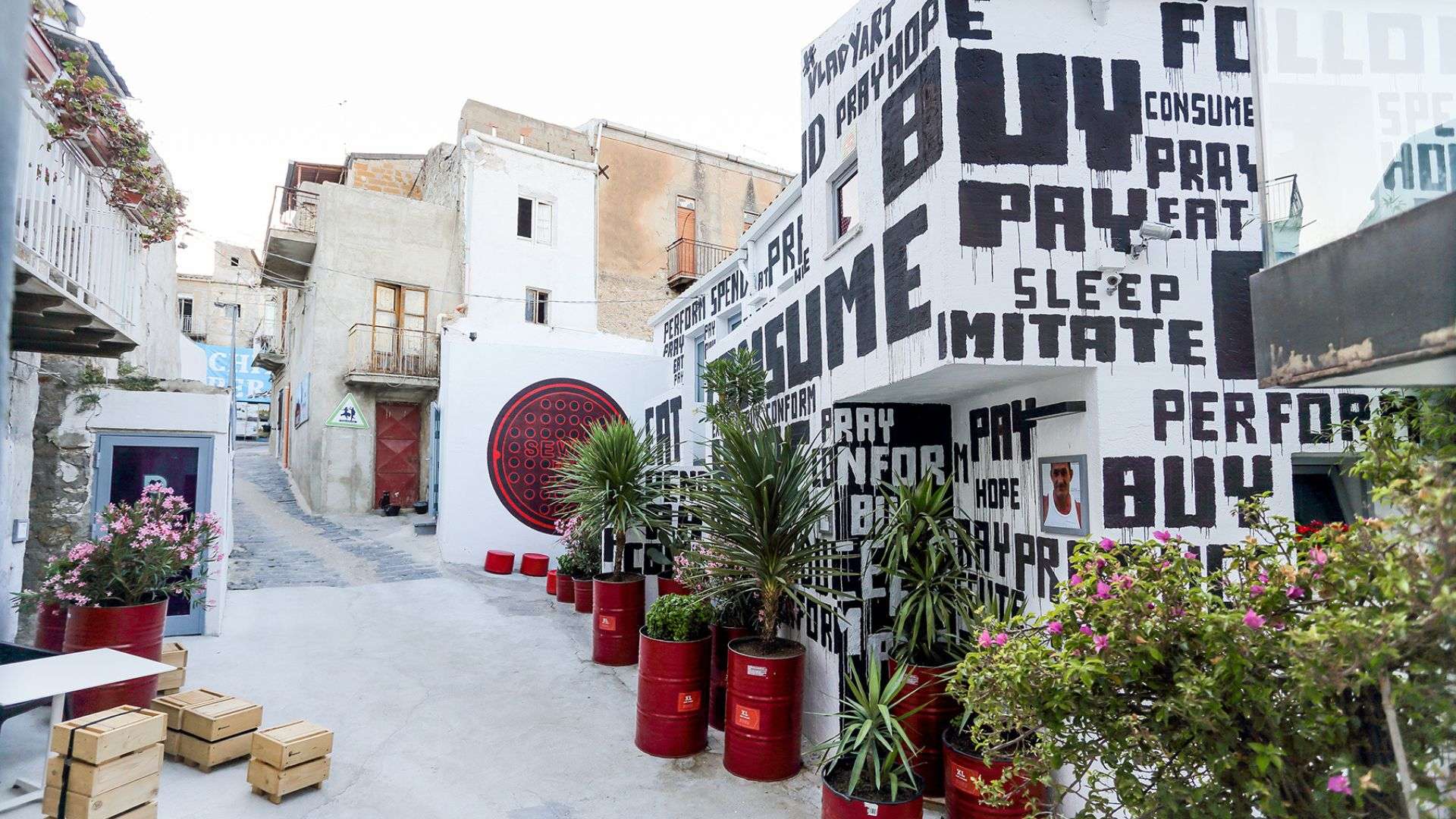
I Sette Cortili di Favara con i murales del Farm Cultural Park
The Seven Courtyards of Favara, heart of Farm Cultural Park: murals, installations and restored houses in a quarter that had been abandoned

In 2010 a Favara notary, Andrea Bartoli, and his wife Florinda Saieva bought several derelict houses in the Seven Courtyards, the half-abandoned core of the old town, and began restoring them, filling them with contemporary art. From that grew Farm Cultural Park: a scattered museum where galleries and installations alternate with residents’ homes, with gardens, workshops, a cocktail bar and coworking spaces wedged between the lanes.

Fifteen years on, Farm brings around 120,000 visitors a year to Favara and has become the province’s second attraction after the Valley of the Temples. But the number that matters most isn’t that one: it’s that bars, workshops and houses have reopened around Farm, and that an inland Sicilian town ended up in international architecture magazines as a case study in urban regeneration. For anyone looking for somewhere to start again — and perhaps contribute to something — Favara describes a concrete possibility, not a theory.

It deserves balance: Favara remains a provincial town with the problems of provincial towns, and Farm is an island within a still-fragile territory. But it’s an island that has widened, and in the Italian south that isn’t a given.

Sambuca di Sicilia and the 1-euro houses bought by Americans

There’s a second chapter to this story, and it’s the one that brought the Italian-American diaspora here. Sambuca di Sicilia, a town in the Agrigento hinterland voted Italy’s “Village of Villages” in 2016, became the country’s best-known case of 1-euro houses: at the first auctions the council offered around fifteen properties and received over a hundred thousand expressions of interest from across the world.

Over time, between council auctions and private sales, roughly a hundred houses have changed hands, and the foreign buyers skew overwhelmingly American — around 80%. The most retold case is that of Meredith Tabbone, from Chicago, who learned of the scheme on CNN, bought at auction and ended up restoring several buildings, recovering her Sicilian roots a few streets from where her great-grandfather had emigrated.

It matters to understand what this really involves: a 1-euro house is not a free house. It carries an obligation to renovate within set deadlines, a deposit, notary costs and a building site in a town where not every firm is equipped for a foreign client. We cover it without sugar-coating in our guide to 1-euro houses in Italy for foreigners. But those who arrive clear-eyed buy something worth more than the house: a piece of their own family history.

Property Finder

Want to buy in the Agrigento area without surprises — among hill towns, coastline and houses to restore? With Property Finder you find, assess and buy with dedicated support.

The coast: Scala dei Turchi, Torre Salsa, Eraclea Minoa

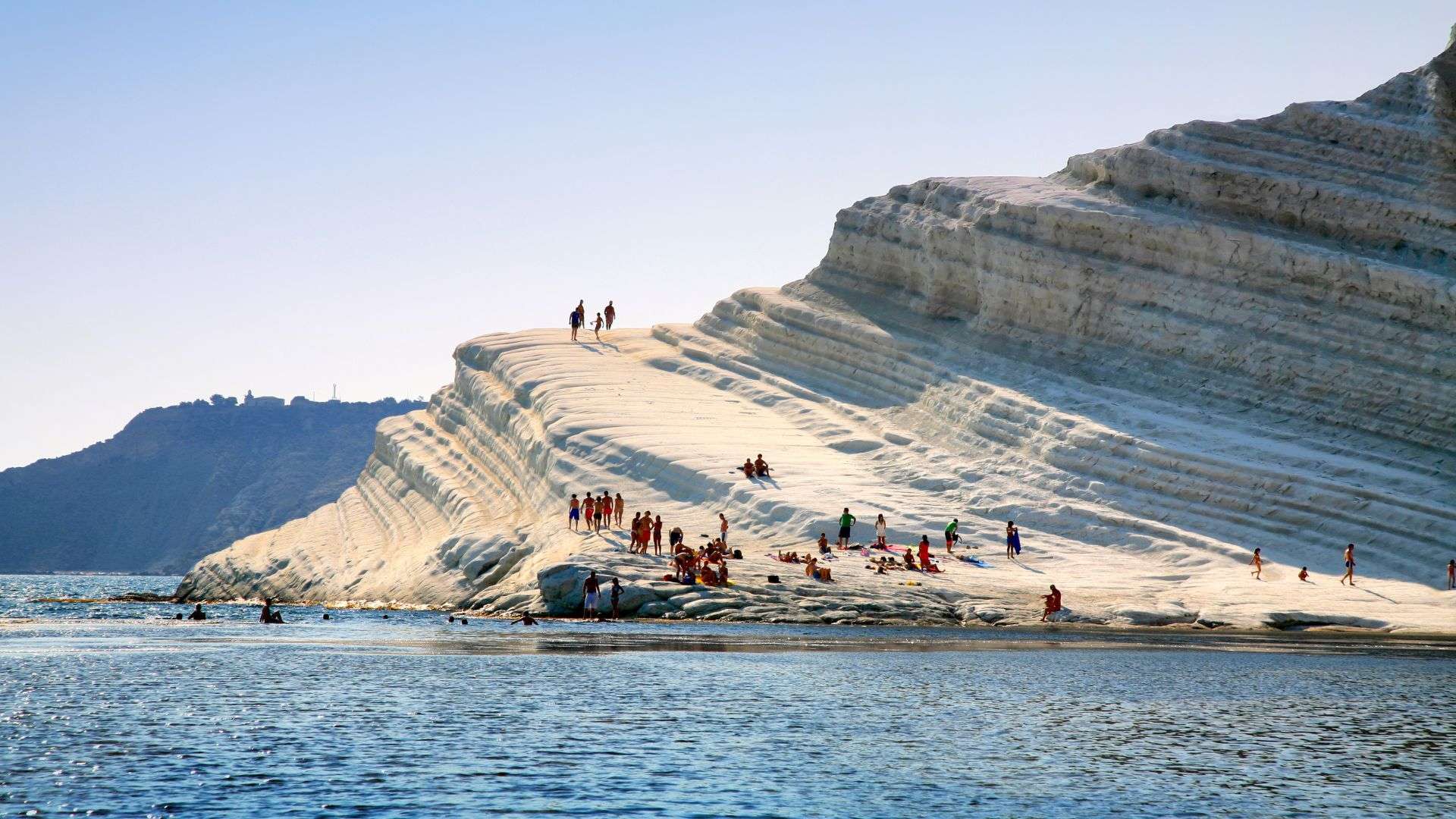
The Agrigento coast has one image everybody knows: the Scala dei Turchi, the stepped white marl cliff dropping into turquoise water, in the municipality of Realmonte. It’s probably the most photographed stretch of coast in Sicily.

La Scala dei Turchi, la falesia bianca di marna a Realmonte
The Scala dei Turchi, the white marl cliff descending to the sea in steps

And it’s also where honesty is required. The cliff is fragile and eroding: since 2020 climbing onto the marl has been banned, a fence marks the minimum distance, and in recent years the site has alternated closures and reopenings. In 2026 it is open on a capped-access basis, with a small ticket and limited numbers, and temporary closures can be ordered — for heatwaves or instability risk — alongside swimming bans on stretches at risk of landslide. Anyone imagining the postcard on their doorstep, free and always open, should adjust expectations; anyone after a broad, still barely built-up shoreline will genuinely find it here.

The coast, though, isn’t only that postcard. Westwards lie Eraclea Minoa, with the remains of a 4th-century BC Greek city and a theatre facing the sea behind a pine-fringed beach, and the Torre Salsa nature reserve, managed by WWF: some six kilometres of coastline alternating cliffs, dunes and long, near-deserted beaches where sea turtles come to nest. These are where residents go when the Scala dei Turchi is full.

There’s also an appendix many overlook: the Pelagie Islands — the municipality of Lampedusa and Linosa — belong to the province of Agrigento. They are the southernmost point of Italy, closer to Africa than to Sicily, reached by ship from Porto Empedocle or by air. Not a commuting destination, but a good measure of how large and varied this territory is.

The literary triangle: Pirandello, Sciascia, Camilleri

One fact makes this province unique in Italy, and almost no relocation guide mentions it: three of the greatest Italian writers of the twentieth century were born within about thirty kilometres of each other, along the same road.

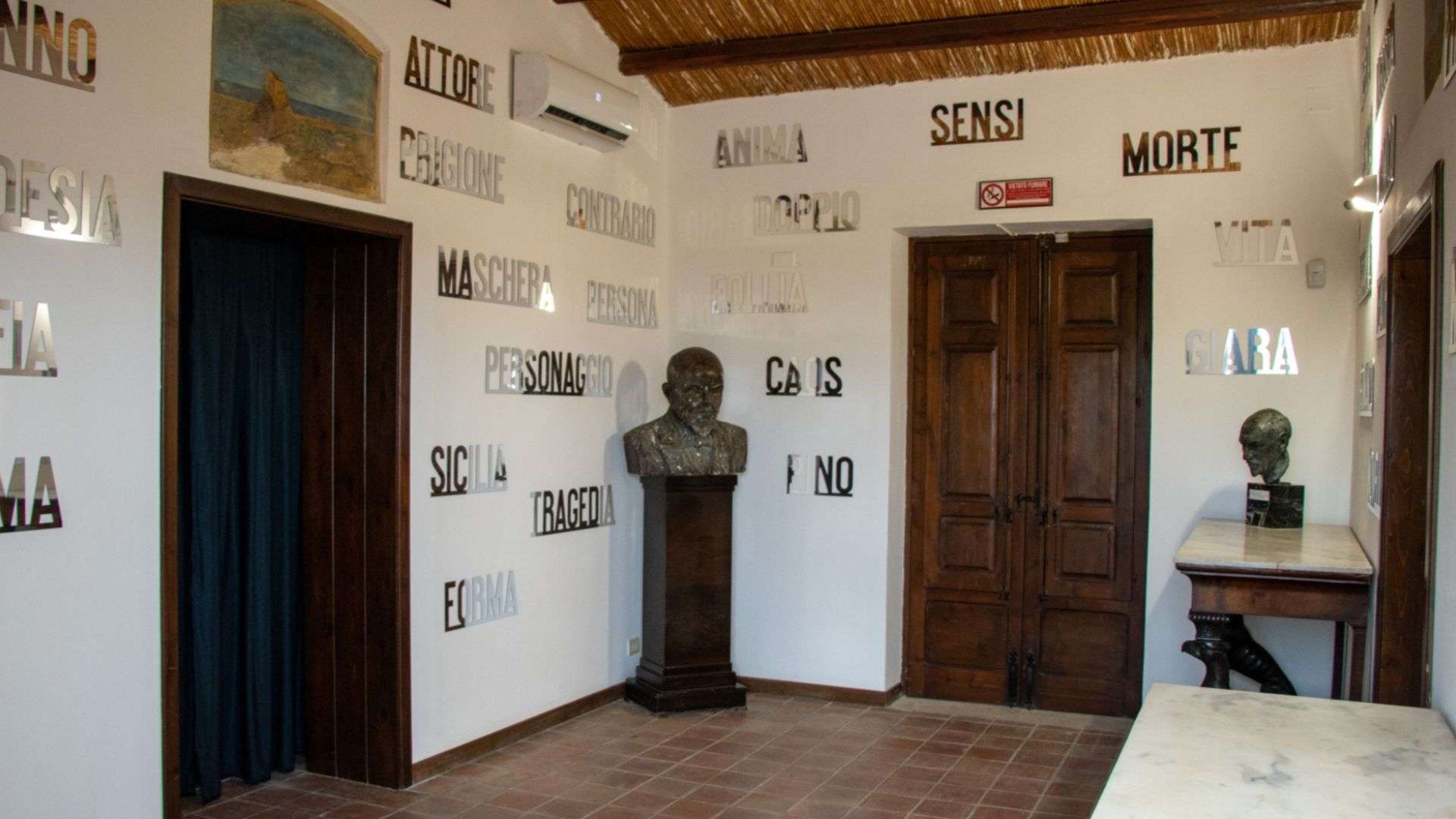
Una sala interna della casa natale di Luigi Pirandello a contrada Caos, con il busto dello scrittore
A room inside Pirandello's birthplace in the Caos district: the writer's bust and, on the walls, the key words of his work

Luigi Pirandello was born in 1867 in Agrigento — then Girgenti — in a district his father jokingly called “Càvusu”, from the Greek kaos: the writer played on it all his life, calling himself “son of Chaos”, and in his books Girgenti became Montelusa. Leonardo Sciascia was born in Racalmuto, which in his books became Regalpetra. Andrea Camilleri was born in 1925 in Porto Empedocle, which he turned into Inspector Montalbano’s Vigàta — borrowing Montelusa from Pirandello, to whom he was related through his grandmother, and who was a friend of Sciascia.

That road genuinely exists and has a name: the Strada degli Scrittori, the Writers’ Road, state route 640 running from Racalmuto down to Porto Empedocle through Favara and Agrigento. For a foreign reader settling here — and for anyone arriving through the Montalbano novels — it means living inside the geography of the books they loved: Pirandello’s birthplace in the Caos district, now a museum, with his ashes buried beneath a pine as he asked; the Sciascia foundation in Racalmuto; the harbour of Vigàta.

One common misunderstanding, though: the television Vigàta is something else and lies further east. The RAI series was filmed in the Val di Noto, around Ragusa, Scicli and Punta Secca. What you find here is the literary Vigàta — the real one.

Sciacca: what's there and what isn't

Sciacca, on the province’s western coast, is one of the most interesting towns in the area: an old centre facing the sea, a working fishing port, a strong craft tradition in ceramics and coral, and one of Sicily’s best-known carnivals.

But one misconception about Sciacca needs clearing up, because it bears directly on anyone considering a move. The town is historically known for its thermal baths — sulphurous waters known since antiquity and the vapour caves of Monte San Calogero — but the thermal establishments have been closed since 2015. In 2026 a relaunch procedure is under way: in May the Sicilian Region identified an operator, but the selection was challenged by the rival bidder and at the end of July 2026 the baths remain closed. Anyone moving to Sciacca counting on an active spa economy should know that, as of today, that economy doesn’t exist: it’s a prospect, not a reality.

That said, Sciacca remains a town of around 37,000 people with services, sea, a good fish market and property prices among the lowest on the Sicilian coast.

The transport problem

Here lies the real limitation of the Agrigento area, and hiding it would help nobody: it is the least well-served Sicilian province in transport terms. It has no airport of its own; the reference hub is Palermo-Punta Raisi, about two and a half hours by car, while Catania-Fontanarossa is further still.

There is, however, one change worth knowing. A direct rail link between Agrigento and Palermo airport has been introduced: four services a day, two in each direction, with a journey time of about two and a half hours. It isn’t a high-speed line, but for frequent flyers it means reaching the airport without a car and without changes. The internal road network remains the weak point, with slow connections inland.

The practical consequence is simple: a car is essential here, and anyone who needs to fly weekly should look elsewhere. Anyone who flies four or five times a year, and in exchange wants a house by the sea at a fraction of the price of any other Italian coast, will find the trade a very good one.

What it costs to live in the Agrigento area

It’s the most affordable coastal area in Sicily, and the figures say so plainly. In Agrigento the average asking price for residential property sits at around €837 per square metre (February 2026 survey), down roughly 9% year on year. In Sciacca apartment valuations vary widely by district, indicatively between €350 and €1,500 per square metre.

AreaCharacterCost
Trapanipractical seaside cityaffordable
Ericemedieval hill townmodest
Marsalawine cityaffordable
San Vito / Egadisea, very seasonalvariable

Populations are indicative, based on ISTAT figures, and property values are average “starting from” prices that vary widely by area and condition and change over time. Always check the individual property against the Italian Revenue Agency’s OMI valuations and with a local professional.

For the comparison with the rest of the island and of Italy, our guide on the cost of living in Sicily lines up every item; anyone after a house to restore will find some of the best opportunities here, as we cover in our guide to where to live in Sicily.

Healthcare and daily life

The hospital

The reference facility is the San Giovanni di Dio Hospital in Agrigento, run by the local health authority, with a 24-hour emergency department and a broad range of units: anaesthesia and intensive care, cardiology and haemodynamics, general and vascular surgery, internal medicine, neurology, oncology, orthopaedics, obstetrics and gynaecology, paediatrics and neonatology, radiology and radiotherapy, nephrology and dialysis, urology. For more complex cases the reference point remains Palermo. Those who transfer residency register with the National Health Service at low cost: the terms for non-EU citizens are in our guide to healthcare in Italy for foreign retirees.

Climate and daily rhythms

The climate is among the hottest and driest in Italy, with mild winters that allow outdoor life almost year-round and decidedly torrid summers: in the peak months heatwaves are a reality to plan for, and a house should be chosen with shade and ventilation in mind. Daily life revolves around the markets, the table — oily fish, durum wheat and almonds are everyday matter here — and a small-town social fabric in which foreigners are noticed and, generally, welcomed with curiosity.

The year begins with the almond blossom

There’s one moment when this province shows its most outward-facing side. Between February and March the almond trees blossom among the temples, and Agrigento hosts the Almond Blossom Festival: founded in 1934 in Naro and moved to Agrigento in 1953, since 1954 it has included an International Folklore Festival bringing groups from across Europe and beyond. The 78th edition runs 7-15 March 2026. For a newcomer it’s the simplest way into the life of the city: a village feast that became international, not an event staged for tourists.

Working remotely: what to expect

Let’s be direct: there is no coworking scene here comparable to Palermo or Catania, and anyone looking for a structured shared office will find little. Connectivity in the main towns is nonetheless adequate for online work, and Favara’s Farm Cultural Park has created the most interesting exception, with shared workspaces inside the Seven Courtyards and a small international creative community around them. It’s a niche, not an ecosystem: anyone who organises themselves from home and flies four or five times a year will do well; anyone needing a daily professional network should do the maths first. On the two possible routes for paperwork, the comparison is in our guide to the digital nomad visa versus the elective residence visa.

A territory losing people

This needs saying too, because it explains a great deal. The province of Agrigento has around 407,000 residents and has lost over 10% of its population since 2012. It’s why houses are cheap, why councils court new residents, and why experiments like Farm and the 1-euro houses exist at all. Those who arrive aren’t entering a saturated place: they’re entering one that needs people, with everything that implies in opportunity and in fragility.

Silver Move

Retiring and want your move to Italy to be simple and secure? Silver Move walks you through every step, from residency to daily life.

Who actually moves here

Having set out the strengths and the drawbacks, the profile of those who choose the Agrigento area is fairly clear.

There are the descendants of emigrants, mostly American, returning to where their great-grandparents left: the phenomenon that made Sambuca famous and that runs through a province historically shaped by emigration. We cover it in our guide to roots tourism in Italy.

There are retirees seeking a mild climate, the sea and a low cost of living, who find here a provincial capital with a hospital and services within reach. On tax, one useful note: the 7% substitute tax on foreign income (art. 24-ter TUIR) applies to those transferring residency to southern municipalities under 30,000 inhabitants — which leaves out Agrigento, Sciacca and, narrowly, Favara with its 31,600, while Realmonte, Sambuca and most inland towns qualify. Details are in our map of municipalities eligible for the 7% regime.

And there are, in growing numbers, creatives and remote professionals drawn precisely by the Farm effect: people who buy a house for a few tens of thousands of euros, restore it and work online from a courtyard in the south. It’s a niche, not a mass movement, but it is real — and places like this usually repopulate exactly this way.

Nomad Landing

Working remotely and want to move to Italy without red-tape headaches? Nomad Landing handles the visa, residency and first steps, so you can focus on the new life.

Conclusion

The Agrigento area is not easy Sicily. It’s the least connected of its provinces, it has been losing residents for years, and some of its best-known promises — the Sciacca baths, free access to the Scala dei Turchi — are not currently being kept. Anyone after a ready-made destination would do better to look east. But it’s also the place where you live beside the best-preserved Greek temples in the world, where a couple with an idea turned seven abandoned courtyards into an international case study, and where a house costing a few tens of thousands of euros can become the way to mend a family story interrupted a century ago. This isn’t a land that simply offers a nicer life: it’s a land asking to be helped back to life, and it gives a great deal to those who take the part.

Sources

Share:

Frequently asked questions

It suits those seeking a mild climate, the sea, low costs and a setting rich in history, accepting a provincial town with basic services and slow connections. Agrigento has 55,118 residents, a hospital with an emergency department, and property prices among the lowest on the Sicilian coast.

Yes, but with limits. Climbing onto the marl has been banned since 2020 and in 2026 access is capped, with a ticket and limited numbers. Temporary closures can be ordered for heatwaves or instability risk, alongside swimming bans on some stretches. Check the Realmonte council website before going.

No. The thermal establishments have been closed since 2015. In 2026 a regional relaunch procedure is under way: an operator was identified in May, but the selection was challenged and at the end of July 2026 the baths remain closed. Treat it as a prospect, not a current reality.

The council auctions derelict properties starting at one euro, with an obligation to renovate within set deadlines, a deposit and notary costs borne by the buyer. The first auctions drew over a hundred thousand enquiries; around 80% of foreign buyers are American. It isn't a free house: it's a building project to plan.

Because all three were born within about thirty kilometres: Pirandello in Agrigento (1867), Sciascia in Racalmuto, Camilleri in Porto Empedocle (1925). Each reinvented his home town under a name — Montelusa, Regalpetra, Vigàta — and state route 640 linking them is now called the Writers' Road.

Between February and March, when the almond trees flower among the temples. Founded in 1934 in Naro and moved to Agrigento in 1953, since 1954 it has included an International Folklore Festival with groups from around the world. The 78th edition runs 7-15 March 2026.

Yes. The Pelagie Islands form the municipality of Lampedusa and Linosa, which belongs to the Agrigento free municipal consortium. They are the southernmost point of Italy, closer to Africa than to Sicily, reached by ship from Porto Empedocle or by air.

It's the area's weak point. There is no airport: the reference is Palermo-Punta Raisi, about two and a half hours by car, now also reachable by a direct train (four services a day, roughly two and a half hours). A car is essential for daily life.

DISCLAIMER

The information provided on this website is for general informational and illustrative purposes only. It does not constitute legal, tax, financial or professional advice and should not be relied upon as such.
While we strive to ensure the accuracy and timely updating of all content in accordance with current laws and regulations, we accept no responsibility for any errors, omissions, misinterpretations, or changes in legislation that may occur after publication. Any decisions or actions taken based on the information contained on this website are undertaken at the user’s sole risk.

Our services

Did you enjoy
this article?

Discover how we can help you relocate or invest in Italy with our dedicated services.

Tailored planning to live or invest in Italy.

Property purchase and management in Italy.

Relocation assistance for visas and residence permits.

Support for businesses and investors choosing Italy.

MAgazine

Stay up To Date!

Subscribe to our newsletter to stay up to date with the latest news.