Palermo: What Life Is Like Between the Old Town, Mondello and Cefalù
Palermo is Sicily's capital: large, layered, theatrical. An Arab-Norman UNESCO city, with markets that feel like souks and a Liberty-style beach twenty minutes from the centre. It offers metropolitan services and a still-affordable cost of living, for those who love urban intensity.
Palermo is the capital of Sicily, an Arab-Norman city inscribed as a UNESCO World Heritage Site in 2015. It’s the choice for anyone who wants to live in Sicily without giving up the metropolitan dimension: services, culture, an international airport. It has elegant districts like Politeama-Libertà, a layered old town with markets of Arab origin, and the Liberty-style beach of Mondello a short ride away. The cost of living stays human, for a city that asks to be lived with all your senses.
Why choose Palermo to move to Sicily?
Palermo is a city you take in with every sense: the vendors’ cries in the markets, the Byzantine gold of the churches, the smell of street food, the sea a step from the centre. It’s the island’s largest and most layered city, where two thousand years of rule overlap — Phoenician, Roman, Arab, Norman, Spanish — and that layering isn’t just history: it’s daily life.
Palermo was recognised as a UNESCO World Heritage Site in 2015 for its Arab-Norman itinerary, a rare blend of Western, Islamic and Byzantine cultures. To live here is to have the Norman Palace, the Palatine Chapel and the Martorana as the backdrop to your daily errands. It’s the same experience that draws a growing flow of international residents each year: people who arrive not looking for the cheapest place, but for a real one where they can begin again — with the comforts of a genuine capital.
For anyone who wants services, culture, serious healthcare and flight connections in Sicily, Palermo is the most complete answer. It’s intense, theatrical, at times chaotic: if you love urban energy, you’ll find it electric.
Politeama-Libertà: where you live the elegant Palermo
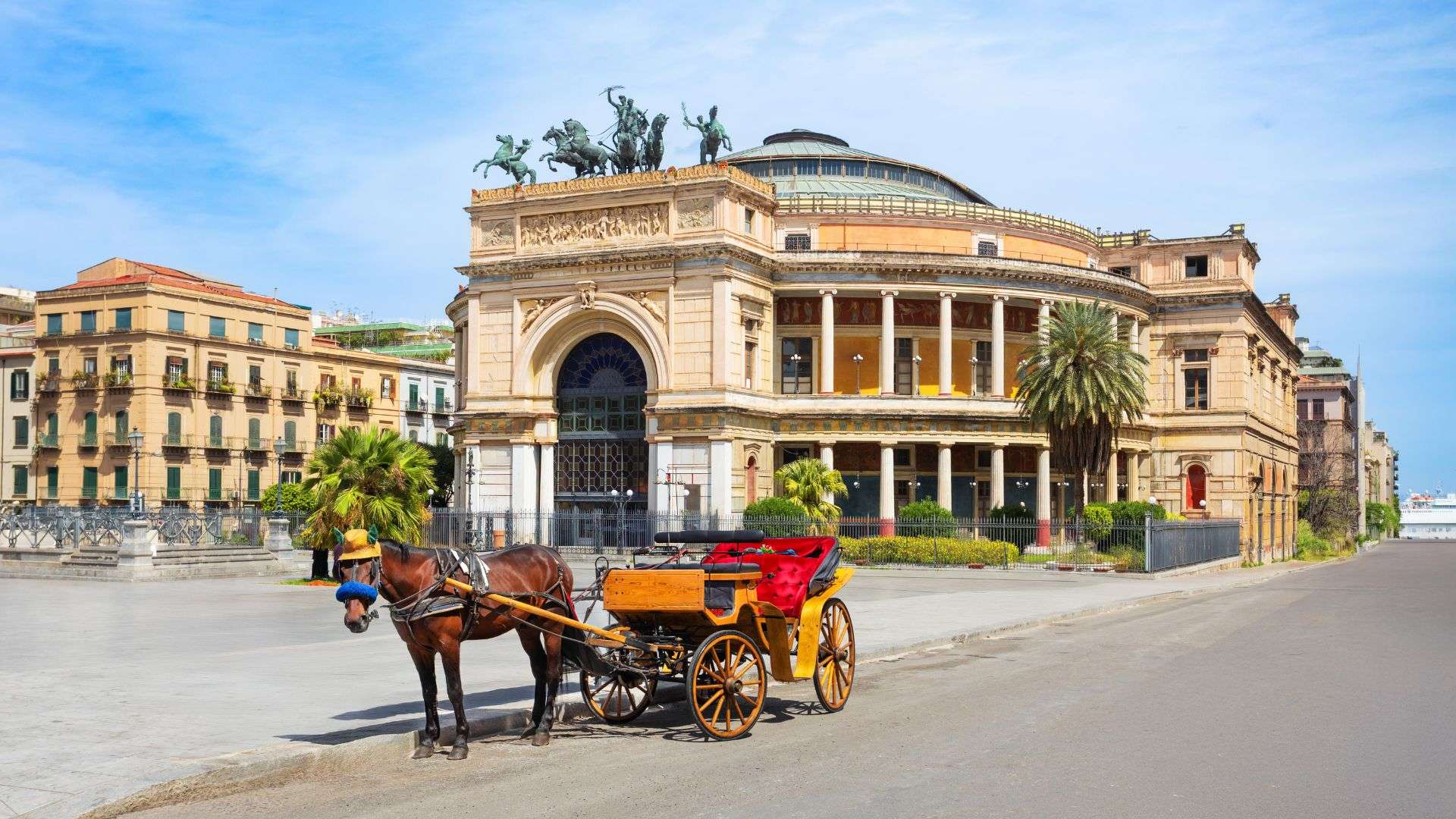
The Politeama-Libertà area is the city’s genteel face: tree-lined avenues, belle-époque buildings, boutiques, theatres. Here you’ll find the Teatro Politeama Garibaldi, with its triumphal-arch façade, and nearby the Teatro Massimo, the largest opera-house building in Italy. It’s the district for those who want convenience, services and urban prestige within walking distance.
The Politeama theatre on Piazza Ruggero Settimo, with one of the horse-drawn carriages still waiting downtown
It’s also the most sought-after and expensive residential area in Palermo: along via Libertà rents top €14 per square metre a month, against a city average of about €8.4. In return you get the best-kept, most livable part of the city, with shops, schools and clinics close by. Many foreigners moving with a family choose this area for the neighbourhood quality of life and the sense of safety.
DID YOU KNOW?
Palermo’s Teatro Massimo is the largest opera-house building in Italy and the third largest in Europe, after the Paris Opéra and the Vienna Staatsoper. Its monumental staircase entered film history as the setting of the final scene of The Godfather Part III: living in Palermo means having this masterpiece as the backdrop to an ordinary stroll.
The old town and the markets: the most authentic Palermo
The old town — around the Cathedral, the Quattro Canti and the four historic quarters — offers the raw, real charm of the ancient city, with variable prices and whole blocks under restoration. This is where Palermo shows its most Mediterranean soul: in the Kalsa, the old Arab-founded quarter facing the sea, now dotted with galleries, workshops and bars, and in the Albergheria, home to the oldest of the city’s markets.
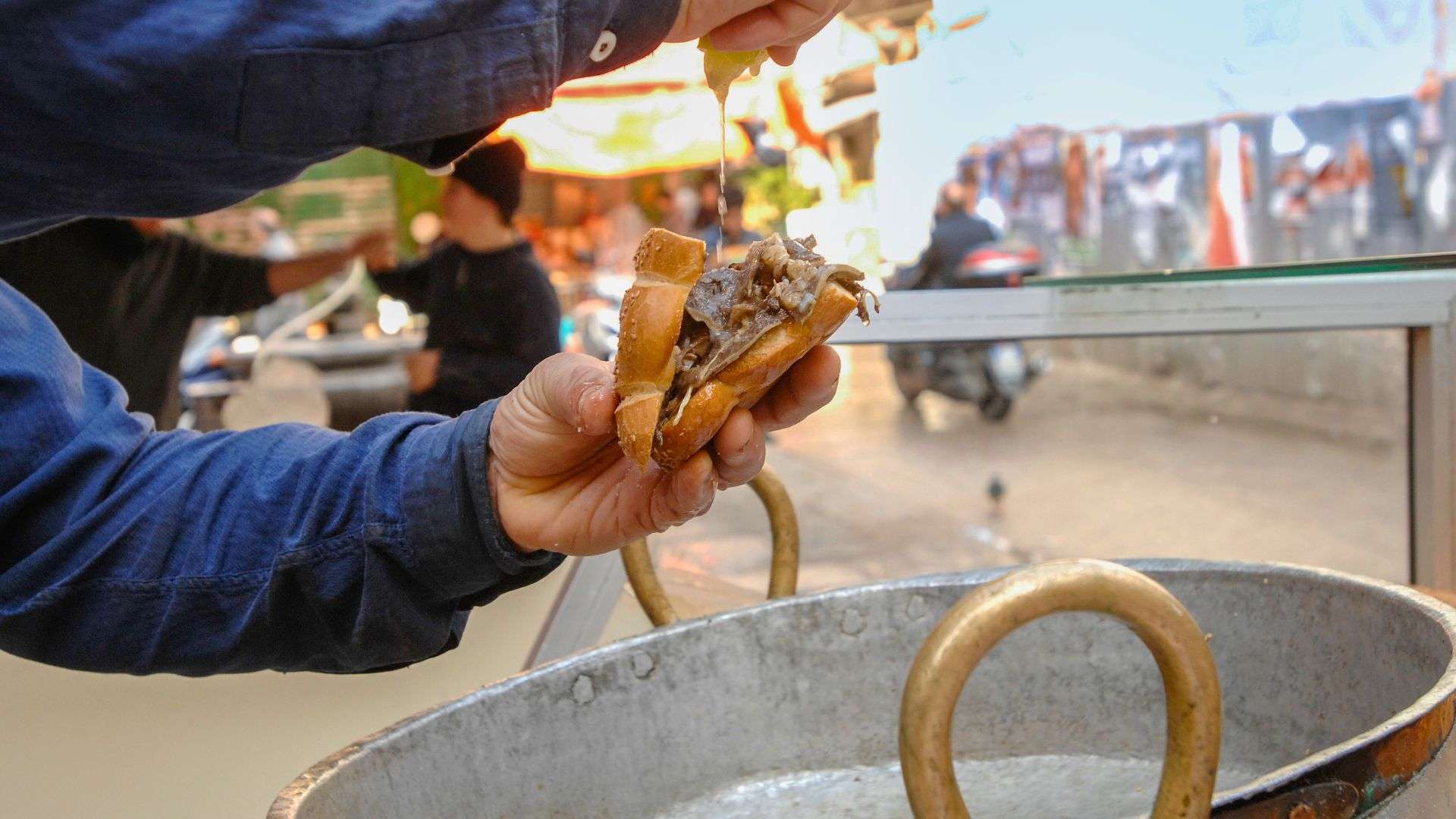
Pani ca meusa served straight from a street stall — the food that ranks Palermo fifth in the world
The historic markets are the beating heart of daily life. Ballarò, whose name comes from Arabic, and il Capo preserve in the abbanniata — the singsong cry of the vendors — the direct legacy of the Arab souks: shopping here means walking through a thousand years of Mediterranean history. The Vucciria, made immortal by Renato Guttuso’s 1974 painting, is today more nightlife than market, but remains one of the city’s icons. For those who want authenticity more than quiet, the old town is the choice: alive, working-class, imperfect, transforming.
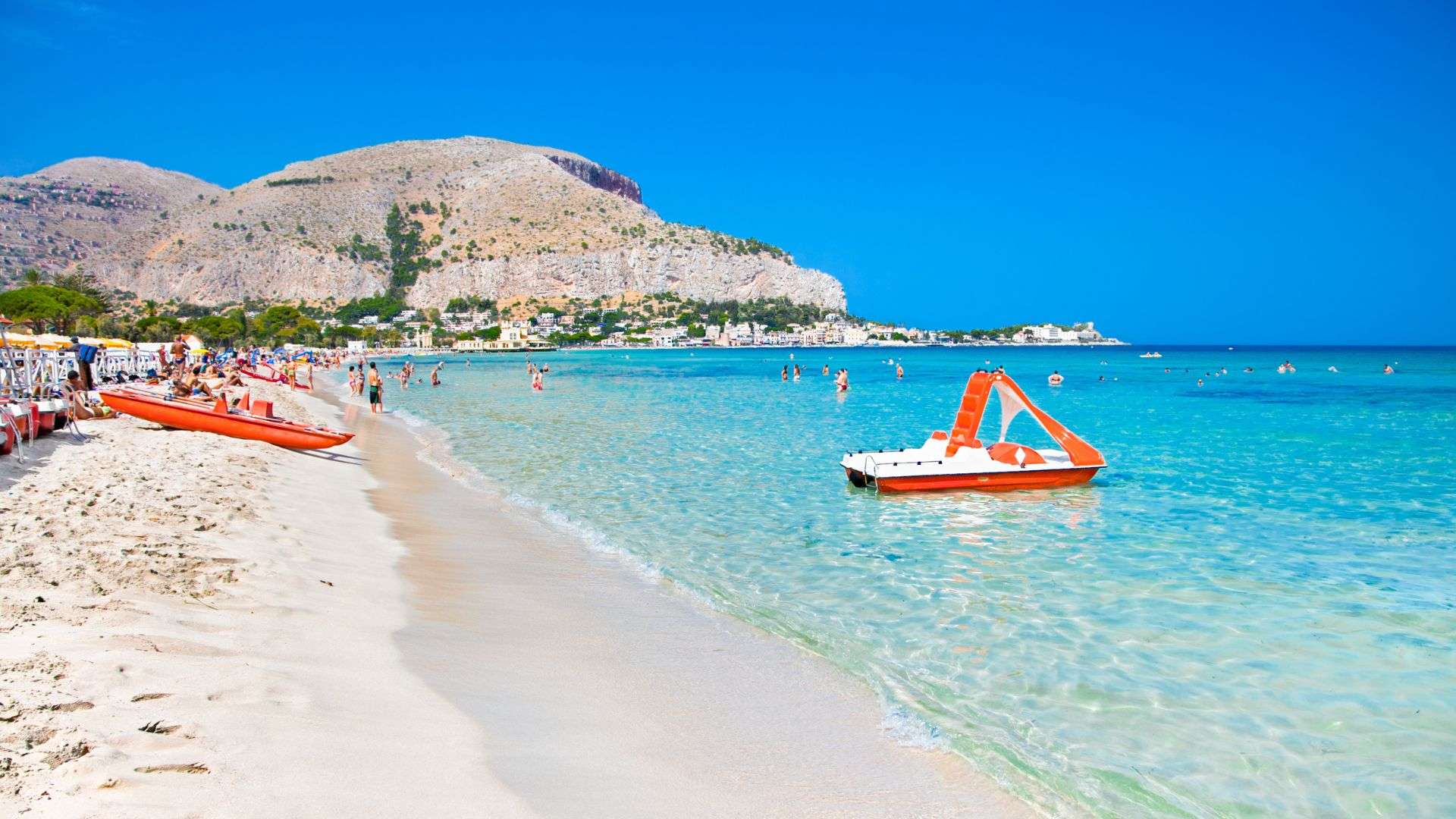
Mondello is Palermo’s seaside village: a crescent of white sand and clear water at the foot of Monte Pellegrino, about twenty minutes from the centre. It wasn’t always this way: until the late 1800s it was a malarial swamp used only by fishermen. Its transformation carries an unexpected signature — that of an Italian-Belgian company, “Les Tramways de Palerme”, founded in 1909 and later renamed Mondello Immobiliare Italo Belga, which drained the marsh, built roads, villas and the Grand Hotel, and linked it to the city by tram.
Mondello beach below Monte Gallo: white sand and shallow water twenty minutes from the centre
Mondello’s symbol is the Antico Stabilimento Balneare, the Liberty-style bathhouse on stilts over the water, decorated with stained glass, friezes and sculptures: one of the finest Art Nouveau works in Europe. Today Mondello is the choice of many foreigners who want to combine city life and the sea — staying in town but with the beach at the door. It’s the quietest, greenest area, with above-average rents, loved by families and retirees.
How much does it cost to live in Palermo?
Let’s put the numbers on the table, honestly. Palermo is the largest of Sicily’s cities and it’s no bargain-bin destination, but the cost of living stays affordable by northern-European or American standards. A couple should budget about €2,000-2,800 a month; a single person lives on around €1,000-1,700. The average city rent is about €8.4 per square metre a month, with wide gaps between the Libertà area and the working-class quarters.
Monthly item
Palermo (estimate)
One-bedroom rent (centre)
€450-700
Utilities
€120-200
Groceries (single)
~€300
Cost of living (couple)
€2,000-2,800
These are indicative average prices, “starting from”: they vary widely by area, condition and period, and change over time. Always check the individual property against the Italian Revenue Agency’s OMI valuations and with a local professional.
The historic markets — Ballarò, il Capo, la Vucciria — help keep the grocery bill down with the freshest produce. For the comparison with Catania and other areas, our guide on the cost of living in Sicily lines up every item.
There’s also a tax lever a foreign retiree should know about, with one important caveat. Article 24-ter of the Italian Income Tax Code (TUIR) provides a 7% flat substitute tax on foreign-source income — pensions included — but only for those who move their residency to a southern town below a population threshold, raised to 30,000 on 7 April 2026 (Law no. 34/2026). The city of Palermo, with about 630,000 residents, is well over the limit; many towns in its province, however, qualify — from Cefalù to Termini Imerese, from Corleone to many villages in the Madonie. Anyone targeting this regime can enjoy Palermo life while setting residency in a smaller provincial town: the details are in our guide to Italy’s 7% tax and its eligible municipalities, and it’s one of the things we handle within the Silver Move path.
Silver Move
Retiring and want your move to Italy to be simple and secure? Silver Move walks you through every step, from residency to daily life.
Monreale: the golden mosaics above the Conca d'Oro
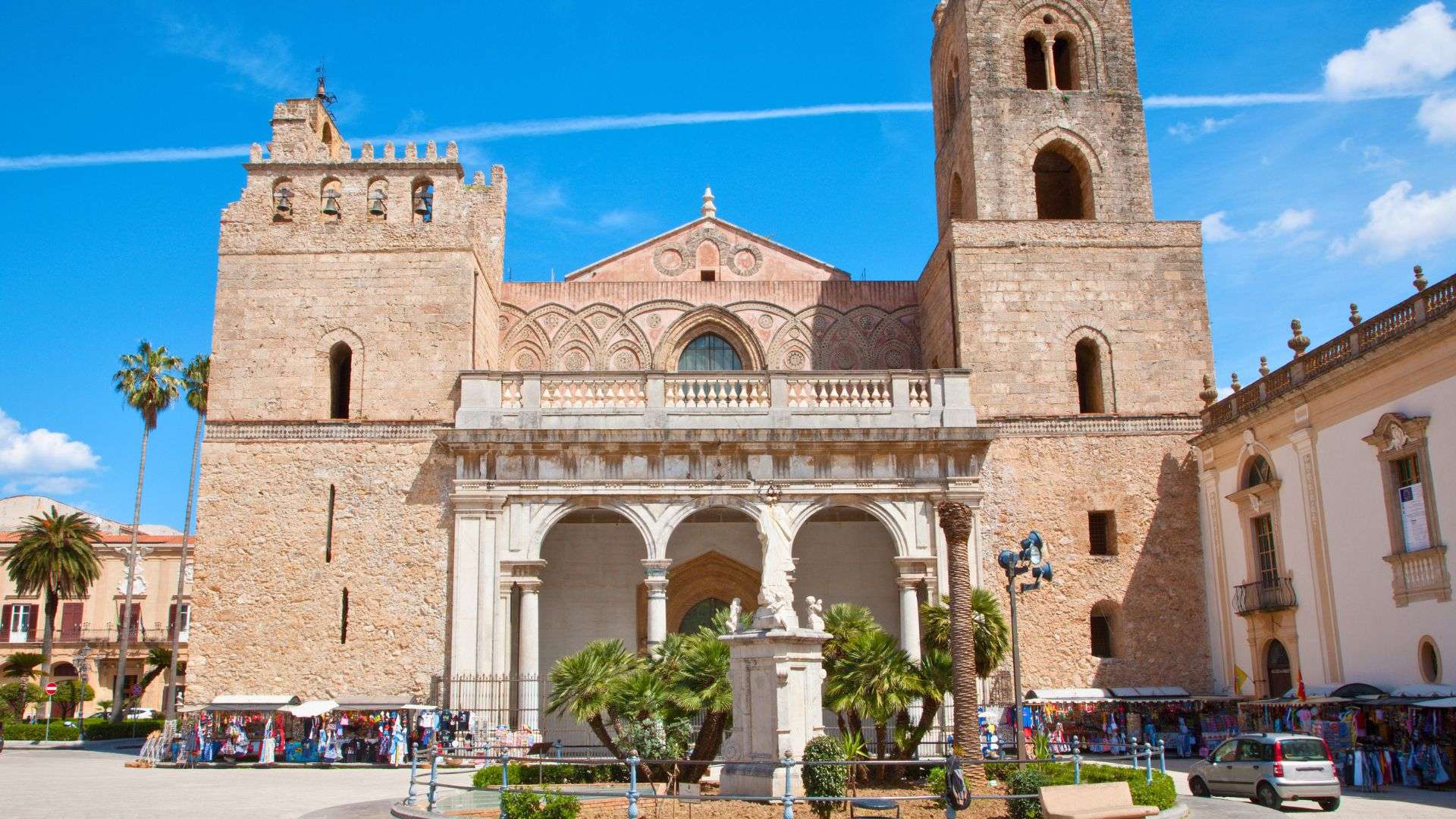
About ten kilometres from the centre, looking down over the Conca d’Oro, stands Monreale. Its Cathedral, commissioned by the Norman king William II in the 12th century, holds roughly 6,400 square metres of gold-ground Byzantine mosaics: the largest mosaic decoration in the world after Hagia Sophia in Istanbul. Beside it, the Benedictine cloister lines up 228 twin columns, every one different. It’s part of the Arab-Norman UNESCO itinerary since 2015 and, for anyone living in Palermo, a half-day that’s worth a journey on its own.
The façade of Monreale Cathedral and the stalls on the square; inside, over 6,000 square metres of gold-ground Byzantine mosaics
Cefalù: the Norman village by the sea
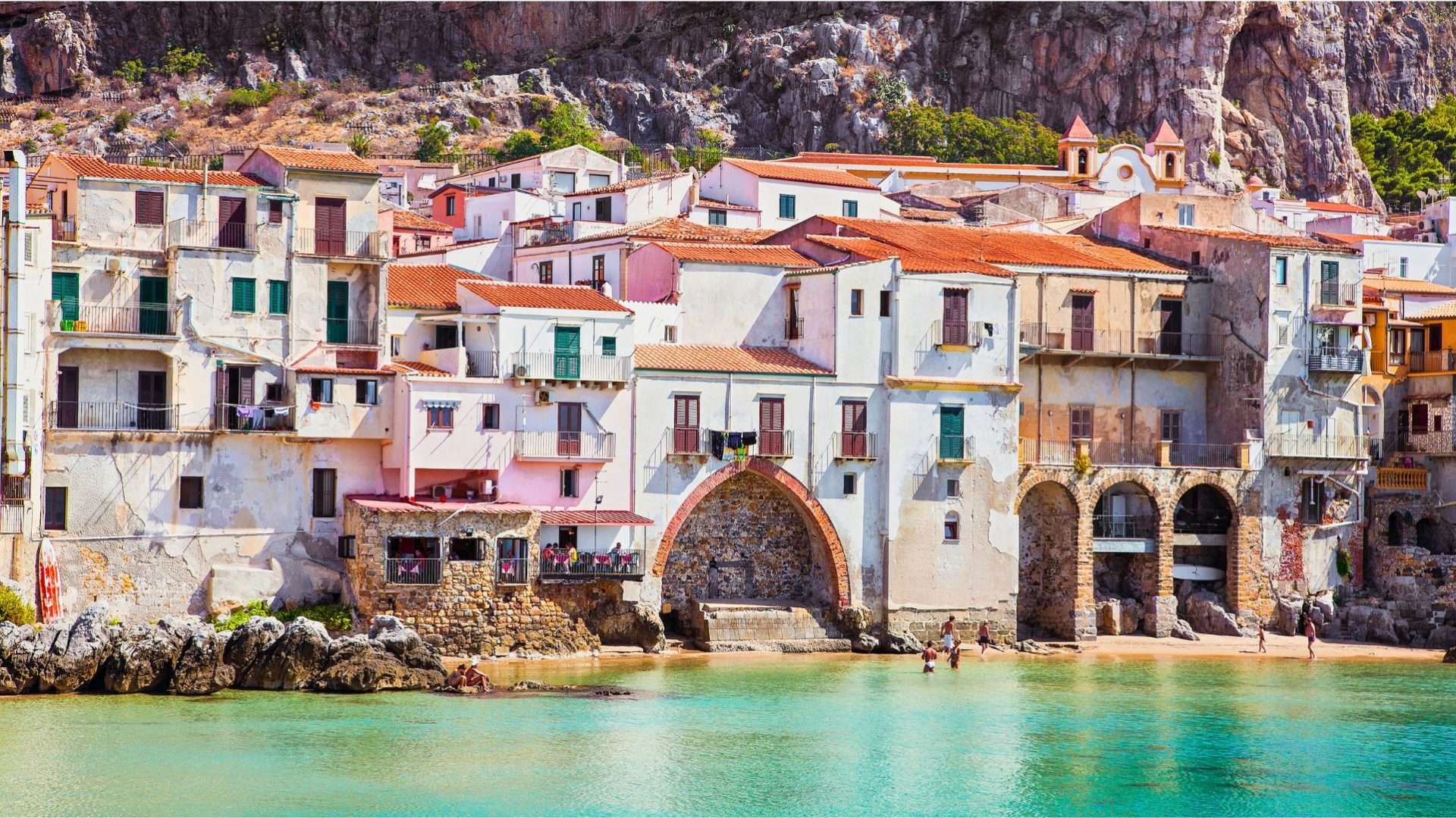
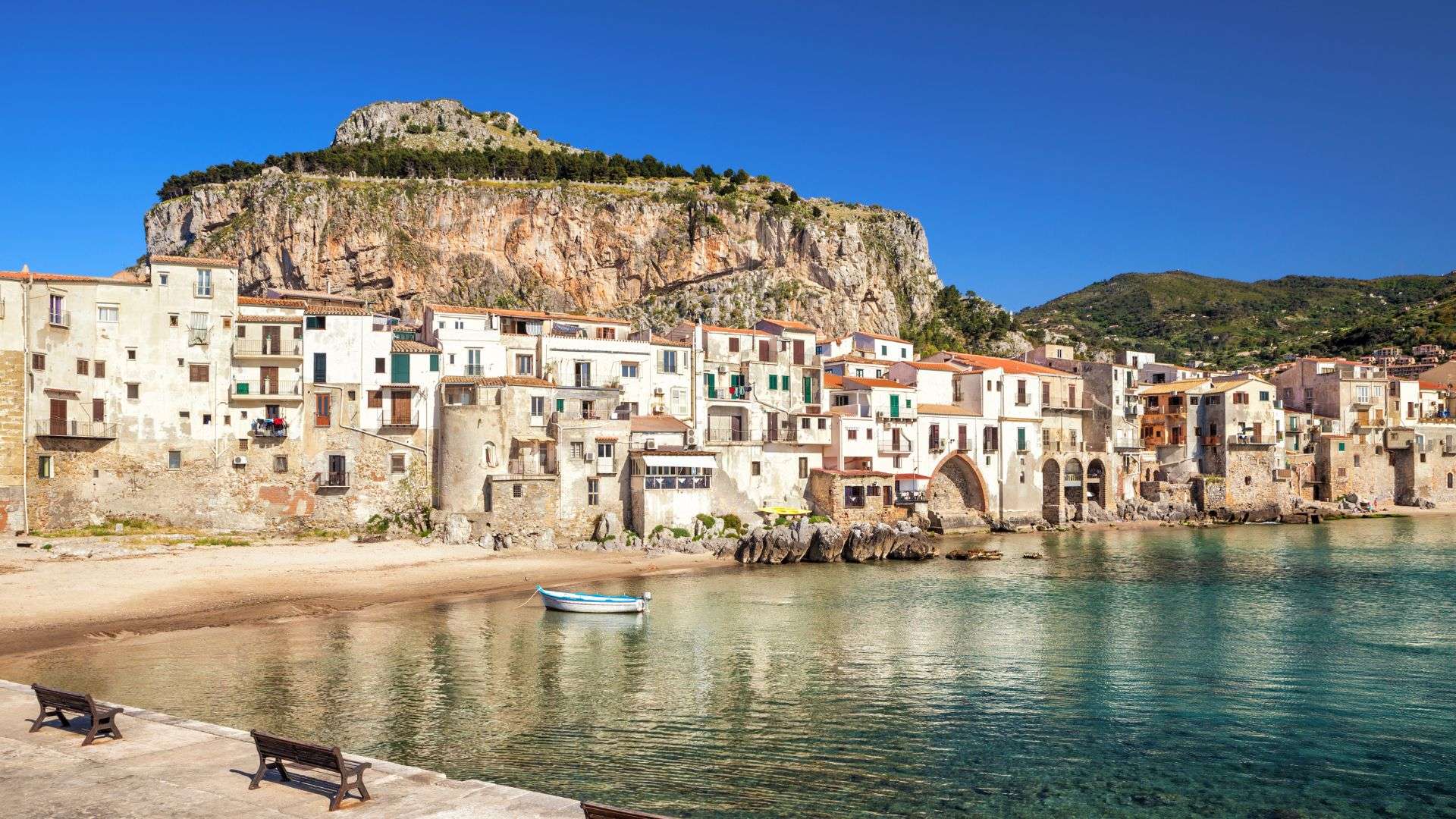
Sixty-seven kilometres east along the Tyrrhenian coast, Cefalù brings together three things that rarely sit side by side: a postcard beach, a medieval village of alleys leaning over the water, and a Norman cathedral whose mosaics were begun in 1131, also part of the Arab-Norman UNESCO site. Crowned by its Rocca, it’s one of the favourite weekend escapes for Palermitans and for those who settle nearby.
The old houses of Cefalù facing the sea, at the foot of the Rocca
A little further out are the baroque villas of Bagheria and, offshore, the volcanic island of Ustica, Italy’s first marine protected area and a divers’ paradise: from Palermo, the weekend is never a question of where to go, but of what to choose. For anyone also thinking of a property investment, this variety — from the city to the sea to the Madonie villages — opens many doors. Finding the right home without surprises, though, takes a local eye: assisted search makes the difference.
Property Finder
Looking for the right home in Palermo, in Mondello or in the province? With Property Finder you find, assess and buy the property with dedicated support, no surprises.
The main gateway is Falcone-Borsellino airport at Punta Raisi, about 35 kilometres west of the city along the A29 motorway. It’s a thirty-minute drive or a roughly 45-minute ride on the Trinacria Express train from the terminal to the centre. It’s one of the best-connected airports in the South, with direct flights across most of Europe; for the United States, the connection usually runs through the Rome or Milan hubs.
On health, Palermo is a centre of excellence. Beyond the large public hospitals — the Paolo Giaccone Polyclinic and the ARNAS Civico — the city is home to ISMETT, the Mediterranean Institute for Transplantation, created in 1997 through a partnership between the Sicilian Region and America’s UPMC (University of Pittsburgh Medical Center). It’s an international reference centre for transplants — over 3,000 performed — running to U.S. standards and used to foreign patients. Those who transfer residency also gain access to the National Health Service at low cost: the terms for non-EU citizens are in our guide to healthcare in Italy for foreign retirees.
Street food, markets and community: everyday Palermo
Palermo’s life is measured in the street. Its street food is world-famous: in the ranking published by Forbes, Palermo is the fifth city in the world for street food and the only Italian one in the top ten. Arancine, panelle, sfincione and pani ca meusa — the spleen sandwich — aren’t folklore for tourists: they’re breakfast and lunch for the people who live here. Around them survive the trades and rituals that turn neighbours into a community.
A practical, resident’s tip on getting around: Palermo traffic is chaotic and parking scarce, so many choose a scooter, which slips in anywhere and makes the most of the mild climate for much of the year. In the centre, though, most of life happens on foot.
Why has Palermo become a digital-nomad capital?
Two currents run through Palermo in opposite directions. On one side, between 2019 and 2026 about 96,000 young Sicilians under 35 left the island — over 10% in the province of Palermo alone. On the other, remote work is opening a route back: the Sicilian Region has committed €54 million to a “south working” scheme, with an incentive of up to €30,000 per worker over five years for those who bring — or bring back — their job to Sicily. The same city that loses twenty-somethings is starting to refill with thirty-somethings and their laptops.
In parallel, Palermo has established itself as an international destination for digital nomads — it’s where the Nomad Sicily initiative began — supported by urban internet speeds running between 30 and 100 Mbps. The coworking spaces tell that story: Moltivolti, in the heart of Ballarò, blends coworking, kitchen and social enterprise; Cre.Zi. Plus, inside the Cantieri Culturali alla Zisa, is a 1,000-square-metre creative hub in the area with the highest creative density in Italy; BeetCommunity is among the country’s first coliving-coworking spaces built for people who work while travelling; alongside studios like and the many laptop-friendly cafés of the centre. For a professional who can choose where to live, Palermo offers the energy of a real city with Mondello’s sea a bus ride away.
Nomad Landing
Working remotely and want to move to Italy without red-tape headaches? Nomad Landing handles the visa, residency and first steps, so you can focus on the new life.
The upsides are clear: it’s the only city in Sicily with a truly metropolitan dimension, Arab-Norman culture on the UNESCO list, excellent healthcare, an international airport, Mondello’s city sea and a still-human cost of living. The downsides deserve honesty: it’s an intense, at times chaotic city, with demanding traffic, some difficult outer districts and public services that aren’t always efficient. Palermo isn’t for those seeking the absolute quiet of a village: it’s for those who love city life and accept it with its contradictions. Those who choose it give up nothing of a big city.
Palermo isn’t a city for everyone, and that’s its strength. It’s intense, theatrical, layered, sometimes contradictory, but it offers what no other place in Sicily gives to the same degree: the full metropolitan dimension, Arab-Norman culture, services, excellent healthcare, Mondello’s city sea. For anyone who wants to live in Sicily without giving up anything of a big city — and who wants to be swept up by a real urban life — the capital is the natural choice. Not to spend less, but to live more.
Politeama-Libertà for elegance and convenience; the old town — Kalsa, Ballarò — for authentic charm and variable prices; Mondello to combine city life and the sea. The choice depends on how much quiet, prestige or closeness to the sea matter.
A couple should budget about €2,000-2,800 a month, a single person around €1,000-1,700. A one-bedroom in the centre costs €450-700, far more in the Libertà area. It's pricier than Catania but affordable by northern-European or American standards.
Not to the city of Palermo: with about 630,000 residents it's well over the 30,000 threshold set by the regime (art. 24-ter TUIR). Many towns in the province do qualify, such as Cefalù, Termini Imerese or Corleone. Always verify case by case with the Italian Revenue Agency.
Yes, for those seeking the sea and quiet while staying in the city. Mondello is Palermo's seaside quarter, with its Liberty-style beach and the Antico Stabilimento Balneare, about twenty minutes from the centre. It's much loved by families and foreign residents.
High quality. Beyond the large public hospitals (Polyclinic, ARNAS Civico), Palermo is home to ISMETT, a transplant centre run with America's UPMC, of international standard. Those who register with the National Health Service get good-quality care at low cost.
Falcone-Borsellino airport at Punta Raisi is about 35 kilometres away: a thirty-minute drive on the A29 or the Trinacria Express train in roughly 45 minutes. It's well connected to Europe; for the United States you typically connect via Rome or Milan.
Yes. It has reliable internet, coworking spaces (Moltivolti in Ballarò, Cre.Zi. Plus at the Cantieri Culturali, BeetCommunity), a growing international community and a well-connected airport. It's a solid base for real city life with the sea a bus ride away.
DISCLAIMER
The information provided on this website is for general informational and illustrative purposes only. It does not constitute legal, tax, financial or professional advice and should not be relied upon as such. While we strive to ensure the accuracy and timely updating of all content in accordance with current laws and regulations, we accept no responsibility for any errors, omissions, misinterpretations, or changes in legislation that may occur after publication. Any decisions or actions taken based on the information contained on this website are undertaken at the user’s sole risk.
Our services
Did you enjoy this article?
Discover how we can help you relocate or invest in Italy with our dedicated services.