
Imagine waking up under a soft Tuscan sky, where the hills roll like golden waves and cypress trees stand like watchful sentinels. For many today, living in Val d’Orcia is no longer just a romantic dream, but a real choice: a mix of lifestyle, investment, and immersion in one of Italy’s most iconic UNESCO landscapes.
Demand for luxury properties in the valley has been driven for years by international buyers. It is part of a broader trend known as “rural luxury,” where people seek not only villas but also farmhouses with land or even a vineyard — the now famous “farmhouse + vineyard” combination.
Still, Val d’Orcia is not an isolated case. Comparing it with other Tuscan rural areas such as Chianti, Casentino or Lunigiana helps us understand its unique advantages — and its challenges.
- It is not one village: it is five municipalities — Montalcino, Pienza, San Quirico d’Orcia, Castiglione d’Orcia, Radicofani.
- UNESCO World Heritage since 2004 as a cultural landscape; the Val d’Orcia Park has existed since 1999.
- The historic centre of Pienza is a separate UNESCO property, inscribed in 1996.
- Asking prices: from €1,400/m² in Radicofani to about €2,500/m² in San Quirico d’Orcia.
- A hectare of Brunello DOCG vineyard is worth up to €1 million; DOC Orcia land, around €50,000.
- The 7% flat tax for foreign pensioners does not apply in Tuscany: it is reserved for the South.
The real estate market in Val d’Orcia
Tuscany’s rural appeal
Over the last decade, Tuscany’s rural villages have become magnets for expats and Italians returning from abroad. Areas like Chianti, Crete Senesi and Val d’Orcia attract those searching for second homes, farmhouses to restore, or historic residences with strong identity.
In the luxury segment (historic villas, panoramic farmhouses, residences with vineyards or swimming pools), property prices in Siena province and Val d’Orcia reach €5,000 per m² for premium properties.
Yet the market is varied: while well-restored properties in historic centers command high prices, rustic buildings in need of restoration remain accessible and offer potential value appreciation.
Current market trends
| Town/Area | Average asking price (2025) | Notes |
|---|---|---|
| San Quirico d’Orcia | ≈ €2,500/m² (2026) | Asking prices, volatile on few sales |
| Castiglione d’Orcia | ≈ €1,932/m² (May 2025) | Farmhouses ~€2,645/m² |
| Vivo d'Orcia | ≈ €2,036/m² | Growing demand |
| Province of Siena (avg.) | ≈ €2,059/m² | Val d’Orcia often above average |
A growing trend is the farmhouse to restore: Idealista lists more than 70 rustic properties in the Val d’Orcia–Amiata area, starting at €25,000. For international buyers, securing financing can be complex — knowing how a mortgage for foreigners in Italy works is often essential.
Mini-dossiers on the villages
Pienza
The “ideal city” of the Renaissance, envisioned by Pope Pius II, Pienza is a masterpiece of harmony between architecture, landscape, and everyday life. Walking down Corso Rossellino feels like entering a painting: from the Cathedral to the panoramic terrace, elegance is everywhere.
- Prices: Around €2,982/m² (May 2025), with higher values in historic palazzi. Rustic farmhouses with land can be found, e.g. a 200 m² property with 5.5 hectares listed at €560,000.
- Local touch: Some of the town’s underground cellars hide vaulted corridors built centuries ago by merchants — reminders of Pienza’s long history of blending commerce, art, and daily life.
For those wondering how to buy a house in Italy as a foreigner, Pienza represents both an opportunity and a challenge, due to its strict architectural regulations.
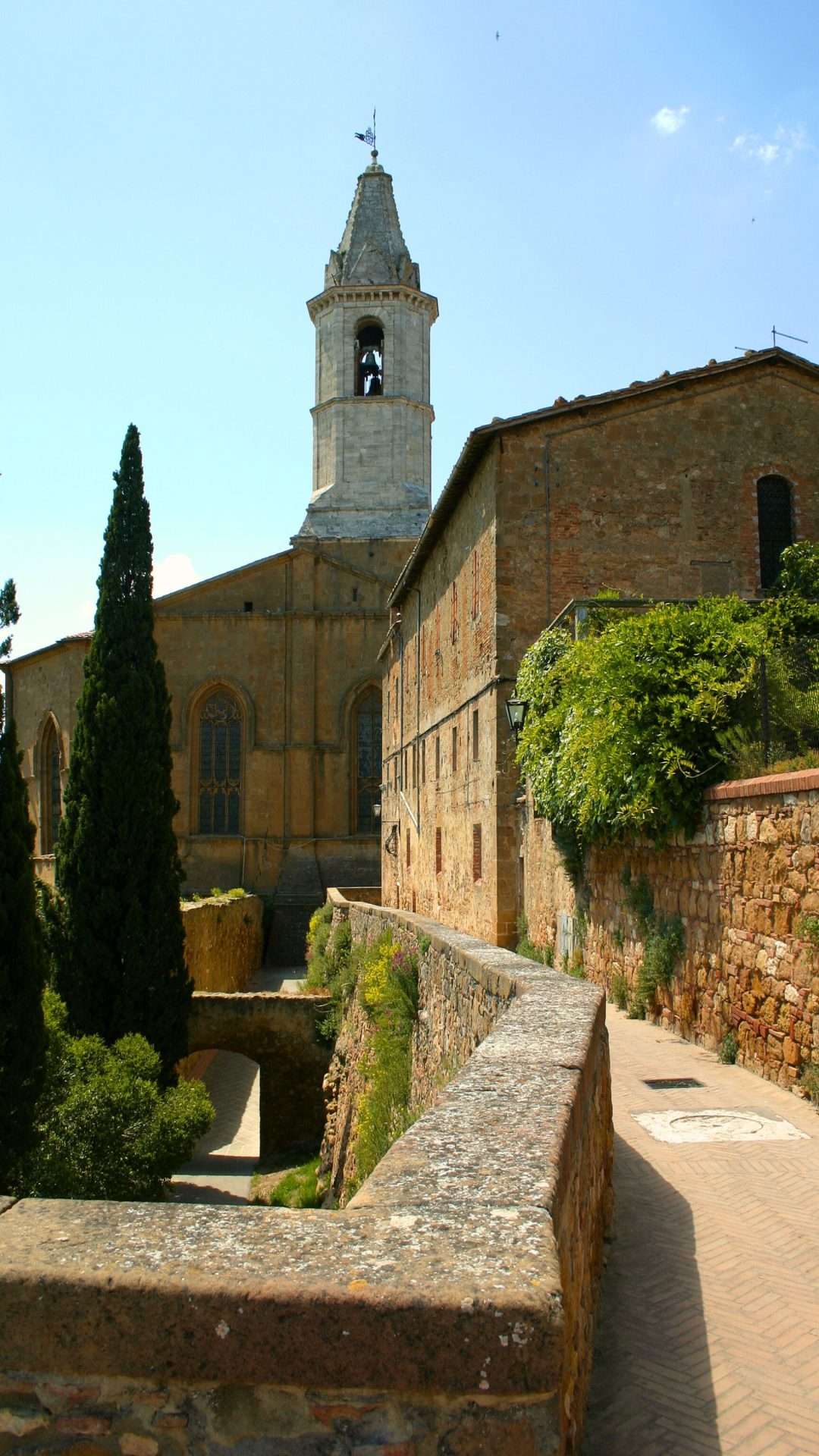
San Quirico d’Orcia
A lively town, strategically located, San Quirico offers a mix of authenticity and services: restaurants, shops, small supermarkets, and a strong community life.
- Prices: Asking prices now average around €2,500/m², after the summer 2025 peak; most listings fall between €110,000 and €1.7 million. In a town of 2,500 people, a handful of sales moves the average.
- Local touch: San Quirico lies on the Via Francigena. Since the Middle Ages, it has welcomed pilgrims. A small frescoed shrine in town once marked a place where travelers received a hot soup — a tradition recalled during a festival each August.
Today, San Quirico also attracts newcomers taking advantage of visas to live in Italy, blending smart working with the charm of slow living.
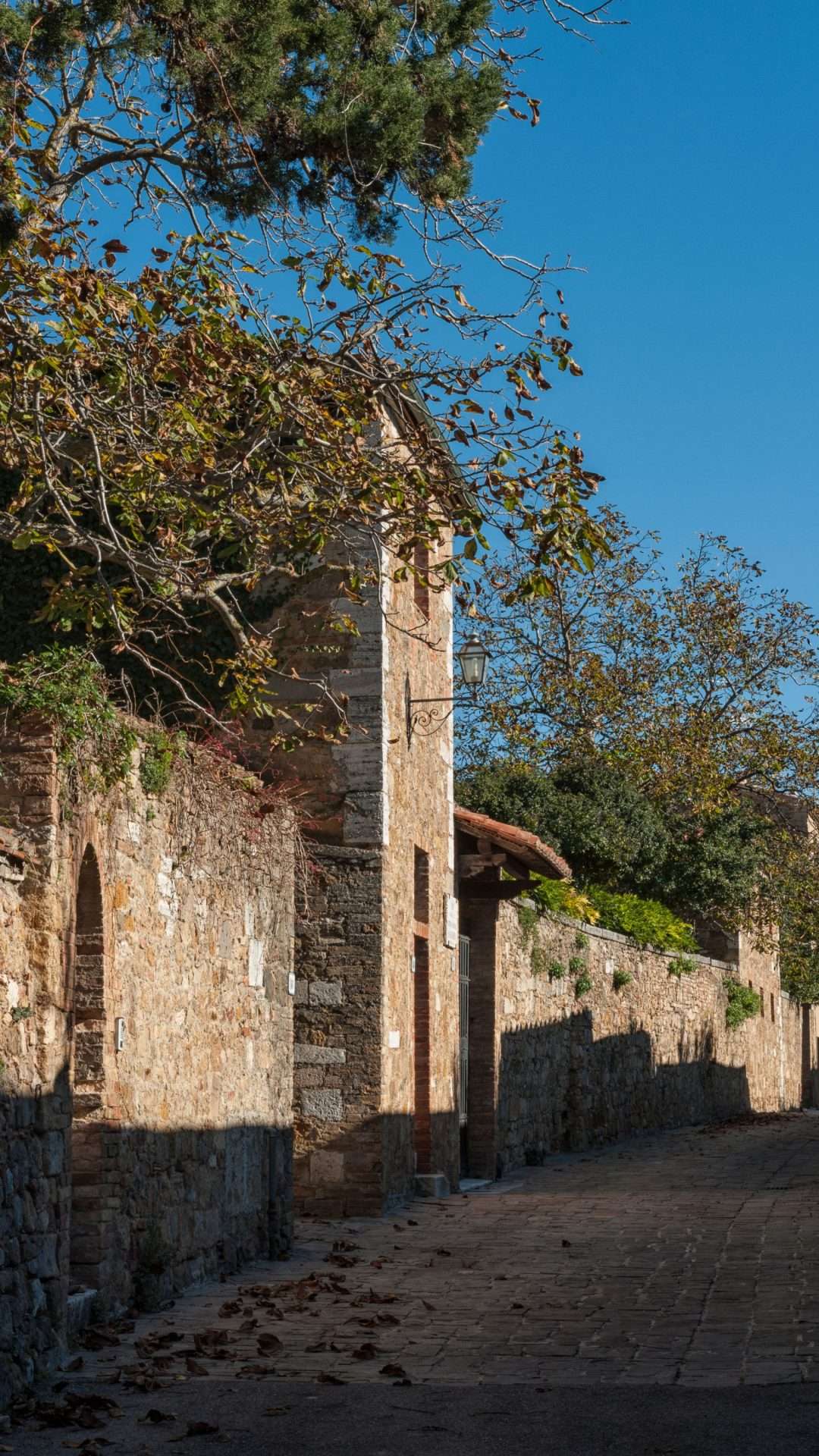
Castiglione d’Orcia
A compact and authentic village, dominated by the Rocca di Tentennano, which offers some of the most dramatic views of the valley.
- Prices: Average €1,932/m² in May 2025; rustic farmhouses around €2,645/m².
- Local touch: Castiglione hosts the Sala d’Arte San Giovanni, set in the former oratory of St John the Baptist, where five Madonna and Child panels by Sienese masters of the 14th and 15th centuries — among them Simone Martini and il Vecchietta — are on display. Nearby, in Campiglia d’Orcia, the centuries-old Festa del Marrone celebrates the chestnut harvest with music, food, and community spirit — a vivid example of local identity.
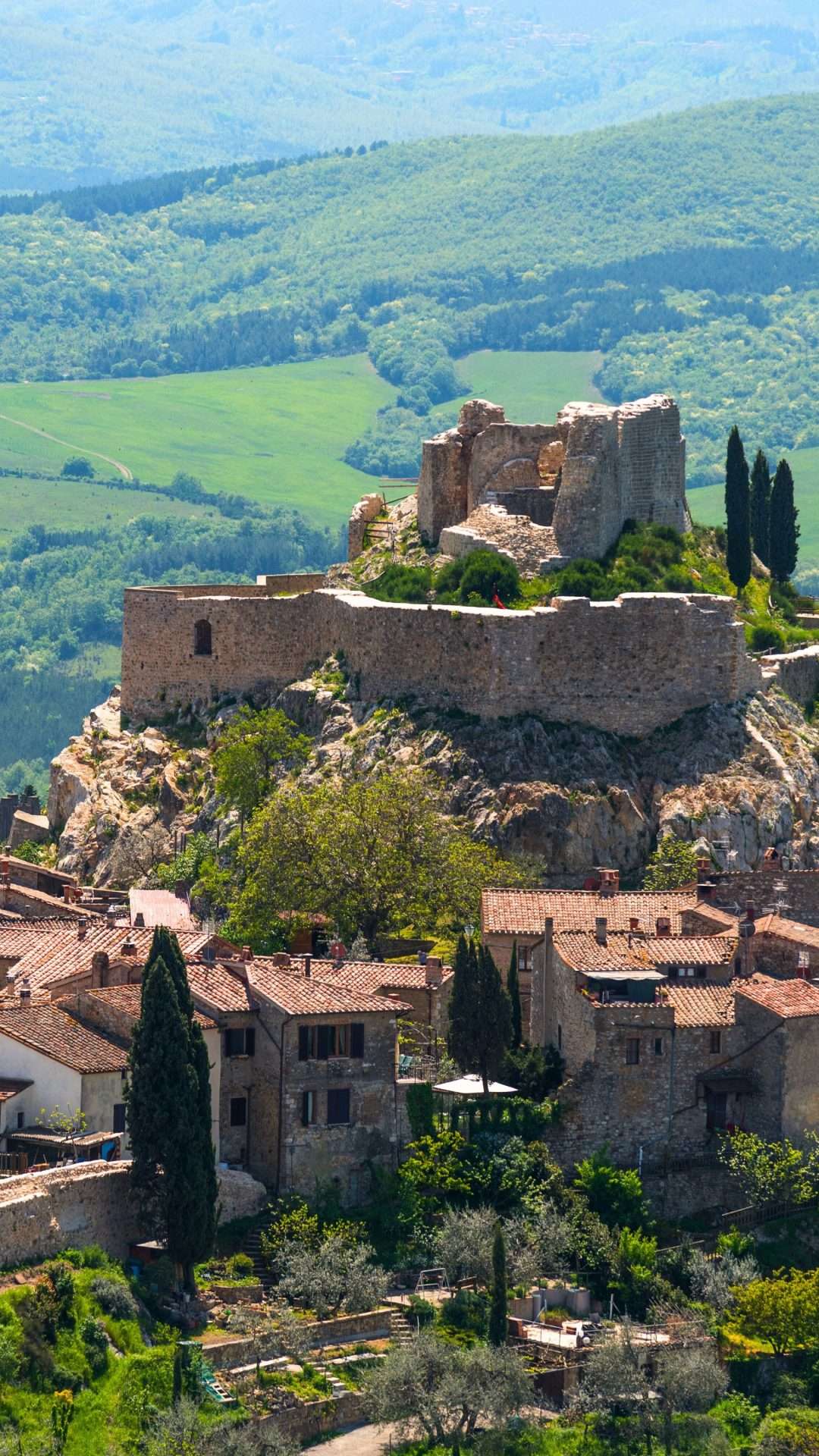
Bagno Vignoni
Unique in the world, Bagno Vignoni is a village where the central square is not paved with stone but filled with a steaming thermal pool. For centuries, these waters have powered mills and soothed travelers. Today, the village is a haven for those seeking wellness and silence.
- Prices: Limited availability pushes values between €3,000 and €3,800/m² for small historic apartments or restored farmhouses.
- Local touch: Saint Catherine of Siena is said to have bathed in these waters. Popular tales even describe them as “prophetic,” with pilgrims watching ripples to glimpse their destiny.
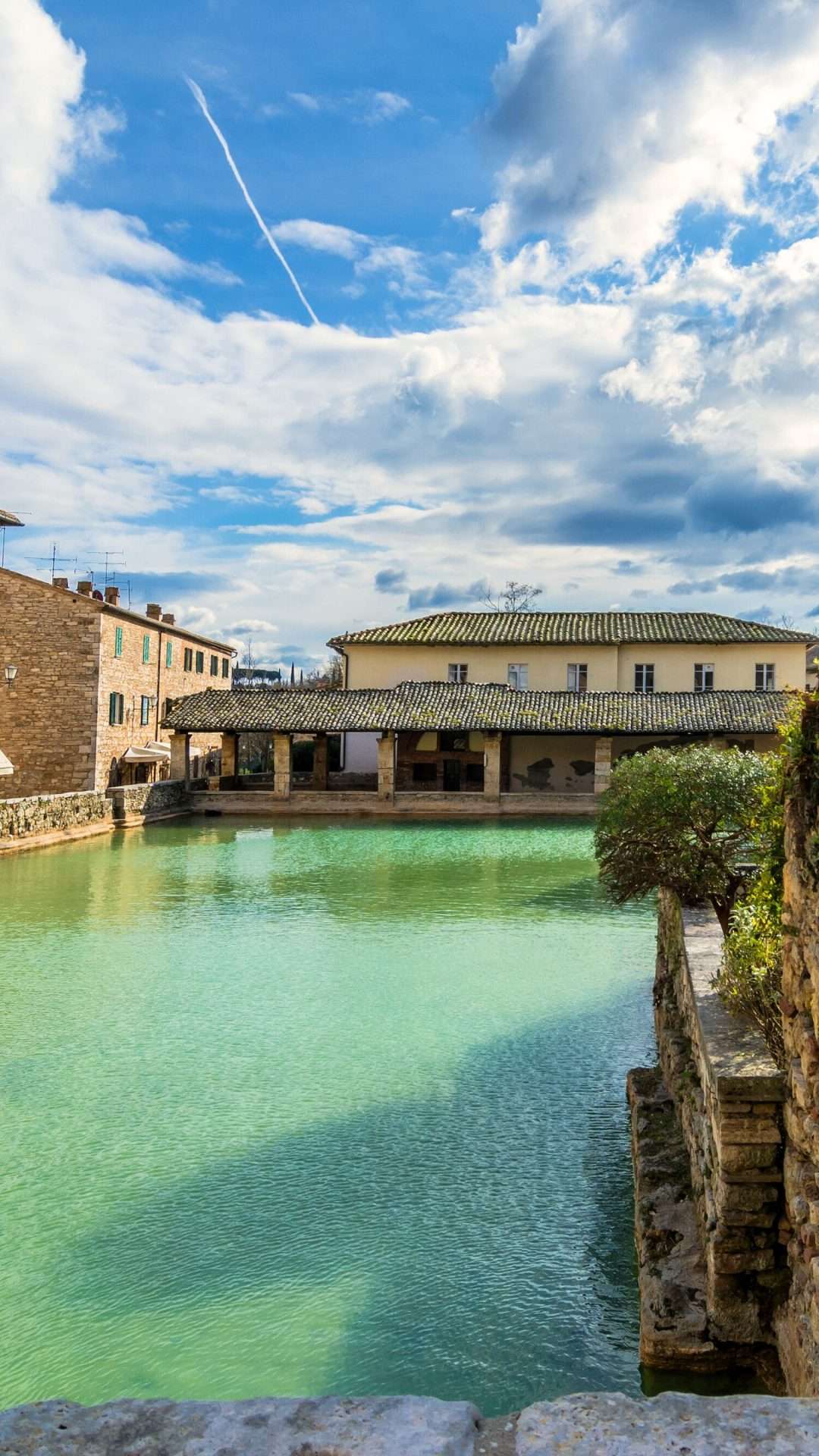
Montalcino
Crowned by vineyards and famous worldwide for Brunello, Montalcino is more than a wine capital: it is a lifestyle. Living here means combining a historic hilltop town with one of the strongest brands in Italian wine culture.
- Prices: Average residential values run between €1,600 and €2,200/m². A hectare of Brunello DOCG vineyard can be worth up to €1 million, making the farmhouse + vineyard model one of the most sought-after investments.
- Local touch: A Renaissance manuscript from nearby Sant’Antimo Abbey mentions a “red wine strong and holy, able to heal melancholy.” Centuries later, Brunello still carries that aura of uniqueness.
Montalcino is not only for wine lovers: it is a cultural hub with festivals and events. For expats and Italians abroad, this is also a strategic location to benefit from Italy’s impatriate tax regime, designed to attract new residents.
Radicofani
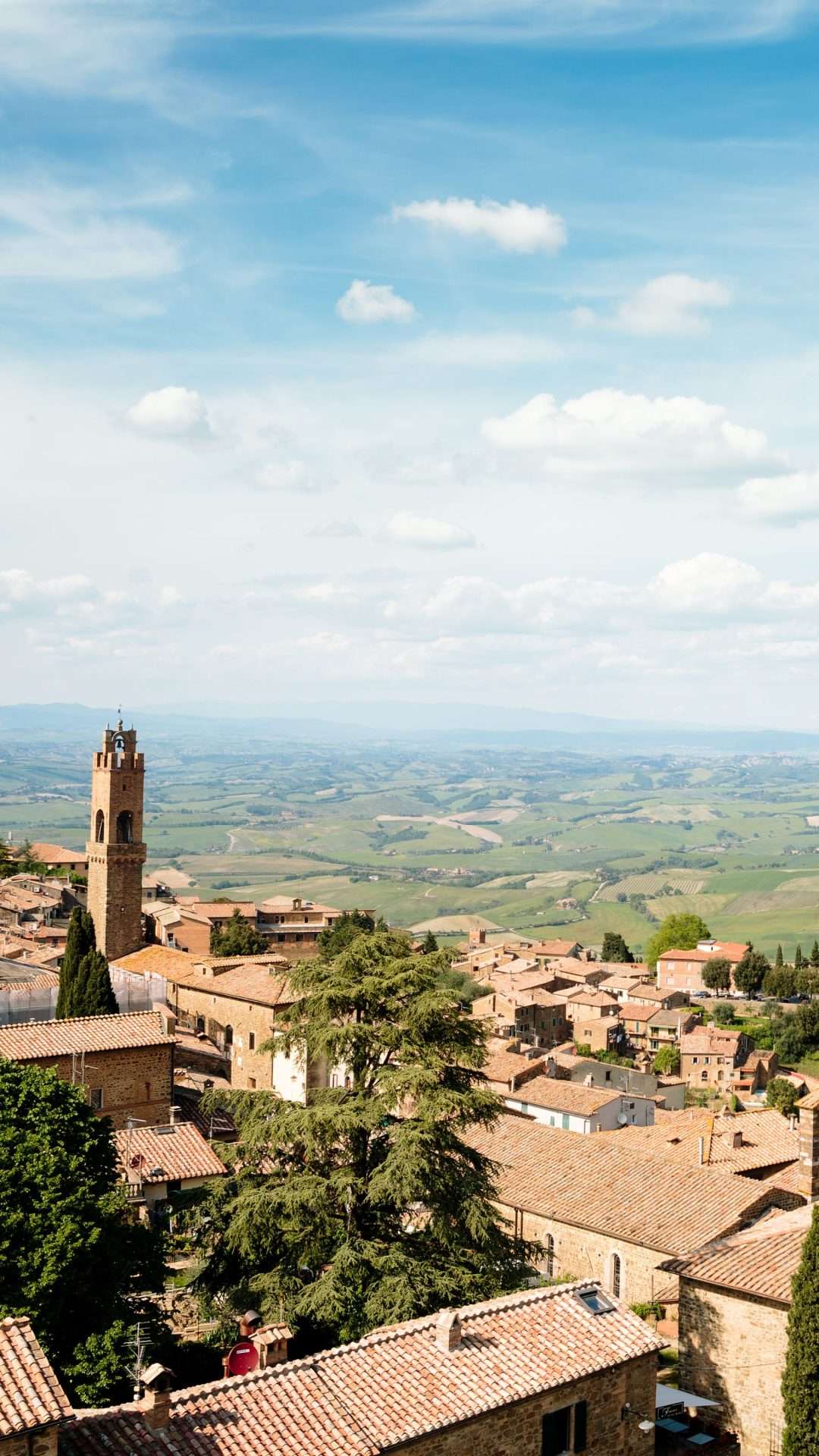
Perched at 800 meters above sea level, Radicofani is dominated by its Rocca, a fortress that commands sweeping views over the Val d’Orcia and the Amiata.
- Prices: More accessible, ranging between €1,400 and €1,800/m². Rustic farmhouses in isolated positions offer generous spaces at affordable values.
- Local touch: Dante himself wrote about Ghino di Tacco, the “gentleman bandit” who lived in Radicofani, robbing the rich but sparing the poor — a Tuscan Robin Hood whose legend still permeates the fortress walls.
Monticchiello
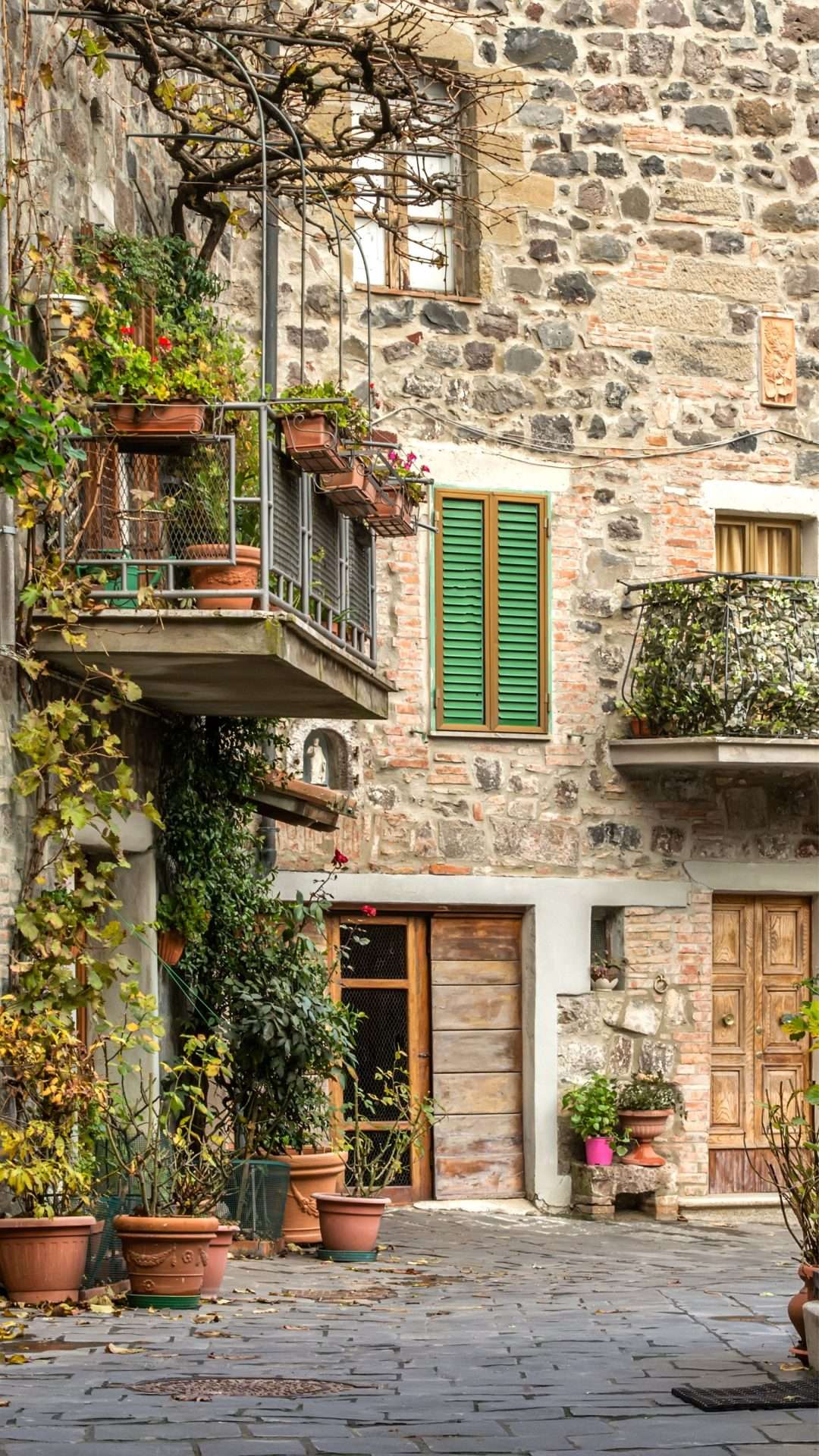
Tiny yet powerful in identity, Monticchiello is famous for its “Teatro Povero” (Poor Theatre), a community theater where residents themselves write and act plays about life, change, and memory.
- Prices: Rare properties, between €2,800 and €3,200/m². Buying here means entering a close-knit community.
Local touch: Each summer, the village becomes a stage under the stars. No professional actors, only locals — sociologists and journalists have studied Monticchiello as a living model of cultural resilience.
Comparison with other Tuscan areas
Why Val d’Orcia instead of Chianti or Casentino?
- Chianti: closer to Florence and Siena, higher prices (€4,000–5,000 / m²), and a strong international community, especially British and American. Perfect for luxury seekers.
- Casentino: pristine nature, low values (€1,200–1,800 / m²), but fewer services and connections. Ideal for solitude lovers.
- Lunigiana: affordable (€1,000–1,500 / m²), green and quiet, but off the main tourist routes.
Val d’Orcia stands out as a balance: UNESCO heritage, internationally iconic landscapes, stable tourism without chaos, and solid connections to Siena and Montepulciano.
The real advantages of living in Val d’Orcia
Moving to Val d’Orcia is not just about changing residence — it means embracing a new rhythm of life. Here, time flows differently: through medieval alleys, sunsets that paint the hills in gold, and communities that genuinely welcome those who choose to stay. It is not a return to the past, but a way of living that blends authenticity with modern comfort.
Alongside its beauty, there are also practical tools that make the transition smoother. For professionals and entrepreneurs looking at Tuscany, the impatriate tax regime is one of the most competitive incentives in Europe, supporting relocation with substantial tax benefits over several years. On the real estate side, the market is vibrant: demand for premium properties remains firmly international, while the UNESCO recognition adds long-term stability and appreciation potential. For international buyers, understanding the essentials — from obtaining a mortgage for foreigners to the legal aspects of buying a house in Italy — is a fundamental step.
Tuscany is also opening up to new forms of residency thanks to the digital nomad visa, which allows international remote workers to settle here while maintaining their professional activities abroad. This is proof that Val d’Orcia is not only a landscape to admire, but a territory that looks to the future: a place where quality of life, community, and opportunity converge — offering not an escape from the city, but a new kind of centrality built on relationships, nature, and a renewed sense of balance.
Conclusion
Val d’Orcia is more than a destination: it is a life project where heritage, culture, and community intertwine. Each village tells a different story, yet they all share the same promise — to offer a future rooted in authenticity and beauty.
Curious to know if Val d’Orcia is right for you?
Share on: