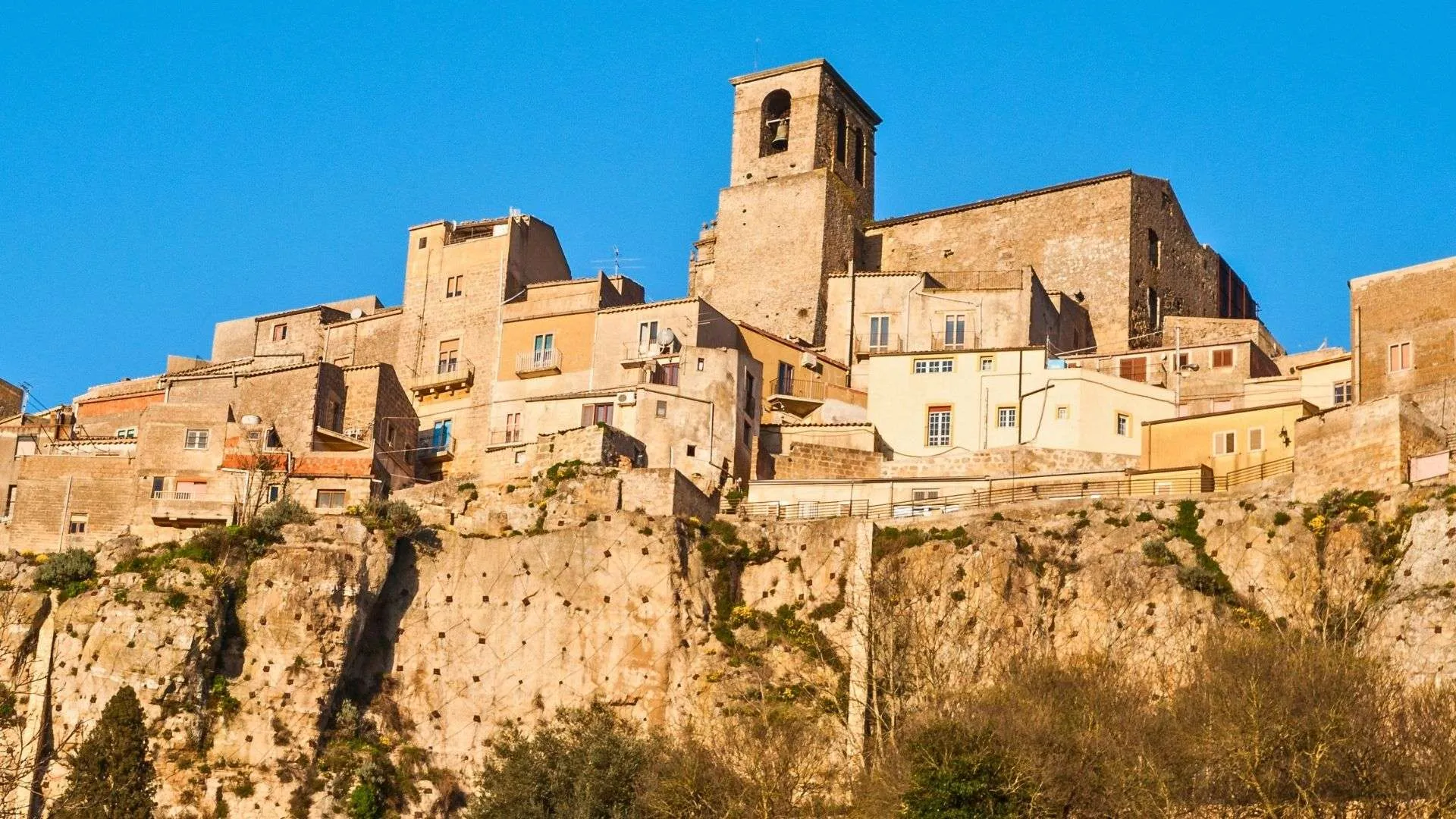
Moving to the mountains in Italy increasingly means looking at Trentino: the UNESCO Dolomites, healthcare ranked among the best in Italy, and a solid economy split between technology and tourism. Trento is expensive (around €3,088/sqm, the priciest province in the country), but in its inland villages the Autonomous Province offers a grant of up to €100,000 — €80,000 for renovation plus €20,000 towards the purchase — to anyone who repopulates one of 32 at-risk villages, with a ten-year residency requirement. The scheme is experimental: the 2025 windows are closed, so any reopening must be checked.
Why are more people choosing to move to Trentino?
Trentino is Italy’s gateway to the Alps. The Dolomites have been a UNESCO World Heritage Site since 2009, and here the mountains are not a holiday backdrop: they are the setting for a life lived year-round. That is what draws people considering a move. Trentino is, after all, the strongest choice among the Italian mountains to move to.
It is not only scenery, though. The Autonomous Province of Trento enjoys a special statute that translates into efficient public services, healthcare consistently at the top of national rankings, and strong investment in schools, transport and innovation. Trento hosts a well-regarded university and a real research and technology ecosystem.
There is a downside to state up front, in fairness. Trentino is Italy’s most expensive region to buy a home: in 2025 idealista puts the average around €3,088 per square metre, with the city of Trento higher still. But that is the picture in the main centres. In the inland villages — the ones losing residents — it is the opposite: low prices and, in some cases, a public grant that covers most of the cost.
Where to live in Trentino? The valleys, one by one
Trentino is not a uniform territory: it is a mosaic of valleys, each with its own character, climate and property market. Choosing where to move means first understanding which valley supports the life you want to build.
Val di Fiemme and Val di Fassa: the Dolomite heart
These are the Dolomite valleys par excellence, dominated by Latemar, Catinaccio, Sassolungo and Marmolada. Val di Fassa is Ladin in culture and language and heavily tourist-oriented: Canazei, Campitello, Moena and Vigo di Fassa live on skiing and mountaineering, with some of the highest property prices in Trentino. Val di Fiemme is broader and liveable year-round: Cavalese, the historic hub of the Magnifica Comunità, together with Predazzo and Tesero — home to an international cross-country skiing centre — offer solid services and a stable community.
Life here runs on tourism, the timber supply chain and winter sports, and the quality of life is very high. The trade-off is cost: international demand, especially in Fassa, keeps prices high. This is the choice for those who want the “real” Dolomites and have the budget to match.
Val di Non and Val di Sole: apples, spas and the incentive villages
Val di Non is the apple valley — the Melinda DOP is grown here — orderly and prosperous around Cles, with Fondo, Sanzeno and the Santa Giustina lake. Val di Sole climbs towards the glaciers, from Malé and Dimaro up to the Tonale pass, inside the Stelvio National Park and the Adamello-Brenta Park.
This is where several municipalities eligible for the provincial incentive sit: Peio and Rabbi, with their spas and mineral waters, and then Bresimo, Livo, Rumo and Cis in the upper Val di Non. These are authentic mountain villages, with contained prices and small communities, where the public grant can cover most of a home’s restoration. It is the Trentino that combines protected nature with a concrete opportunity.
Valsugana and Tesino: the most accessible mountains
Valsugana links Trento to the Veneto along the Brenta river and is the mildest and most accessible of the Trentino valleys: Pergine Valsugana, Levico Terme and Borgo Valsugana offer urban services, while the lakes of Caldonazzo and Levico provide a swimmable summer season, rare in the mountains.
Higher up, the Tesino plateau gathers three villages in the scheme: Castello Tesino, Cinte Tesino and Pieve Tesino, birthplace of statesman Alcide De Gasperi. It is the area that best combines low prices, nature and connections towards the Veneto plain: ideal for anyone who wants the mountains without giving up the city entirely.
Giudicarie, Rendena and the Chiese valleys: between Adamello and Brenta
To the west, the Giudicarie and Val Rendena rise towards the Adamello-Brenta Nature Park and fashionable Madonna di Campiglio, passing through Tione and Pinzolo. It is a two-speed Trentino: the elite tourism of Campiglio on one side, quiet and more affordable villages on the other.
The Chiese valleys, more secluded towards Lake Idro, host four scheme municipalities: Borgo Chiese (with the hamlets of Condino and Cimego), Castel Condino, Valdaone and Pieve di Bono-Prezzo. This is the Trentino least touched by mass tourism, where the incentive makes the biggest difference because it starts from genuinely low property values.
Vermiglio, the Piné plateau and the other high-altitude areas
The picture is completed by several high-altitude, often historic areas. Vermiglio, at the foot of the Tonale pass, is a gateway to skiing and high mountains. The Piné plateau, around Baselga di Piné and the Serraia lake, is close to Trento and liveable year-round. Segonzano guards the famous earth pyramids, a rare geological phenomenon.
Further south, towards the Vicenza area, lie Terragnolo, Vallarsa — at the foot of the First World War’s Pasubio — and Valfloriana, along with Sover in the Cembra valley. These are small, sometimes fragile villages, where the revitalization project aims to bring back families and young people: this is where Trentino’s incentive finds its deepest meaning.
How does Trentino’s incentive of up to €100,000 work?
The measure’s full name is the grant for the revitalization of areas at risk of abandonment (art. 24-quinquies of Provincial Law 3/2006). According to the Autonomous Province of Trento, it supports anyone who restores a property in one of the listed municipalities and uses it as a main residence — their own or rented at a moderate rate — for at least ten years.
The grant has two parts. The first covers renovation: 40% of eligible expense (up to €200,000) if the property is in a historic settlement, 35% elsewhere, capped at €80,000. The second rewards the purchase of the property to be restored, with a share equal to 20% of the price, up to €20,000. Add the two together and you reach the €100,000 the headlines talk about.
Requirements, municipalities and conditions at a glance
| Item | Detail (Autonomous Province of Trento) |
|---|---|
| Renovation grant | 40% of eligible expense (35% outside historic settlements), up to €80,000 |
| Purchase grant | 20% of the price of the property to be restored, up to €20,000 |
| Eligible municipalities | 32 at-risk villages (Peio, Rabbi, Vermiglio, the Tesino, the Chiese valleys, etc.) |
| Residency condition | Main residence for at least 10 years (or rented at a moderate rate) |
| Applicant requirement | Not resident in the municipality as of 6 August 2024, unless under 45 |
| Scheme status | Experimental: 2025 windows closed; check any reopening on the Province’s website |
One clarification matters more than any figure: this is not cash paid to “go and live” in Trentino, but a grant tied to renovation and purchase, with a ten-year residency commitment. It is a serious, structured incentive, not an automatic prize. For the national picture of similar measures, see the guide to Italian towns that pay you to move.
How much does it cost to live in Trentino?
The answer depends on where you look. In Trento and the tourist valleys costs are high: in 2025 idealista ranks Trentino-Alto Adige as Italy’s most expensive area to buy, with the city of Trento around or above €3,000 per square metre and high average rents.
In the inland villages, prices collapse: these are exactly the municipalities losing residents, where a property to restore can cost a fraction of a city home. This is where the provincial incentive makes sense, because it turns a renovation cost into a publicly backed investment. The comparison with the rest of the country is in the guide to the cost of living in Italy for foreigners.
Living in Trentino: healthcare, schools, transport and work
Trentino is among the areas with the best quality of life in Italy, and services are the main reason. Provincial healthcare consistently ranks at the top nationally, with the Provincial Healthcare Agency (APSS) and Trento’s Santa Chiara hospital as reference points. For newcomers from abroad, how the National Health Service works is explained in the guide to healthcare in Italy for foreign retirees.
The school network reaches even the small municipalities, and Trento offers a solid university. Public transport is efficient by Italian standards, but a car remains necessary in the inland valleys. On work, alongside tourism and agri-food, a technology sector is growing around Trento: a good fit for remote workers too, as covered in the guide on where to live in Italy as a digital nomad.
Who chooses to move to Trentino?
People who choose Trentino are not just after a view: they want mountains that work. Healthcare at the top of national rankings, schools that reach even the small municipalities, transport looked after right into the valleys. It is no accident that when the Province opened its grant of up to €100,000, requests arrived from across Europe.
The profiles, though, differ. Retirees put services and proximity to a hospital first, and find them in the valley-floor towns. Families look at schools and house prices, and in the scheme villages buy at a fraction of the cost of Trento. Remote workers want reliable fibre and a reachable airport, and the well-connected valleys deliver.
Finally, some look at Trentino as an investment, not only as a home: prime Dolomite properties and village restoration projects can fit into a wider wealth strategy.
Among those arriving, the most dynamic push comes from people who work remotely and bring their profession to Trentino. The first step is to check the requirements of the impatriate regime and the visas for remote work — AIRE registration, years of residence abroad, the same-employer rule.
Working remotely or bringing your profession to Italy? The Nomad Landing path follows those relocating with qualified work: the digital nomad visa or Elective Residency, residence setup and access to the inbound-workers regime.
Different again is the view of those who see Trentino mainly as an investment: prime Dolomite homes, village restoration projects, entry into Italy through capital. Here the game is played on the asset and tax structure, even before the house itself.
Looking at Trentino as an investment, not just a home? Investor Entry structures entry into Italy through capital — from the Golden Visa to the new-residents flat tax — handling the asset and tax side of the project.
Conclusion
Trentino is Italy’s strongest answer to the question “moving to the mountains.” It combines what is rare elsewhere: the Dolomites, quality services and, in the inland villages, a public incentive that can reach €100,000.
The key, though, is to read the two Trentinos well. The one of the centres — beautiful but expensive — and the one of the at-risk villages, where the grant turns a house to restore into a long-term life project. The difference between a successful move and an improvised one lies here: in the choice of valley, in checking the requirements, and in accepting the ten-year commitment.
- Autonomous Province of Trento — Grant for the revitalization of areas at risk of abandonment (structure, municipalities, windows).
- Autonomous Province of Trento — Provincial Government Resolution no. 592 of 29 April 2025 (criteria and municipalities).
- idealista — Sale price report, Trentino-Alto Adige (2025).
- Provincial Healthcare Agency (APSS) — Healthcare in Trentino.
Share on:
FAQ
The Autonomous Province of Trento’s grant can reach up to €100,000: €80,000 for renovation (40% of eligible expense, up to €200,000, or 35% outside historic settlements) and €20,000 towards the purchase of the property to be restored (20% of the price). It applies to properties in the 32 at-risk villages and requires use as a main residence for at least ten years.
The incentive covers 32 municipalities identified as at risk of abandonment, including Peio, Rabbi, Vermiglio, Bresimo, Livo, Rumo, Cis, Castello Tesino, Cinte Tesino, Pieve Tesino, Borgo Chiese, Castel Condino, Valdaone, Segonzano, Sover, Terragnolo, Vallarsa and Valfloriana. The full, up-to-date list is published by the Autonomous Province of Trento in Resolution no. 592 of 2025.
It is an experimental project. For 2025 two application windows were planned — 19 May to 30 June and 14 November to 31 December — both now closed. At the time of checking, the measure is marked as inactive on the Province’s website; the funds allocated for 2025-2026 leave a possible reopening open, to be confirmed on the official site.
It is open to private individuals who restore a property in one of the eligible municipalities and use it as a main residence — their own or rented at a moderate rate — for at least ten years. For use as a first home, the applicant must not have been resident in the municipality as of 6 August 2024, a requirement that does not apply to those under 45.
It is worth it for anyone seeking mountains that are liveable year-round, quality services and safety, and who accepts high housing costs in the main centres. Trentino is Italy’s most expensive region to buy a home, but in the inland villages prices are low and the provincial incentive can cover most of the cost. It is not for those seeking a quick gain: the residency commitment is ten years.
The lowest costs are in the inland at-risk municipalities — in the Chiese valleys, in Val di Sole at Peio and Rabbi, in the Tesino and in minor valleys such as Terragnolo and Vallarsa — where properties to restore are worth a fraction of those in Trento. These are the same areas where the provincial grant of up to €100,000 applies, designed precisely to repopulate them.